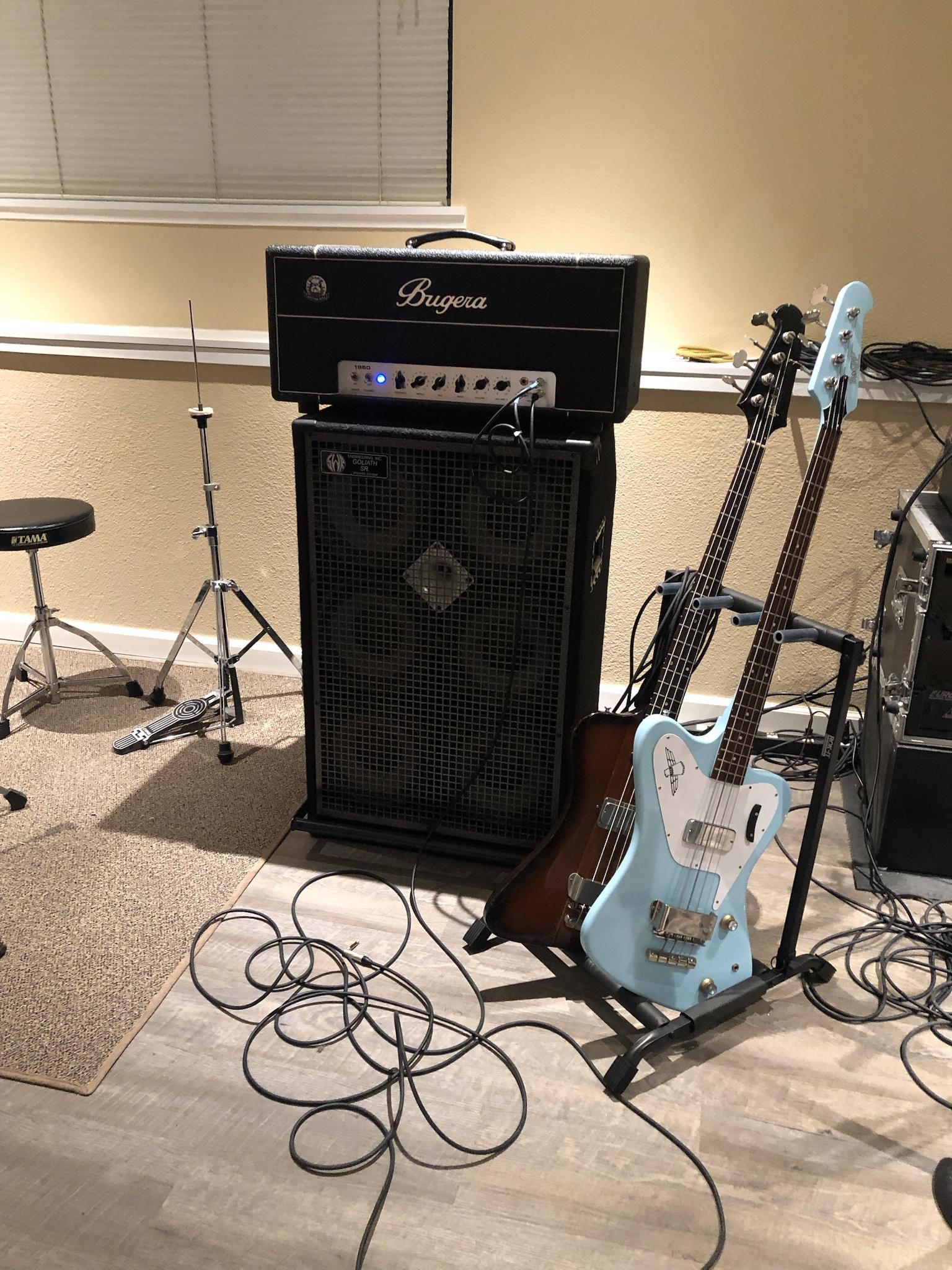
Me too. Cool rock, blues, jazz all mixed up and it comes out ABB.Love that band!

Enjoy the benefits of a premium membership!
Upgrade Account
-
TalkBass has been independent since 1998. Add your voice.
Create a free account to reply to discussions, view embedded media, and browse with fewer display ads.
Join free Log in
Want zero display ads or expanded classifieds tools? Compare plans.
You are using an out of date browser. It may not display this or other websites correctly.
You should upgrade or use an alternative browser.
You should upgrade or use an alternative browser.
Thunderbird Club
- Thread starter TBird1958
- Start date
-
- Tags
- club thunderbird
More options
Who Replied?

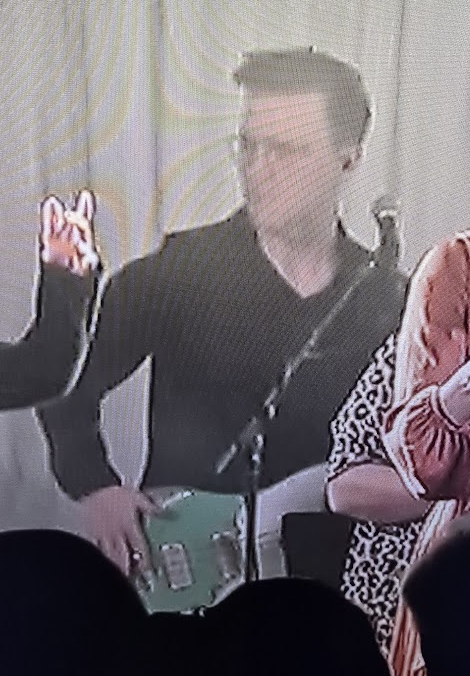
Been working on a song for an Easter special and went back and listened to the YT vid and noticed this. Never could make out the headstock. I've always thought and '55 Pbass body with Thunderbird pups. Been contemplating putting one together, just not sure I can get into it this Summer. I really need to sell some stuff....
Several classic “YES” recordings were actually put down “live.” At least I read that at some point. An exception was on the title track for Close to the Edge where Wakeman actually used a massive church organ recorded in the cathedral. One reason for live takes was said to be that they were actually rehearsing for the tours that were planned to promote the albums. Another reason was to save money. In fact, they were famously supposed to go on tour to promote Close to the Edge a few weeks after finishing the album. But Bruford decided to quit at the end of the sessions, so they had to get Alan White in at the last minute. He only had something like 2 1/2 weeks to learn all the material for a massive world tour. That he could pull it off is a testament to how good he was. RIP Alan.Being able to play like it's fresh and spontaneous when recording is a skill on its own.
IMO some of the best recordings are played live in the studio (at least drums and bass) with overdubs to fix small mistakes and add to the sound. It's kind of like painting.
Consider how Led Zeppelin 2 was recorded. From the Bob Spitz book:
“It was quite insane, really,” he (Jimmy) recalled. “We had no time, and we had to write numbers in hotel rooms. We’d put down a rhythm track in London, add the voice in New York, overdub harmonica in Vancouver, and then [go] back to New York to do the mixing.”
The recording itinerary was indeed astoundingly peripatetic. At tiny Morgan Studios in North London, with Glyn Johns’s brother, Andy, at the board, they’d laid down the tracks for “Thank You,” “Livin’ Lovin’ Maid (She’s a Woman),” and “Sugar Mama,” the latter of which was eventually abandoned. “Heartbreaker” was recorded in New York, with the rhythm track taped at A&R Studios. Jimmy’s solo, however, “was an afterthought,” he said. “That whole section was recorded in a different studio”—farther uptown at Atlantic—“and was sort of slotted in the middle.” While at Atlantic, he put the finishing touches on “Bring It On Home,” which had initially been cut at funky R&D Studios in Vancouver. “Moby Dick” finally came together at Mirror Sound in LA, then back to New York for “Ramble On” at Juggy Sound before heading back to Olympic in London for a session that produced “What Is and What Should Never Be.”
“We recorded and overdubbed our way from West Coast to East Coast,” Jimmy said, gratified that they were able to pull it off. Miraculously, consistency wasn’t a problem, nor was what he called “the attack”—the way they bit into those songs “to get excitement onto a piece of plastic.” It was essential to match what was happening onstage—the dynamics, of course, but also the spontaneity and the experience. “Part of the excitement of the album is due to the fact that we were completely energized from the live shows and the touring.”
Yes didn’t do a lot of Tales From Topographic Oceans as live recordings and that was said to be one reason that album was pretty much a fragmented failure (but I still love it).
Just buy a Lull P with Tbird pickups.Been working on a song for an Easter special and went back and listened to the YT vid and noticed this. Never could make out the headstock. I've always thought and '55 Pbass body with Thunderbird pups. Been contemplating putting one together, just not sure I can get into it this Summer. I really need to sell some stuff....
View attachment 7466721
Last edited:


Kim Gordon with the Thunderbird.
I like the amp collection! ...and Kim is an awesome performer to watch.
It's amazing to me how close they sound to their studio recordings. Those microtones are not as random as they seem
I know, but $$$$$. I do love the Gen 2 Pbass bodies.Just buy a Lull P with Tbird pickups.
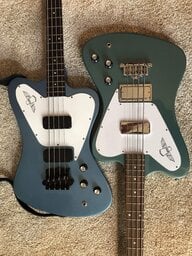
I like what these guys do not far from here. Still over 3k. They use Lollars. For my purposes I can likely do one for maybe 1/3 of that. I still have some tuning keys J.T. gave me. Thought about flipping the headstock. Looks cool, but seems like a practical pain.
Off the top of my head I recall Tom Petty & THBers did their tracts together and live. Basically played in a circle from what I remember seeing/hearing.Several classic “YES” recordings were actually put down “live.” At least I read that at some point. An exception was on the title track for Close to the Edge where Wakeman actually used a massive church organ recorded in the cathedral. One reason for live takes was said to be that they were actually rehearsing for the tours that were planned to promote the albums. Another reason was to save money. In fact, they were famously supposed to go on tour to promote Close to the Edge a few weeks after finishing the album. But Bruford decided to quit at the end of the sessions, so they had to get Alan White in at the last minute. He only had something like 2 1/2 weeks to learn all the material for a massive world tour. That he could pull it off is a testament to how good he was. RIP Alan.
Yes didn’t do a lot of Tales From Topographic Oceans as live recordings and that was said to be one reason that album was pretty much a fragmented failure (but I still love it).

Since we're doing jazzy drum solos here's one I love, but is best heard with cans or buds so you can better hear what both drummers are doing and how they intertwine, separate and play off each other which is the really cool part.
Bonus--Barry's bass solo when Jaimoe and Butch finish.
Drums begin at ~13:00
Still in my top five jams.
Neil did that for most of his sixties and seventies stuff. Tonight’s the Night was the epitome of recording live. And high. He “worked at home” a lot for most of the eighties, at least until Ragged Glory. A lot of stuff after that seems to have been a mix of methods, depending on what was going on with his kids and his other interests.Off the top of my head I recall Tom Petty & THBers did their tracts together and live. Basically played in a circle from what I remember seeing/hearing.
And that’s what I find missing from many studio albums - the energy the songs really need.Being able to play like it's fresh and spontaneous when recording is a skill on its own.
IMO some of the best recordings are played live in the studio (at least drums and bass) with overdubs to fix small mistakes and add to the sound. It's kind of like painting.
Consider how Led Zeppelin 2 was recorded. From the Bob Spitz book:
“It was quite insane, really,” he (Jimmy) recalled. “We had no time, and we had to write numbers in hotel rooms. We’d put down a rhythm track in London, add the voice in New York, overdub harmonica in Vancouver, and then [go] back to New York to do the mixing.”
The recording itinerary was indeed astoundingly peripatetic. At tiny Morgan Studios in North London, with Glyn Johns’s brother, Andy, at the board, they’d laid down the tracks for “Thank You,” “Livin’ Lovin’ Maid (She’s a Woman),” and “Sugar Mama,” the latter of which was eventually abandoned. “Heartbreaker” was recorded in New York, with the rhythm track taped at A&R Studios. Jimmy’s solo, however, “was an afterthought,” he said. “That whole section was recorded in a different studio”—farther uptown at Atlantic—“and was sort of slotted in the middle.” While at Atlantic, he put the finishing touches on “Bring It On Home,” which had initially been cut at funky R&D Studios in Vancouver. “Moby Dick” finally came together at Mirror Sound in LA, then back to New York for “Ramble On” at Juggy Sound before heading back to Olympic in London for a session that produced “What Is and What Should Never Be.”
“We recorded and overdubbed our way from West Coast to East Coast,” Jimmy said, gratified that they were able to pull it off. Miraculously, consistency wasn’t a problem, nor was what he called “the attack”—the way they bit into those songs “to get excitement onto a piece of plastic.” It was essential to match what was happening onstage—the dynamics, of course, but also the spontaneity and the experience. “Part of the excitement of the album is due to the fact that we were completely energized from the live shows and the touring.”
I'm praying there's a Pelham Blue everything there to see how that resistance holds up.


IMO some of the best recordings are played live in the studio (at least drums and bass) with overdubs to fix small mistakes and add to the sound.
Red Sun Ruins is in the process of recording four more new songs. We intentionally recorded the drums, bass and initial guitar rhythm tracks (likely to be scratched) first with Bart Thurber (where we have recorded most of all of our stuff). That is done live, with me and the drummer in the same room, and the guitarists in the next room with a window in between.
Next we will record all the guitar parts and all the vocals at Bad Lemon’s rehearsal space with Mike (BL’s former drummer/lead vox, now solely the lead vox) doing the tracking.
This second step will allow the guitarist to take their time and get all the rhythm tracks, doubling, dual harmony thingies and solos, and maybe some cool keys or other “effect” sounds going.
Then, vocals, harmonies and backing.
Once we have everything tracked, it will all go back to Bart for mixing and mastering.
The idea is we can do this with no pressure (other than our desire to get it done), a therefore really get it right. (Also it really won’t cost all that much, Bart is super affordable and Mike is tracking basically for free. We will offer him $$$ but he won’t take it. We’ll just keep him stocked up with whiskey to sip on.
The point is, there are so many ways to record.
The first four songs RSR recorded were with Bart and we recorded four songs, all of it, drums, bass, all guitar parts, all vocal parts, in a one day session.
The second four songs we did the same, but there were a few return trips to add guitar and vocal tracks.
The third recording we did, we recorded all parts of three songs with Mike, and sent everything to Bart for mix and master.
The fourth time we did two songs same way as the second time, all with Bart in one session, but with return trips.
Then we did our cover of Ohio with someone else completely. Full day to record all parts of one song.
All of these recording sessions were followed up with quite a bit of mixing revisions done via file sharing to listen and suggest changes before mastering.
This time we’re doing four songs recorded over the course of what will likely be a few months or more, in different places, on different software, with different people. Sometimes even the songs continue to develop during this time too.
It’s cool to be able to record is such a broken up, not cohesive way and yet have a recording that sounds like it was all done in a uniform, continuous, logical manner.
Especially these days. The 'bands' don't even see each other 'til they go out on tour.And that’s what I find missing from many studio albums - the energy the songs really need.

Looks like a Bluesman Vintage to meBeen working on a song for an Easter special and went back and listened to the YT vid and noticed this. Never could make out the headstock. I've always thought and '55 Pbass body with Thunderbird pups. Been contemplating putting one together, just not sure I can get into it this Summer. I really need to sell some stuff....
View attachment 7466721
That's how our album was recorded. Live in the studio, with vocals and some guitar added after. We tracked all ten songs in one day.And that’s what I find missing from many studio albums - the energy the songs really need.

- Jun 30, 2010
- 49,589
- 221,970
- Disclosures
- musician/artist/owner - Gildaxe
100% - a rich history of playing live and also mastering the process of documentation - as ad hock as it could often be.Being able to play like it's fresh and spontaneous when recording is a skill on its own.
IMO some of the best recordings are played live in the studio (at least drums and bass) with overdubs to fix small mistakes and add to the sound. It's kind of like painting.
Consider how Led Zeppelin 2 was recorded. From the Bob Spitz book:
“It was quite insane, really,” he (Jimmy) recalled. “We had no time, and we had to write numbers in hotel rooms. We’d put down a rhythm track in London, add the voice in New York, overdub harmonica in Vancouver, and then [go] back to New York to do the mixing.”
The recording itinerary was indeed astoundingly peripatetic. At tiny Morgan Studios in North London, with Glyn Johns’s brother, Andy, at the board, they’d laid down the tracks for “Thank You,” “Livin’ Lovin’ Maid (She’s a Woman),” and “Sugar Mama,” the latter of which was eventually abandoned. “Heartbreaker” was recorded in New York, with the rhythm track taped at A&R Studios. Jimmy’s solo, however, “was an afterthought,” he said. “That whole section was recorded in a different studio”—farther uptown at Atlantic—“and was sort of slotted in the middle.” While at Atlantic, he put the finishing touches on “Bring It On Home,” which had initially been cut at funky R&D Studios in Vancouver. “Moby Dick” finally came together at Mirror Sound in LA, then back to New York for “Ramble On” at Juggy Sound before heading back to Olympic in London for a session that produced “What Is and What Should Never Be.”
“We recorded and overdubbed our way from West Coast to East Coast,” Jimmy said, gratified that they were able to pull it off. Miraculously, consistency wasn’t a problem, nor was what he called “the attack”—the way they bit into those songs “to get excitement onto a piece of plastic.” It was essential to match what was happening onstage—the dynamics, of course, but also the spontaneity and the experience. “Part of the excitement of the album is due to the fact that we were completely energized from the live shows and the touring.”
- Jun 30, 2010
- 49,589
- 221,970
- Disclosures
- musician/artist/owner - Gildaxe
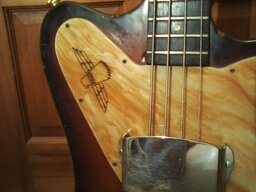
Yah, I never got the reversed hs/tuner thing... more of a stylistic choice and one that makes things more difficult. "longer = better sound on the E string" ... behind the nut.., I have a bridge to sell you. (and not a BA or KA or...) Maybe if I were left-handed...I know, but $$$$$. I do love the Gen 2 Pbass bodies.
I like what these guys do not far from here. Still over 3k. They use Lollars. For my purposes I can likely do one for maybe 1/3 of that. I still have some tuning keys J.T. gave me. Thought about flipping the headstock. Looks cool, but seems like a practical pain.
View attachment 7466787
View attachment 7466789
Last edited:
If we are in Santa Cruz, I’ll likely stay at the Fairfield by UCSC.If he’s serious count me in. I’ll get a hotel in SC but would leave my basses at Dave’s. Let me know if I can help with any logistics.
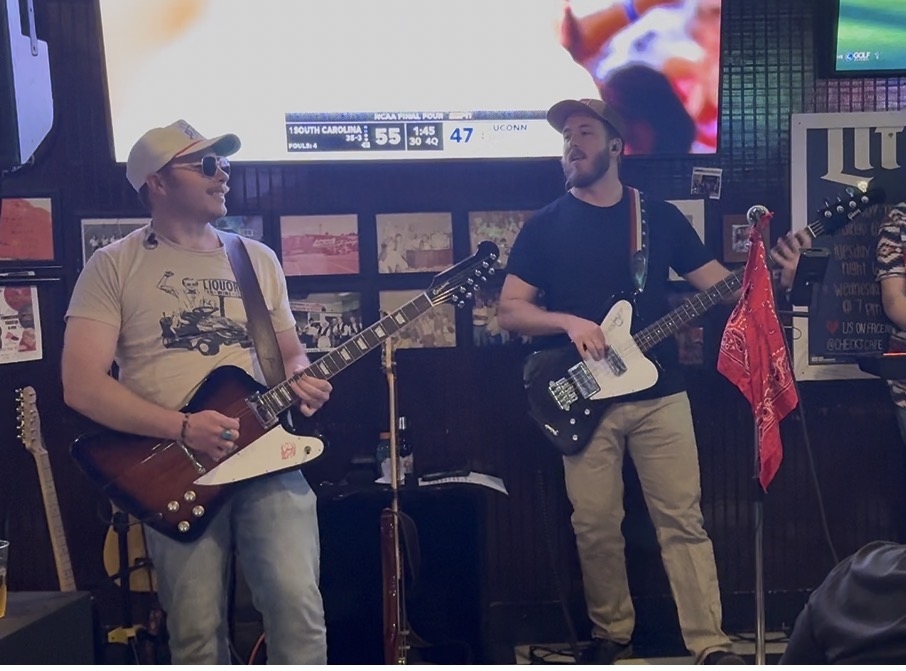
The Thunderbird was ripping last night! I used a P bass for one set, and the whole time I was wishing it was my NR.
Count me in!All,
I'll put together an internal thread for a possible GTG, just want to chat with Chuck first.
Hold tight and Thunderbird on!