• TalkBass has been independent since 1998. Add your voice.
    Create a free account to reply to discussions, view embedded media, and browse with fewer display ads.
    Join freeLog in
    Want zero display ads or expanded classifieds tools? Compare plans.

Tips on learning bass by ear?

Mar 30, 2023
1,449
2,317
I’ve been playing bass for 20 years, but I never really learned by ear. Tabs were always easy to find, and there weren’t any music teachers around where I grew up.

For about three years, I focused mostly on playing guitar and picked up a lot by ear during that time. It helped that guitars are usually up front in the mix, pitches are higher, and, let’s be real, most guitarists stick to just seven or eight chords.

Bass is trickier for me because it tends to get buried in the mix and sits at a lower pitch.

To give you an idea: I'm currently learning Talking Heads's Psycho Killer. I had the A and the G in the intro/verse, but was playing an F# instead of the E (looking back, I should've known since it wasn't in the key). For the chorus, I had the pattern on the F and G right. I had the interval figured for the part on the A, but couldn't find the pitch. I found the C after that, but thought it was the same interval as the A part (C-A rather than C-B). I'll be attacking the bridge later this week.

Any tips on how I could make the process easier? Apps or tools I could be using?

Thanks!
 
  • Like
Reactions: dbsfgyd1
I’ve been playing bass for 20 years, but I never really learned by ear. Tabs were always easy to find, and there weren’t any music teachers around where I grew up.

For about three years, I focused mostly on playing guitar and picked up a lot by ear during that time. It helped that guitars are usually up front in the mix, pitches are higher, and, let’s be real, most guitarists stick to just seven or eight chords.

Bass is trickier for me because it tends to get buried in the mix and sits at a lower pitch.

To give you an idea: I'm currently learning Talking Heads's Psycho Killer. I had the A and the G in the intro/verse, but was playing an F# instead of the E (looking back, I should've known since it wasn't in the key). For the chorus, I had the pattern on the F and G right. I had the interval figured for the part on the A, but couldn't find the pitch. I found the C after that, but thought it was the same interval as the A part (C-A rather than C-B). I'll be attacking the bridge later this week.

Any tips on how I could make the process easier? Apps or tools I could be using?

Thanks!

Have you tried the Cordify app? If you are used to following guitar chord charts, this should help you a lot. It also comes with variable speed for working out tricky passages. You also have almost instant cueing to specific parts of a song to -lay along with until you get it right. It also gives you access to a 500,000 plus library of songs to play along to.
 
I learned to play by ear because it was forced on us in High School by my music teacher when I was playing trombone though I could sight read pretty good as well. I am forever indebted to him for making us in the jazz band to learn this. It easily translated (for me) to playing keys and bass by ear. It all comes down to listening to and learning to hear intervals (and where they land on the bass fretboard).

When I listen to music these days, I am picturing in my mind what intervals the bass player is using and envisioning those fingerings in my head...it's not easy at first but if you stay with it, it will eventually come to you. Also, learn where every note is on the fretboard and learn the circle of fifths and/or fourths cold. The bass is tuned in fourths so when you learn what a fourth interval sounds like, you're halfway there.

Another great way of learning is to plop a CD or any other form of recording into a player and try to play along with it, even if you've never heard the song before...you'll suck at first because you don't know where or when the changes are coming but you'll eventually start to hear certain things that means a change is coming.

And practice, practice, practice and then practice some more.
 
It starts with becoming familiar with the song..
If you've never even heard a song, predicting every chord change, key change, odd bridge,etc.,,, is sometimes doable..but pretty darn tough.
If I've heard a song, especially if I've heard it many times... Ive already learned the changes..in my head.
Even if I've never played it.
The rest of it is familiar patterns, riffs....Or as my old bass teacher would say..
" cheatin" 😉
 
Last edited:
Just listen.

If you can tune your bass by ear from a reference note, and then tune all the strings to each other without using a tuner, you can play by ear. Just listen. Match notes like you do when you're tuning. If they sound off you're playing the wrong note. If they sound in tune, you're playing the right note.

Listen. Do small chunks. Learn a note. Then the next. Then the next. Don't try to learn the next part until you have the part before it down. And listen.

Thinking about which chords are being played will help with narrowing down which notes you're going to play. Writing things down helps commit them to memory. But mostly just a lot of listening, and taking it note-by-note; phrase-by-prhase.
 
And practice, practice, practice and then practice some more

THIS^^^^^First off, why is your bass getting buried in the mix? Too loud band, not enough umph in your equipment? Get in the mix, not under it. Start simple with some unknown 3 cord hacks. Once you know the root, you are started.


Play that song until comfortable. Move on to another 3, same thing. Then move on with something a little more difficult. Maybe a run, simple bridge? You have to master simple to get an idea but, you have to work at it. Oh, while doing this, forget the charts, that would be a crutch for what you are trying to accomplish. Good luck.
 
  • Like
Reactions: dmt
there's really no 'secret' or special technique here other than repeat repeat repeat. You have to put in lots of hours every single day. It's tedious and a bit frustrating but once you reach a certain point it definitely becomes much easier.
 
  • Like
Reactions: bassdude51
It’s a steep learning curve, but if you keep at it and do little bits at a time you’ll get exponentially faster and more fluent as you go. Start with something repetitive where the bass is clearly audible, take a break when you get frustrated, and don’t get hung up on any one note or phrase—like a multiple choice test, sometimes something that happens later on will clarify what came before.

Apps to slow down and/or isolate the bass tracks can be very helpful, but anything that holds your hand too much can, in my opinion, hinder your progression.
 
I tend to still trip up on a minor variation. example .. when a guitar goes to a 7th or an aug. My ear says, .. chord change. When really it depends on the song and to hit the root note of the chord again or simply sustain it over. It doesn't always call for a complimentary (or dissonant) alternative of the chord.
 
It’s very easy to learn to play by ear. Only two simple steps:
  1. Listen to as many songs in your favorite genres as possible
  2. Do this for a few decades
But seriously, you have to learn all the intervals. You can’t be guessing. You have to get to the point where you just know. now, I learned in college, but the technique is the same as what’s out there now. For every interval you have to internalize a song that begins with that interval. So when I was in college 45 years ago, a major second is how happy birthday starts; a minor seventh was the theme from Star Trek, etc. And there has to be a system for learning ascending and descending intervals, plus harmonic intervals (two notes played simultaneously). The college course lasted two years, so it is easily attainable.
 
Last edited:
  • Like
Reactions: bassdude51
Transcribing bass parts from recordings was the only way I knew when I began playing bass 45 years ago.
The more I did it, the easier and faster it became. For more difficult passages, I would play it over and over until I could sing it, then transfer that to the bass. If the goal is simply to become better at learning by ear, then I would forgo slowing tracks, isolating, etc.
 
I learned to play by ear because it was forced on us in High School by my music teacher when I was playing trombone though I could sight read pretty good as well. I am forever indebted to him for making us in the jazz band to learn this. It easily translated (for me) to playing keys and bass by ear. It all comes down to listening to and learning to hear intervals (and where they land on the bass fretboard).

When I listen to music these days, I am picturing in my mind what intervals the bass player is using and envisioning those fingerings in my head...it's not easy at first but if you stay with it, it will eventually come to you. Also, learn where every note is on the fretboard and learn the circle of fifths and/or fourths cold. The bass is tuned in fourths so when you learn what a fourth interval sounds like, you're halfway there.

Another great way of learning is to plop a CD or any other form of recording into a player and try to play along with it, even if you've never heard the song before...you'll suck at first because you don't know where or when the changes are coming but you'll eventually start to hear certain things that means a change is coming.

And practice, practice, practice and then practice some more.
Can't say it any better than this.

When I began to learn to play bass in 1965 (guitar came over a year later) there were no apps or YouTube videos and no books with TAB of popular songs. There were stores that give lessons but they were an hour away from me. So every night I went to my bedroom with my first bass and small 5w guitar amp, put records on my portable stereo, and listened to the bass lines played in the song.

I was able to copy them in the proper key but had nowhere near the knowledge I needed to transpose them to a different key. But what I could do as timmus suggests is to develop a way to memorize the patterns and eventually realize how often they were repeated in different songs. With that little knowledge I was actually playing bass and singing lead vocals six months later. I was that joke about the kid who quits his bass lessons after the second one because he already had a gig.....LOL. But I admit there are far better ways to do it.

Being able to sing on pitch certainly helped since once I could play chords on guitar I was able to work out chord progressions for most rock songs. Knowing that I could even devise bass lines that while not exact where close enough for rock in a 60's rock band. To this day I still play by ear. I can ask the guitarist or keys to play through a progression and pretty much pick it up and devise a bass line to fit with it. Ear training can take you a long way in terms of the skill needed to play with others at jams or in a band. Work on it.
 
Tech-wise you could try the Moises app (for isolating parts). Ear-wise you could work on singing intervals.
I'd second Moises, it's a really amazing practice tool. I wish it would've existed a couple decades ago when I was getting started!

One thing to add: aside from isolating the bass part, it can also be really helpful for your ear to remove the bass and listen to the song again, especially if it's something you've heard a million times. You might be surprised by how different (or just plain empty) some songs sound without bass! After doing that, the bass part will probably jump out at you next time.
 

Tips on learning bass by ear?​


Ha! With YouTube videos, it's hardly necessary.

Otherwise, take dreamadream99 advice......................
It’s very easy to learn to play by ear. Only two simple steps:
  1. Listen to as many songs in your favorite genres as possible
  2. Do this for a few decades
Also..................

Smooth_bass88​

there's really no 'secret' or special technique here other than repeat repeat repeat. You have to put in lots of hours every single day. It's tedious and a bit frustrating but once you reach a certain point it definitely becomes much easier.
 
Last edited:
When i don't hear clearly the bass I use Reaper (DAW). I upload song on a track. Then i add an EQ on this track, and by tweaking it emphasis bass and low mid. And on this track, i can also easily slow down tempo without changing song pitch to transcribe quick or difficult parts.
 
Last edited:
I’ve been playing bass for 20 years, but I never really learned by ear. Tabs were always easy to find, and there weren’t any music teachers around where I grew up.

For about three years, I focused mostly on playing guitar and picked up a lot by ear during that time. It helped that guitars are usually up front in the mix, pitches are higher, and, let’s be real, most guitarists stick to just seven or eight chords.

Bass is trickier for me because it tends to get buried in the mix and sits at a lower pitch.

To give you an idea: I'm currently learning Talking Heads's Psycho Killer. I had the A and the G in the intro/verse, but was playing an F# instead of the E (looking back, I should've known since it wasn't in the key). For the chorus, I had the pattern on the F and G right. I had the interval figured for the part on the A, but couldn't find the pitch. I found the C after that, but thought it was the same interval as the A part (C-A rather than C-B). I'll be attacking the bridge later this week.

Any tips on how I could make the process easier? Apps or tools I could be using?

Thanks!
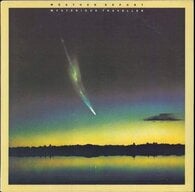
Learn these tunes by ear, in this order, and you'll improve.
 

Attachments

  • Like
Reactions: Brandon Shea
I’m currently working through Eric Claptons Layla in my head … have the main verse progression basically down, but it’s a very busy mix and I’m slowly working through that. I’ve only ever used feel to learn a tune having the root key helps.