
Enjoy the benefits of a premium membership!
Upgrade Account
-
TalkBass has been independent since 1998. Add your voice.
Create a free account to reply to discussions, view embedded media, and browse with fewer display ads.
Join free Log in
Want zero display ads or expanded classifieds tools? Compare plans.
You are using an out of date browser. It may not display this or other websites correctly.
You should upgrade or use an alternative browser.
You should upgrade or use an alternative browser.
To be worn or not to be worn
- Thread starter Lowendchamp
- Start date
- Status
- Not open for further replies.
More options
Who Replied?


It does seem like Groundhog Day every time this comes up. It's a personal preference thing. And either you like it or you don't.
I was on the fence about the concept when Fender originally starting rolling out the Roadworn series. When I played a RW Jazz bass I really liked it. And I actually liked that it was already a bit nicked up. For me it eliminated some of the stress that I suffered when some of my prized instruments got dinged. I had a Fender 5 string that got a big chip in the finish and it bothered me so much that I wound up selling that bass. Another time I was at a jam and someone slammed something into my Zon 6 string. I nearly flipped out at the guy over that because he had been so careless. With this option that was out of the mix - FOR ME. I've got a Roadworn Jazz bass that I love and I don't have to worry about the finish. I've also put together a couple of project basses with nitro finishes, and they're already starting to wear naturally because of my playing. And I have no qualms about it.
As for distressing in general? It's been an element in design for some time now and it's not limited to musical instruments. You can find it in clothing, furniture and other items. It's a style. Sometimes that translates to comfort, or just a personal design preference. The key issue being preference. We have choices here.
Some people talk about "authenticity" or "mojo" that's associated with an instrument whose finish has naturally worn over time. Those are concepts of our own making and we cannot quantify that in any measurable way. Probably the only measurable factors in naturally worn instruments that we can discern are the actual dimensions of the instrument, the amount of wear on the finish, the resonance of the wood, and how does the instrument sound. There's been a fair amount of discussion on the resonance issue - does it change with time as the wood dries out? The finish can impact how the wood dries out - the belief being that a nitro finish allows the wood to dry out more than a poly finish. Can we measure that? It's almost impossible to study that since we can't really get the data to study an instrument that might have been built in the 1950's and compare it to the modern day.
My thoughts on the nature of the conversation? I think we can probably all benefit from focusing on where we all are as individuals. Feel free to critique and discuss at your leisure. I think how we approach this conversation is more revealing about us by what we say and how we say it, than it is about this particular topic.
I was on the fence about the concept when Fender originally starting rolling out the Roadworn series. When I played a RW Jazz bass I really liked it. And I actually liked that it was already a bit nicked up. For me it eliminated some of the stress that I suffered when some of my prized instruments got dinged. I had a Fender 5 string that got a big chip in the finish and it bothered me so much that I wound up selling that bass. Another time I was at a jam and someone slammed something into my Zon 6 string. I nearly flipped out at the guy over that because he had been so careless. With this option that was out of the mix - FOR ME. I've got a Roadworn Jazz bass that I love and I don't have to worry about the finish. I've also put together a couple of project basses with nitro finishes, and they're already starting to wear naturally because of my playing. And I have no qualms about it.
As for distressing in general? It's been an element in design for some time now and it's not limited to musical instruments. You can find it in clothing, furniture and other items. It's a style. Sometimes that translates to comfort, or just a personal design preference. The key issue being preference. We have choices here.
Some people talk about "authenticity" or "mojo" that's associated with an instrument whose finish has naturally worn over time. Those are concepts of our own making and we cannot quantify that in any measurable way. Probably the only measurable factors in naturally worn instruments that we can discern are the actual dimensions of the instrument, the amount of wear on the finish, the resonance of the wood, and how does the instrument sound. There's been a fair amount of discussion on the resonance issue - does it change with time as the wood dries out? The finish can impact how the wood dries out - the belief being that a nitro finish allows the wood to dry out more than a poly finish. Can we measure that? It's almost impossible to study that since we can't really get the data to study an instrument that might have been built in the 1950's and compare it to the modern day.
My thoughts on the nature of the conversation? I think we can probably all benefit from focusing on where we all are as individuals. Feel free to critique and discuss at your leisure. I think how we approach this conversation is more revealing about us by what we say and how we say it, than it is about this particular topic.

But is that because it’s been artificially distressed?My Fender Roadworn Jazz kicks ass. It’s one of the best playing basses I’ve ever owned.
Or are you a dedicated follower of fashion?

But is that because it’s been artificially distressed?
Or are you a dedicated follower of fashion?
No, it’s because it’s a solid bass with great fretwork that I easily setup to my liking with little effort. Do you know what playability means?
I don't remember the brand but in the 80s I remember a pair of distressed jeans that attached along with the price tag was the shotgun shell they used to shoot the jeans with bird shot. So I guess some people like that sort of thing, and as long as enough people do, companies will provide products that fill that need. Personally I wish more basses were finished in nitro instead of poly. Poly is more durable but I am always disappointed when I get a chip or scratch in poly, not as much with nitro.

I felt the same as you until I played a RW Jazz, and then I was a believer and got over the RW finish in a hurry. The RW Jazz, imho, is probably the best MIM bass Fender ever made, if not one of the best passive, Fender Jazz basses ever made. It plays almost identical to my MIA, '95 Fender Jazz, weight and balance, with just a slightly darker tone. The " broken in " feel is no different than playing a vintage Jazz from that era ( late '60's ), and is very comfortable on my hands. I bought mine used, for around $700, and its the best $700 I ever spent on a bass, next to my '95 Jazz.So I can't help but notice the past decade that Fender specifically tends to push these signature series instruments that get a "roadworn" finish and charge a premium for them, even going so far as to charge more for it in a custom or master build. So as far as I can tell that would be cool for collectors that want art, especially when the time is taken to replicate the original instruments wear for the signatures. What about the players? I want to put wear on that instrument myself through time, you know? I just feel like the roadworn finish is the same as getting new jeans with the knees already blown out, a rip off. That is just my opinion maybe some people can jump in there and tell me why it's cool or assure me that it doesn't effect the sound or prematurely end a bass' life.

I want to put wear on that instrument myself through time, you know?
Yes, I do.
Hard to believe it's been almost 13 years and congress still refuses to consider passing the JACO Bill that would enable free speech in bass forums across the country.

We all have our neuroses. OK, maybe I just speak for myself. I'll be damned if I'm going to pay to have a manufacturer deface my instrument. I like stuff pristine. I take good care of my belongings, and if I (you can't tell, but I is capitalized) put a scratch or dent in it, I can live with it 'cause I did it. YOU are not doing it.  If you do, I'm certainly not paying you.
If you do, I'm certainly not paying you.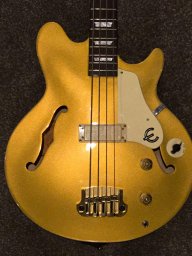
Roadworn is not my thing, but I couldn’t care less if anyone else wants to pay up for it. It probably suits builders just fine because if they have a bass that has a finish flaw after painting, why not just relic over it and no one would be the wiser?
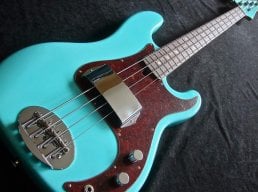
I'm selling my "roadworn" car if anyone's interested.
faux-tina paint jobs - Page 11 - The 1947 - Present Chevrolet & GMC Truck Message Board Network


I have nothing against the idea of artificially relic'ed instruments but would never buy one myself. It just looks tacky (to me) and is in my short list of absolute deal-breakers, which also includes gold hardware and tort pickguard.

Maybe for me it's psychological? I'll buy a used bass that's beat up if it plays and sounds great, but I don't go out of my way to look for distressed instruments. There's only three I've ever owned that were in relic territory when I got them.
If you look at Fender CS prices, a Relic is more expensive than a Closet Classic which is more expensive than a NOS. You are paying for the extra labor it takes to do the relic job. When buying a real vintage Fender, the less distressed the finish the more you pay
Relic jobs on low cost basses (I've seen a few imports in the $300 range) look fake and the feel that some people expect isn't there. Even the Fender Road Worns look and feel fake to me.
If you look at Fender CS prices, a Relic is more expensive than a Closet Classic which is more expensive than a NOS. You are paying for the extra labor it takes to do the relic job. When buying a real vintage Fender, the less distressed the finish the more you pay
Relic jobs on low cost basses (I've seen a few imports in the $300 range) look fake and the feel that some people expect isn't there. Even the Fender Road Worns look and feel fake to me.
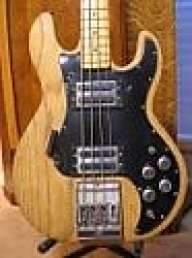
legit '68
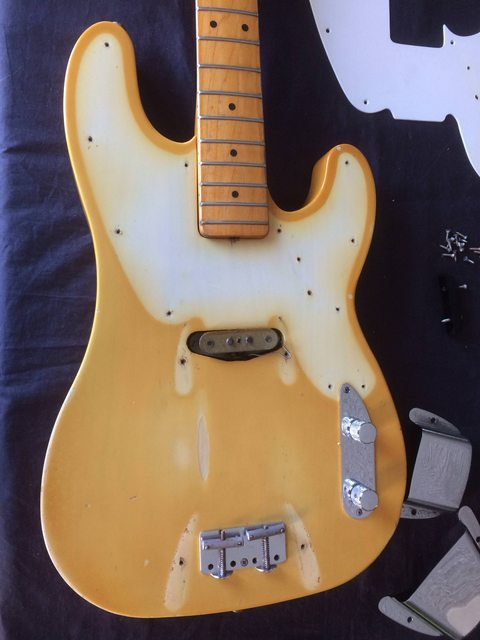
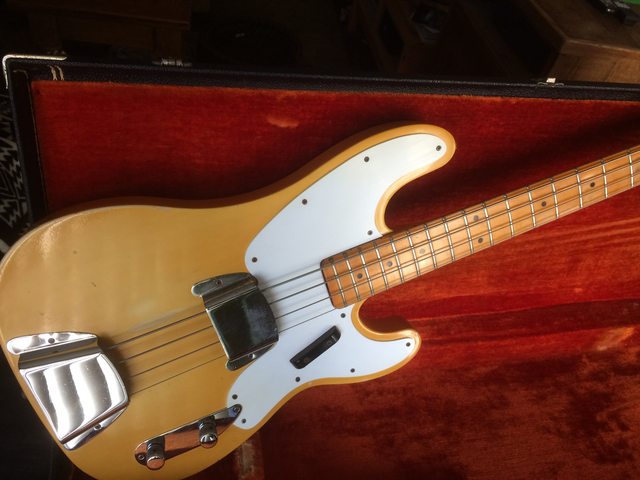
legit '72
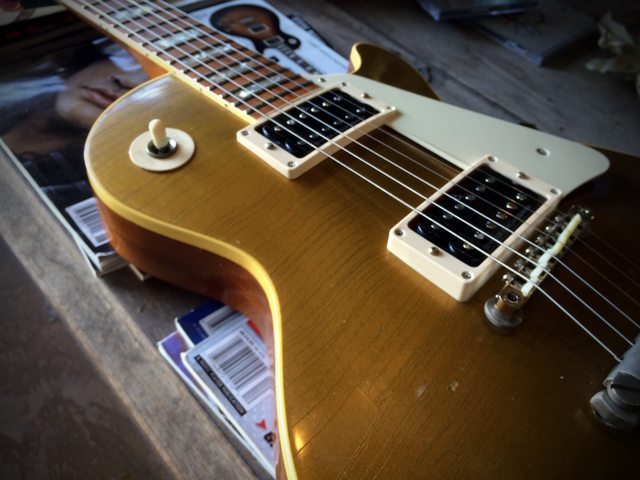
that yes someone hit with a hammer
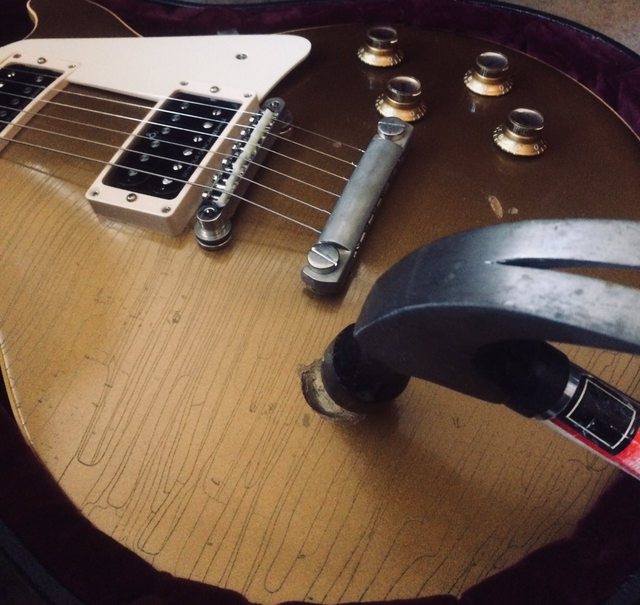
Relic Pittman , r.i.p. Paul
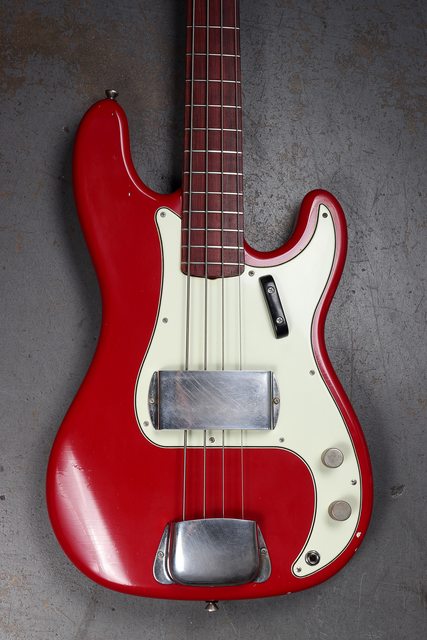
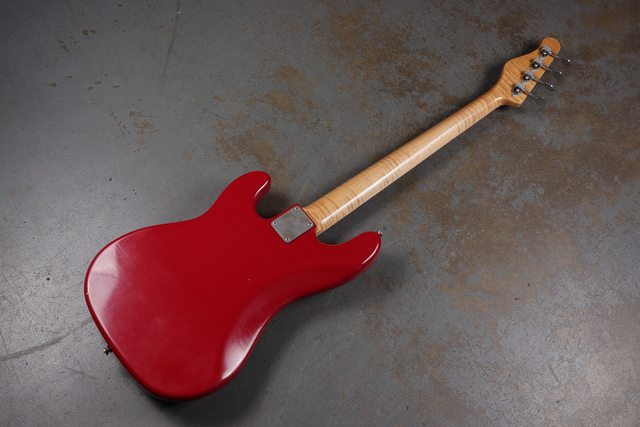
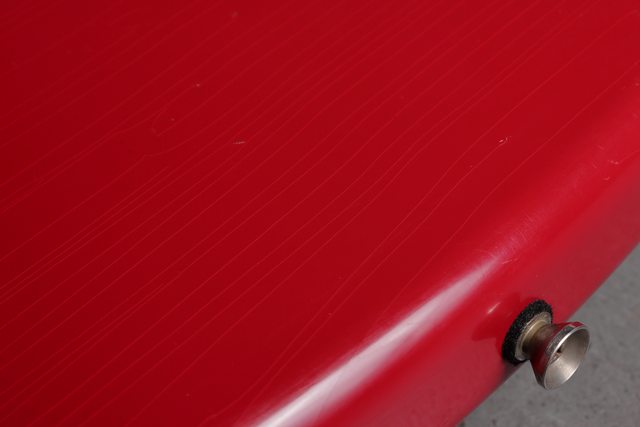
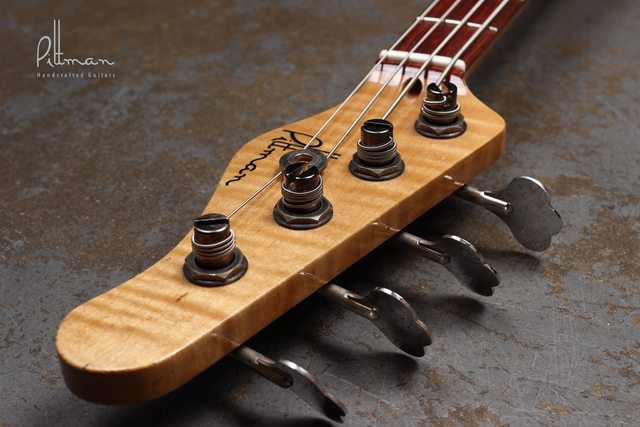
another Pittman
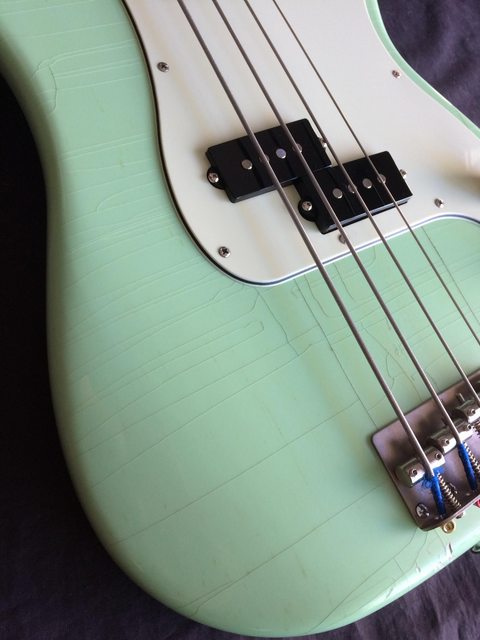
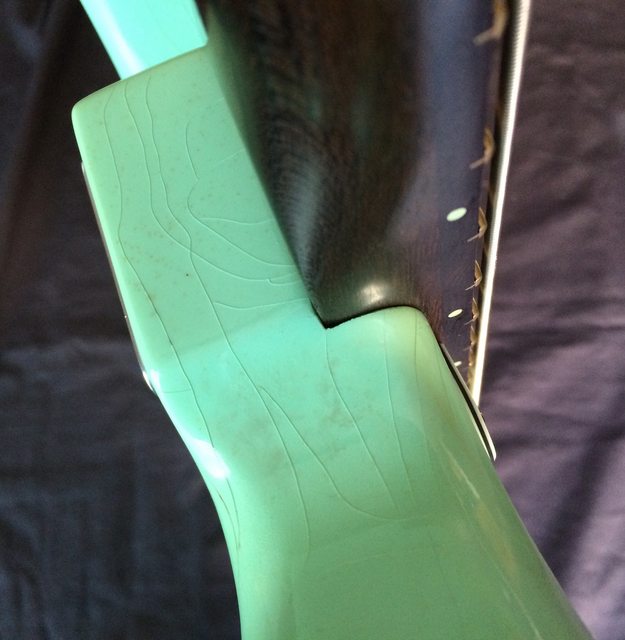
Roscoe classic
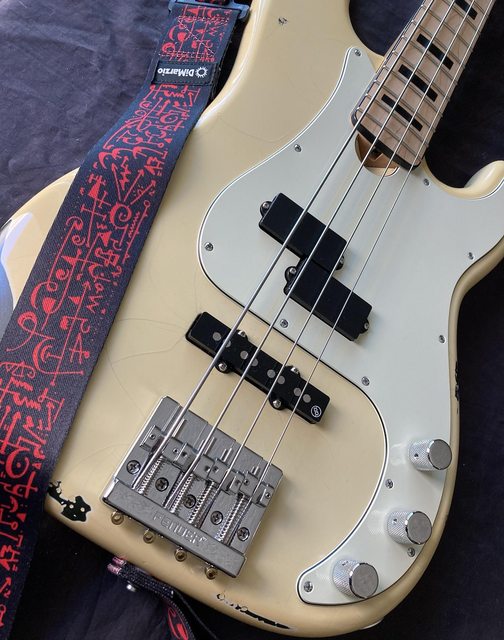
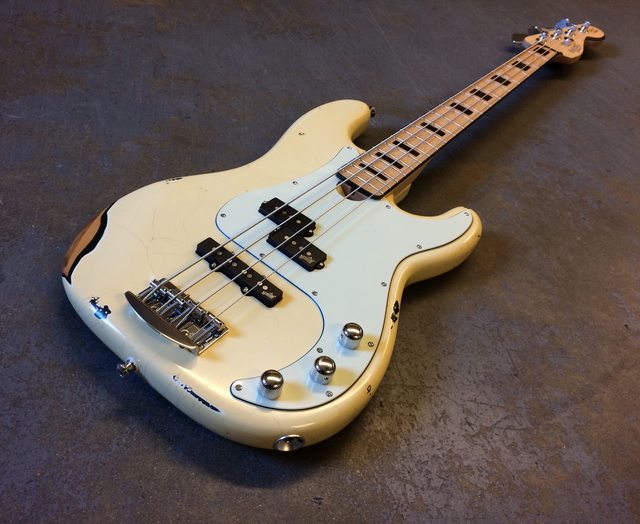
legit '72
that yes someone hit with a hammer
Relic Pittman , r.i.p. Paul
another Pittman
Roscoe classic

I do not prefer relic finishes but my Road Worn Precision is the best bass out of the many Fenders I've owned, numbering many fine pre-CBS examples among them.


One of my favorite moments was a few years ago, when I took my Precision, which I bought brand new in 1978, in for a repair, and the guy at the counter (who was far younger than the bass) asked me if it was a relic’ed model. I told him that I’m the relic!

Last edited:
- Status
- Not open for further replies.


