
People will do all kinds of things to chase a certain sound. IME you can 99% of that vintage fender sound by pulling a brand new Fender off the rack, and playing with your EQ accordingly.....but were in DB so I'll shut my mouth now.

TalkBass has been independent since 1998. Add your voice.
Create a free account to reply to discussions, view embedded media, and browse with fewer display ads.
Join free Log in
Want zero display ads or expanded classifieds tools? Compare plans.

I'd call the newspaper.The meds I take say I should call the doctor if that happens.
The meds I take say I should call the doctor if that happens.

as a long-time member of the acoustic guitar forum, i'm not only aware of tonerite, but also of how controversial it is among acoustic players.
the thing is this - even if they work, and i'm skeptical, why not buy a guitar or bass you like the tone of NOW? that way you don't have to worry about whether aging it by putting it in front of a loud speaker, vibrating it or using a tonerite works. i'm actually not always a fan of the vintage stuff at hollywood guitar center and other local stores. i find newer acoustics can sound fan-freaking-tastic, where some old guitars sound more worn out to me. but for those who want a vintage or broken-in tone, why not buy used and get the real thing?
btw, a few years ago i bought a custom acoustic made for me by the luthier. when it arrived, i found the sound very tight and didn't care for it. i put it up for commission at a local high end guitar store, but within a few weeks the finish fully dried and it sounded like a whole nother guitar. this happened without a tonerite, and is the only time i played a guitar that was too new to sound its best, but it wasn't because of the wood.
I have noticed sometimes that when starting a session I have trouble being heard without pulling too hard, but after an hour or so it seems like I'm getting a lot bigger sound with less effort.
I do NOT attribute this to the instrument "waking up". Rather, I believe it's due to my body and reflexes getting properly aligned with the response of the instrument. Despite the known variableness of the big wooden box, I think I am still way more variable than it is.
I don't know if this thing is horse hockey or not. I hear guys talk about basses opening up over time, however how often do we really hear our own instrument in it's acoustic glory? For me I rarely hear it. There are occasions when other people in the band are fiddling on it, but they aren't exactly bass players. My bass is a little over a year old, and it's had the bah-jesus played out of it since I picked it up.
So does it sound any different than the day I picked it up?.....I have no idea. I can tell you that I notice a positive audible difference in it after practicing for an hour or so. I think that's typical with gut strings though. They seem to really come to you after they warm up.
I think it would be really cool if someone did an actual experiment with one of these do-hickeys in a controlled environment (same bass, same mics, same room, etc.) over an extended period of time. It wouldn't be difficulty, only time consuming really.

Good point here. Otherwise, how can I explain my carbon fiber cello sounding better after a good run of scales to warmup followed by some lyrical passages. As many years went by, and I steadily improved as a player, the initial sound out of my double bass and wood and cf cellos got better. Seems it is mainly me “opening up” more quickly and maybe not the fiddles as much. And that is a good thing since I rarely get to warm up much before starting a gig. No Green Room for You!I have noticed sometimes that when starting a session I have trouble being heard without pulling too hard, but after an hour or so it seems like I'm getting a lot bigger sound with less effort.
I do NOT attribute this to the instrument "waking up". Rather, I believe it's due to my body and reflexes getting properly aligned with the response of the instrument. Despite the known variableness of the big wooden box, I think I am still way more variable than it is.

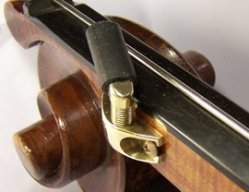
 . I like the sound of my bass and didn't expect some improvement, but I thought it wouldn't hurt if the wood is beeing vibrated regularly. In the meantime I play a lot, so it's sleeping in a drawer
  if someone is interested, I'll put it low-priced in the classified section, but it's the european version voltage. PM please.
I have clamped a cheap $20 aquarium bubbler up on a bass bridge for several weeks for the same effect. It was noticeably improved, but it’s the kind of thing you have to try for yourself.
Good point here. Otherwise, how can I explain my carbon fiber cello sounding better after a good run of scales to warmup followed by some lyrical passages. As many years went by, and I steadily improved as a player, the initial sound out of my double bass and wood and cf cellos got better. Seems it is mainly me “opening up” more quickly and maybe not the fiddles as much. And that is a good thing since I rarely get to warm up much before starting a gig. No Green Room for You!
If we are in tune with other instruments, the bass sounds "opened up". Being in tune is a great way to open up the sound.


