• TalkBass has been independent since 1998. Add your voice.
    Create a free account to reply to discussions, view embedded media, and browse with fewer display ads.
    Join freeLog in
    Want zero display ads or expanded classifieds tools? Compare plans.

Tru Oil on a fretless neck

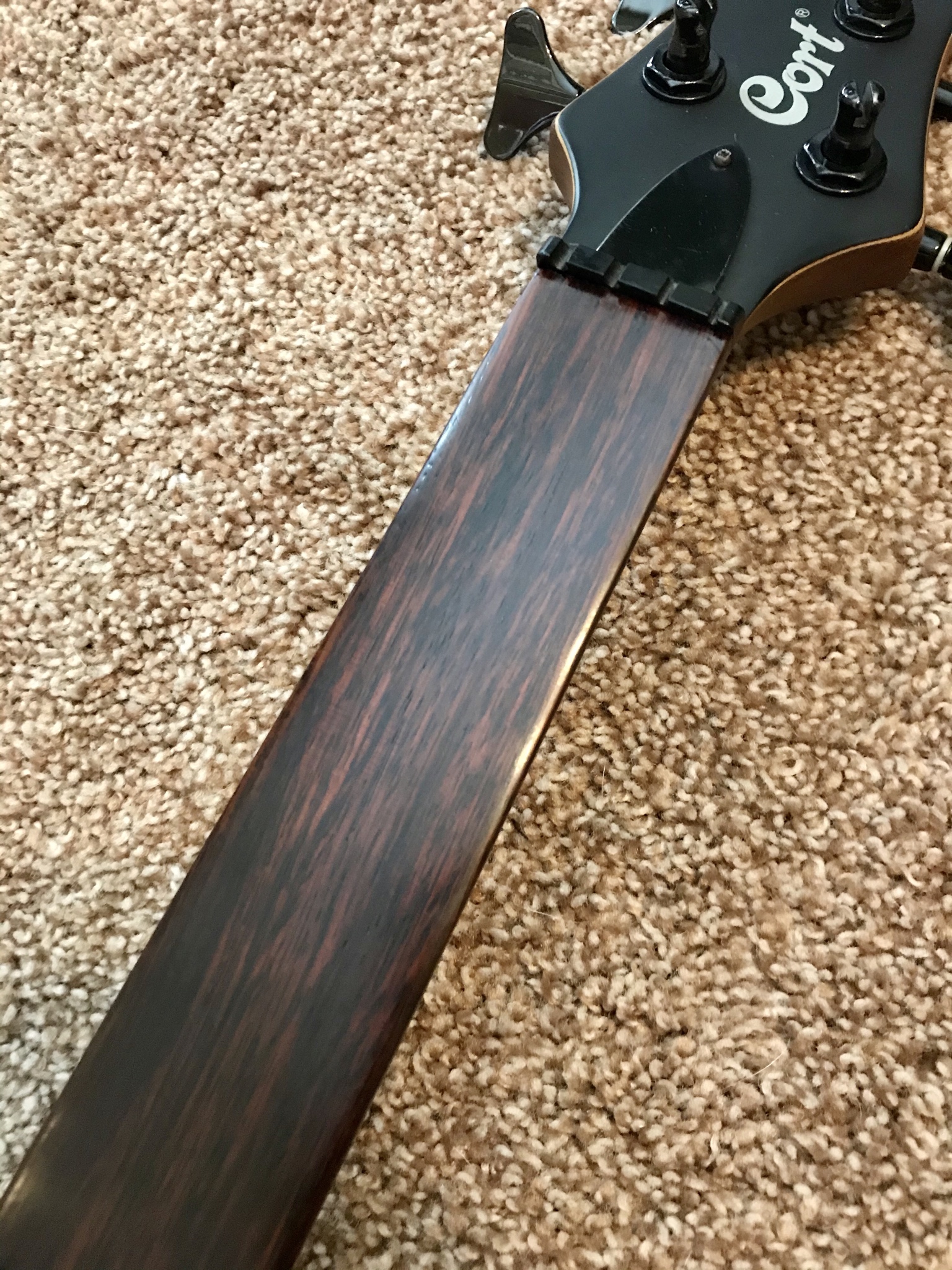
Hi everyone, was hoping someone could have some insight on this. I'm receiving a fretless neck in the coming months from a Warmoth build. The fingerboard is black ebony. I know ebony is a pretty hard wood and is already more resistant to string wear than other woods, but I plan on using roundwound strings and I want to make sure I can protect my fingerboard as best I can. I'm not skilled enough to mess around with pouring boat epoxy down my neck, so I thought Tru-Oil would be a safer route while still being able to enhance fretboard protection.

I'd like from words of advice/direction from anyone on talkbass on how to safely apply the Tru-Oil to my fretboard, and how to get the best results out of the process.
My neck will not be attached to the body so there will be no electronics in harms way.

I do not care If the feel of the fretboard changes or stays the same, I'm just looking to add some extra protection from string wear.

All input and advice is welcomed and appreciated! :)
 
I don't think Tru-Oil will provide much protection for that fingerboard. Have you considered using superglue instead (just on the board, Tru-Oil is fine on the back and sides). I've read good things about superglue (other than the fumes while it's curing).
 
  • Like
Reactions: RSBBass
Tru-Oil will wear off from the string contact within the first two or three times you use the bass. It's not hard like epoxy or CA. I have lightly resurfaced my ebony fretless once in 30 years. No epoxy, no CA, no oil of any kind.

You are likely to get worried by marks left by the roundwound strings. But surface marks are not serious wear and nothing to be concerned about.
 
Like the others, I specifically do not recommend Tru-Oil on the surface of an ebony fingerboard.

I recommend one or two wiped on coats of Stew-Mac's Fingerboard Oil. This is a thin (low viscosity) hardening oil mix made specifically for this purpose. It sinks down into the pores of the ebony and hardens, sealing it up against moisture. Hardly any remains on the surface when you wipe it off. It isn't a hard clear coating; it's for long term protection of the wood. I've been using it for 25+ years on every bass I build.
 
Tru-Oil will wear off from the string contact within the first two or three times you use the bass. It's not hard like epoxy or CA. I have lightly resurfaced my ebony fretless once in 30 years. No epoxy, no CA, no oil of any kind.

You are likely to get worried by marks left by the roundwound strings. But surface marks are not serious wear and nothing to be concerned about.
You're probably right. But I finished the rosewood fingerboard on my fretless with Tru-oil anyway just to see how it would do. While there are now some marks on the fingerboard after playing roundwounds for several months, it's no worse than if it didn't have Tru-oil on it. If it ever becomes an issue, it can easily be sanded back and refinished with something else. This has about 12 thin coats on it:
v3s3v4I.jpg

Despite this, I'd take @Turnaround's and @Bruce Johnson's advice and either leave it alone or try Stew-Mac's Fingerboard Oil.
 
  • Like
Reactions: roccobass
Really?? You use Feed 'N Wax on an ebony fingerboard? I do not recommend that. That's asking for a sticky, smelly mess. And I don't recommend Tung Oil, particularly Pure Tung Oil, for the same reasons I don't recommend Tru-Oil.
No.The macassar ebony fretless was sold off a while back.
 
I've not used this, but perhaps check out HG Thor? HG Thor Epoxy Fretless

With that said, my main bass is fretless, with a beautiful unlined ebony fingerboard, and I have played roundwounds on it without much noticable wear. The ebony, at least on my bass, seems pretty tough. For the last few years though I've been using TI Jazz flats, so I don't have recent data/experience.
 
  • Like
Reactions: JRA
I've not used this, but perhaps check out HG Thor? HG Thor Epoxy Fretless

With that said, my main bass is fretless, with a beautiful unlined ebony fingerboard, and I have played roundwounds on it without much noticable wear. The ebony, at least on my bass, seems pretty tough. For the last few years though I've been using TI Jazz flats, so I don't have recent data/experience.
Unfortunately there is a four year wait.
It's a one man business.
 
You could just play it to death and accept it will wear- that is what we do with frets. If it gets to a place it is “unplayable” have the board planed/dressed. If you plane it so many times there is no more ebony, have a new board put on the neck.

This is the process classical instruments go through for hundreds of years. Personally I am yet to need a new fretboard, been through plane/dressed many times.
 
...but I plan on using roundwound strings and I want to make sure I can protect my fingerboard as best I can.
0000.jpg

You are likely to get worried by marks left by the roundwound strings. But surface marks are not serious wear and nothing to be concerned about.

per the OP: i'd play the untreated ebony board first until i had a 'handle' on the neck (do i like the profile/feel, do any edges need to be rolled, how is the nut, yada yada?). assuming all is good --- then make a decision about whether or not you need to coat an ebony board. part of the charm of ebony is that it's a wood that doesn't need a coating! ;)

FWIW: i only play fretless, i only use rounds. IME:
- all string types leave string marks.
- all fingerboard coatings show string marks.
- all uncoated woods get string marks, too, of course.
- it's not a big deal because it's expected.
- players like to use rounds because of the sound/feel: to them, that's more important than fret wear, board wear.
- the whole idea of using rounds on a fretless bothers fretless newbies.
- experienced fretless/rounds players worry less, play more.

if you want your fingerboard to last for a long(er) time = study some fretless techniques, use a slightly lighter touch, etc., but you can't expect a fretless fingerboard to not get marks if you play it! :D ;)

TBH, i'd be more concerned about intonation than string marks, but good luck with both! :thumbsup:
 
Last edited: