Well, I'm about halfway through sealing my new Warmoth '72 P bass body with Tru-Oil, and since I couldn't find very many online resources for procedures that weren't for gunstocks or for 6-string guitars, I thought I'd start a thread for everyone who is thinking of using Tru-Oil to seal their natural grain instead of finishing.
I'm in no way a pro, this is actually my first job with the stuff, but if everyone who has used it could contribute to the thread, we might end up with a handy-dandy user's guide for BASSISTS only.
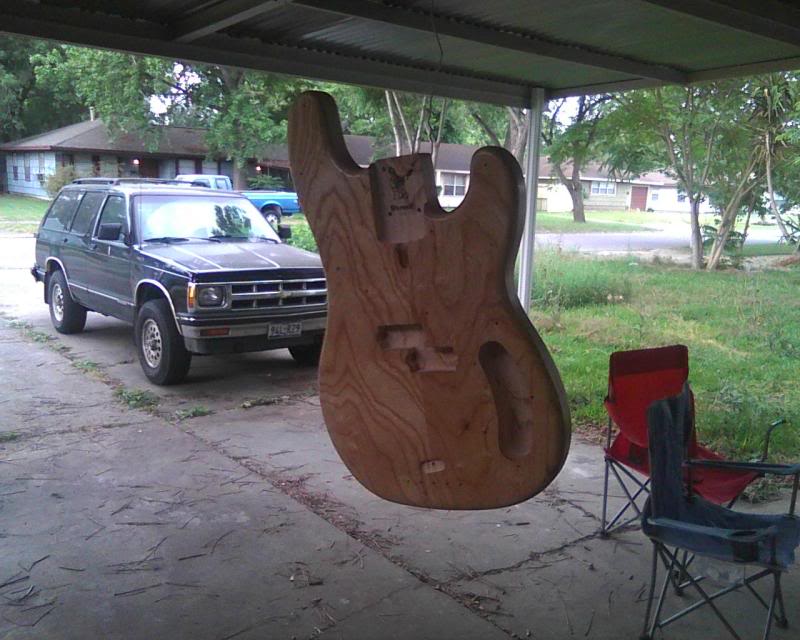
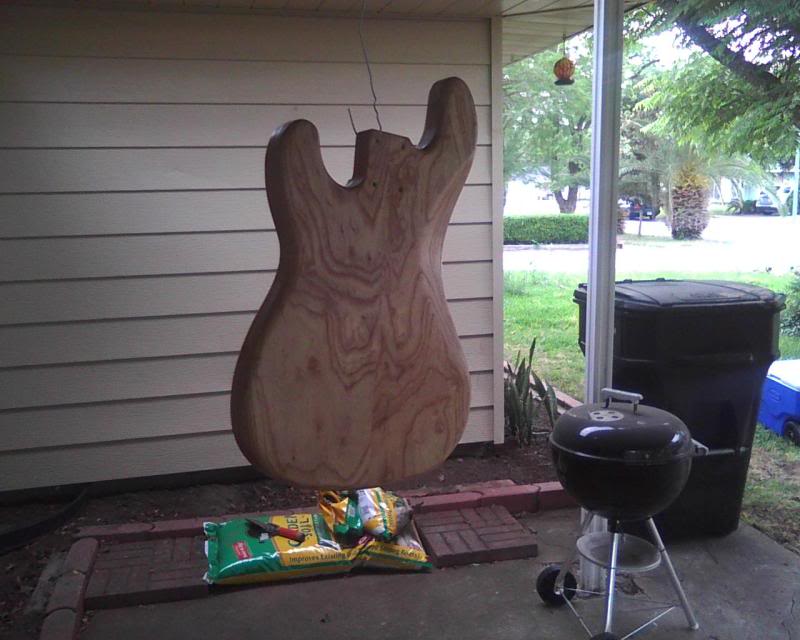
Here's my body, hanging out on my front porch, drying its 5th coat-
And here are a few basic tips for using Tru-Oil-
1. DO IT OUTSIDE!! I can't stress this enough. This stuff stinks something fierce and lingers like a mother-in-law. Your wife/parents/pets will not appreciate your craft as much as you do.
2. Invest in a box of latex gloves. Although it's not particularily harmful to your skin, it's sticky and hardens under water, so it can be annoying.
3. I found the best applicator was my old shoe-polish rag that I haven't used since I was in the army. I started with cotton swabs and moved to paper towels but found it wasteful. I also used an ordinary absorbent wash cloth, but when I went to do another coat the next day it had dried and hardened and the application got streaky and inconsistent.
4. I was using Gojo to clean my hands afterward, but I ran out and didn't feel like a trip to the hardware store, so I tried ordinary dish detergent and it worked like a charm!
5. 00 Steel wool is suggested to use for buffing between coats, but I found that the 220-240 grit sandpaper was a cheaper and easier to use alternative.
That's all I've got for now, let's get some more tips if you have them!
I'm in no way a pro, this is actually my first job with the stuff, but if everyone who has used it could contribute to the thread, we might end up with a handy-dandy user's guide for BASSISTS only.
Here's my body, hanging out on my front porch, drying its 5th coat-
And here are a few basic tips for using Tru-Oil-
1. DO IT OUTSIDE!! I can't stress this enough. This stuff stinks something fierce and lingers like a mother-in-law. Your wife/parents/pets will not appreciate your craft as much as you do.
2. Invest in a box of latex gloves. Although it's not particularily harmful to your skin, it's sticky and hardens under water, so it can be annoying.
3. I found the best applicator was my old shoe-polish rag that I haven't used since I was in the army. I started with cotton swabs and moved to paper towels but found it wasteful. I also used an ordinary absorbent wash cloth, but when I went to do another coat the next day it had dried and hardened and the application got streaky and inconsistent.
4. I was using Gojo to clean my hands afterward, but I ran out and didn't feel like a trip to the hardware store, so I tried ordinary dish detergent and it worked like a charm!
5. 00 Steel wool is suggested to use for buffing between coats, but I found that the 220-240 grit sandpaper was a cheaper and easier to use alternative.
That's all I've got for now, let's get some more tips if you have them!