

Enjoy the benefits of a premium membership!
Upgrade Account
-
TalkBass has been independent since 1998. Add your voice.
Create a free account to reply to discussions, view embedded media, and browse with fewer display ads.
Join free Log in
Want zero display ads or expanded classifieds tools? Compare plans.
You are using an out of date browser. It may not display this or other websites correctly.
You should upgrade or use an alternative browser.
You should upgrade or use an alternative browser.
Truss Rod Adjustments Suck
- Thread starter Jack Deth
- Start date
More options
Who Replied?

Gee, I feel left out... Out of 23 basses (and 6 guitars, and an old banjo), I don't have a single one with a truss rod that's all that hard to adjust. Yeah, some are a little easier than others, but none are anywhere close to being a PITA. But, I'm an old fart, and I've been doing set ups for a long time. And, I've never been an impatient, "I want it NOW" kind of guy, either. My instruments and their truss rods?
* The Ricks. I have 3; a 4001, a 4003, and a 330 guitar - all with dual truss rods, accessed at the headstock. Lots of Rick's have access problems (not enough clearance under the nuts, usually); my 3 don't. I adjust them the way Rick says you're supposed to; quick, easy, never had a problem. And I only have to do it once every decade or so...
* "Normal" heel access. Here's a little secret; you don't have to take the neck off - even if there isn't a handy access hole. When I have to mess with these truss rod nuts, I do it this way: Slacken off the strings quite a lot; loosen the outboard screws a few turns; loosen the inboard screws a lot; tilt the neck up, and adjust the nut. Then, reverse the process; tune back to pitch, and check the neck relief. Been doing it this way for 30+ years, now. Easy, surprisingly quick (with a little practice), and it works fine.
* Other heel access. My Alembic Epic's 2 truss rod nuts live under a little cover that, frankly, isn't the easiest thing to remove. The strings have to be pretty slack to get it off, but the nuts are easy-peasy to adjust. But, it's an Alembic; the tone is more than worth it... The capstan wheel on my EBMM Stingray 4HH Special? Yeah, that thing is the cat's ass...
* "Normal" headstock access. Most of my instruments fall into this category. Maybe I'm lucky, but the only one that's ever been a problem was my '13 Gibson Thunderbird. But, after I cleaned the paint/lacquer globs and lumps out of the cavity/off the nut? Not a problem ever again... As for the rest? I just make sure I'm using the right hex key, and that there's nothing interfering with the nut; if not - no problem...
* The Kramer "Lumies". I have 3 of them. They're the easiest ones to deal with - by far. They have aluminum "T" cross-section necks - and no truss rods to adjust. Their only possible problem is, that if the neck should somehow ever get out of whack? Better hope you have an hydraulic press...
Out of 23 basses (and 6 guitars, and an old banjo), I don't have a single one with a truss rod that's all that hard to adjust. Yeah, some are a little easier than others, but none are anywhere close to being a PITA. But, I'm an old fart, and I've been doing set ups for a long time. And, I've never been an impatient, "I want it NOW" kind of guy, either. My instruments and their truss rods?* The Ricks. I have 3; a 4001, a 4003, and a 330 guitar - all with dual truss rods, accessed at the headstock. Lots of Rick's have access problems (not enough clearance under the nuts, usually); my 3 don't. I adjust them the way Rick says you're supposed to; quick, easy, never had a problem. And I only have to do it once every decade or so...
* "Normal" heel access. Here's a little secret; you don't have to take the neck off - even if there isn't a handy access hole. When I have to mess with these truss rod nuts, I do it this way: Slacken off the strings quite a lot; loosen the outboard screws a few turns; loosen the inboard screws a lot; tilt the neck up, and adjust the nut. Then, reverse the process; tune back to pitch, and check the neck relief. Been doing it this way for 30+ years, now. Easy, surprisingly quick (with a little practice), and it works fine.
* Other heel access. My Alembic Epic's 2 truss rod nuts live under a little cover that, frankly, isn't the easiest thing to remove. The strings have to be pretty slack to get it off, but the nuts are easy-peasy to adjust. But, it's an Alembic; the tone is more than worth it... The capstan wheel on my EBMM Stingray 4HH Special? Yeah, that thing is the cat's ass...
* "Normal" headstock access. Most of my instruments fall into this category. Maybe I'm lucky, but the only one that's ever been a problem was my '13 Gibson Thunderbird. But, after I cleaned the paint/lacquer globs and lumps out of the cavity/off the nut? Not a problem ever again... As for the rest? I just make sure I'm using the right hex key, and that there's nothing interfering with the nut; if not - no problem...
* The Kramer "Lumies". I have 3 of them. They're the easiest ones to deal with - by far. They have aluminum "T" cross-section necks - and no truss rods to adjust. Their only possible problem is, that if the neck should somehow ever get out of whack? Better hope you have an hydraulic press...
Last edited:

Personally I don't really care where, or which type of adjuster is on a bass...as long as it works the way it's supposed to work. And that's the rub...they don't always work right.
Here's a little angst saver that Ibanez uses...no more fiddly little screws to mess with. Clever, works great too.
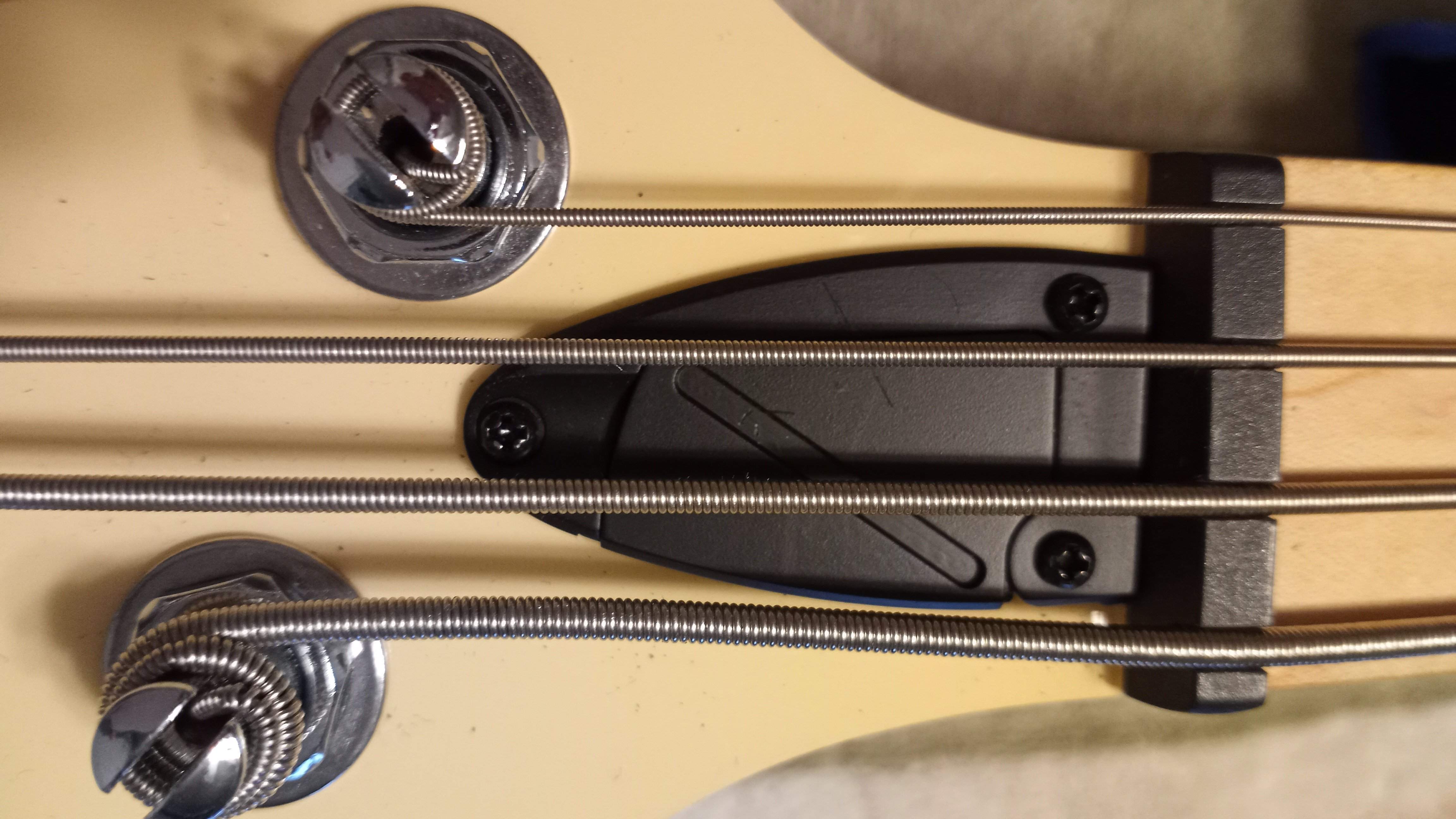
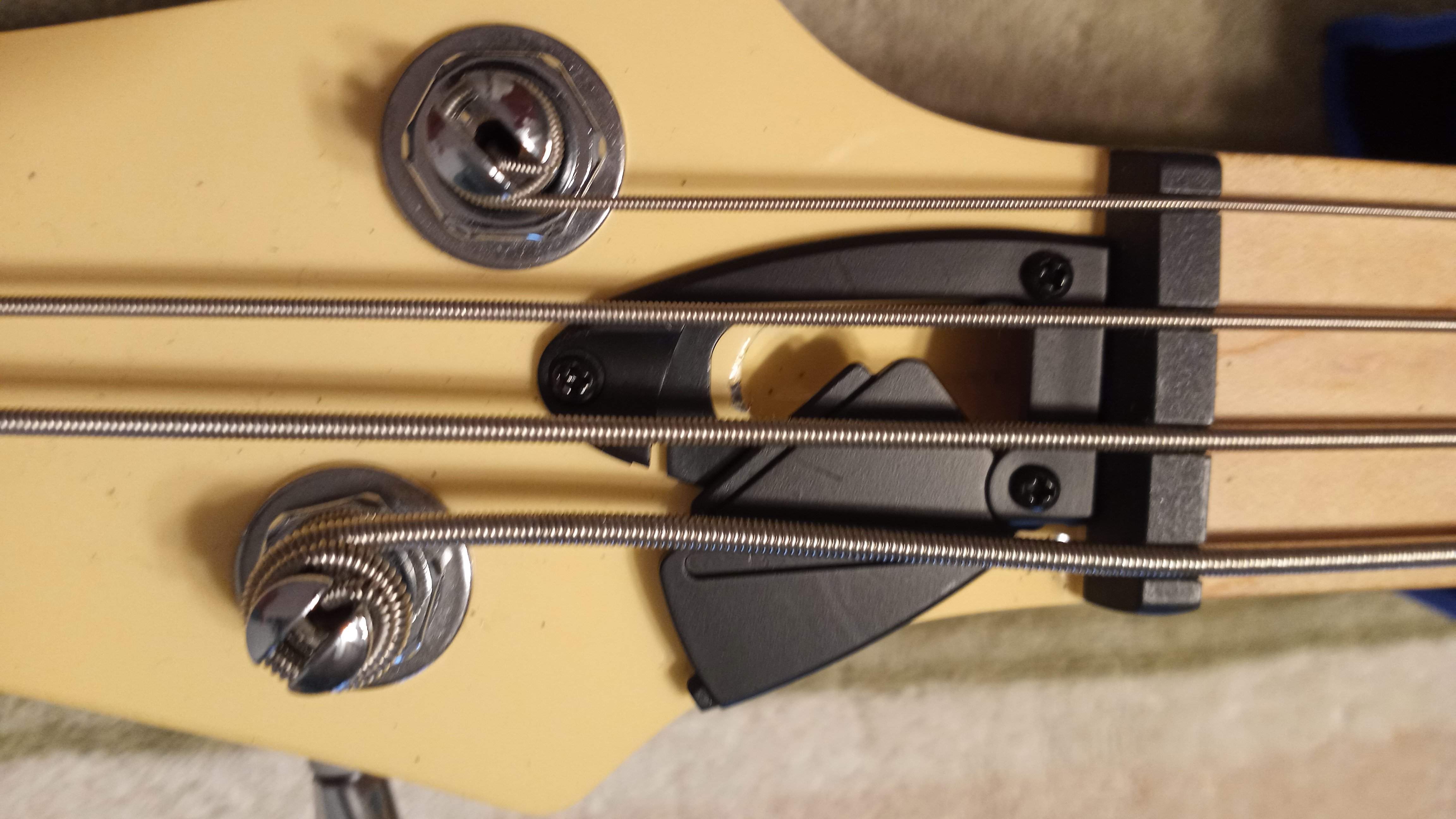
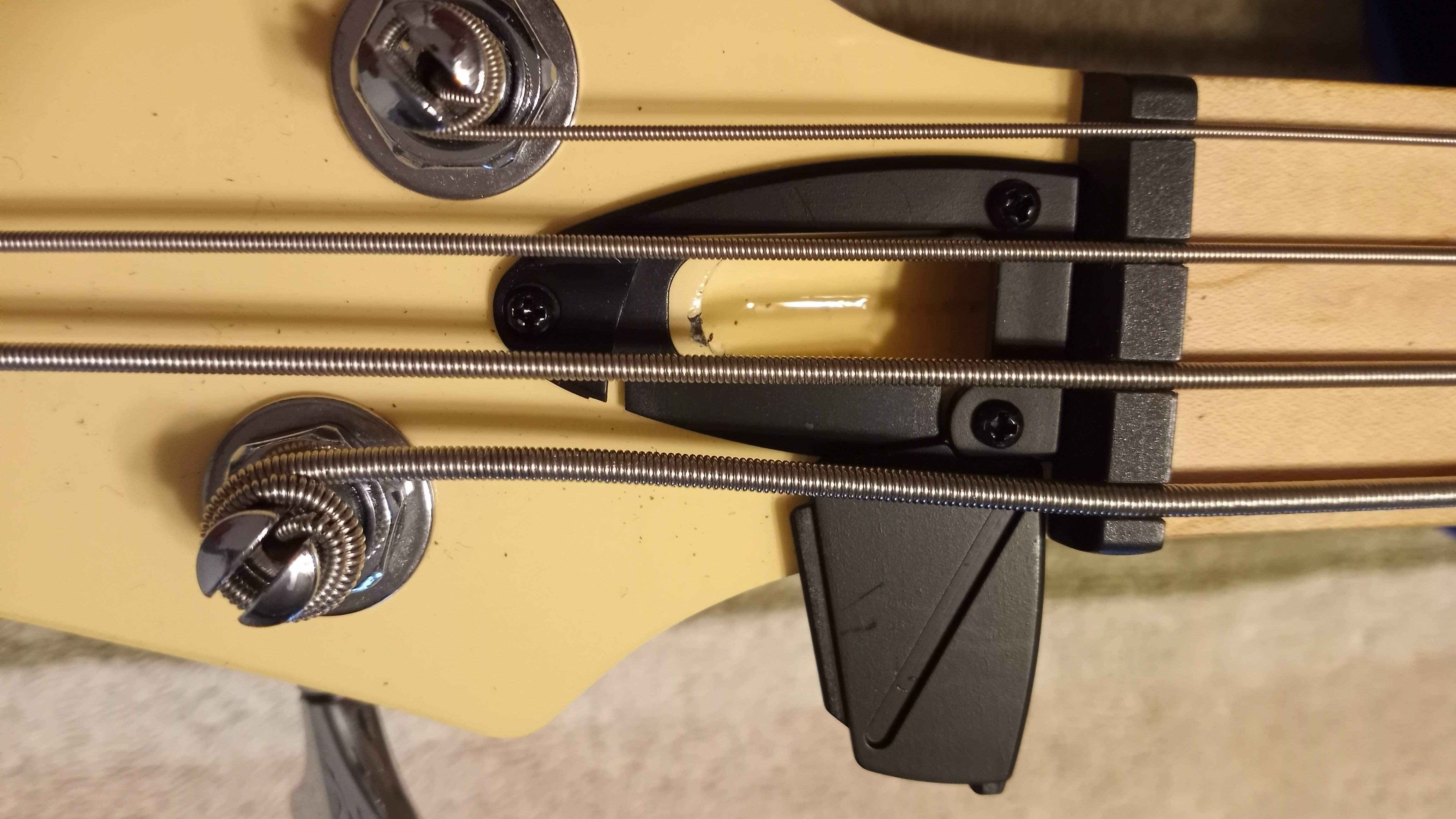
Here's a little angst saver that Ibanez uses...no more fiddly little screws to mess with. Clever, works great too.

Neck-thru basses (I have a couple) would not work with the wheel AFAIK.Why any manufacture doesn't use the wheel adjustment at the heel of the neck is a mystery to me.

- Apr 18, 2008
- 16,019
- 1
- 31,735
- Disclosures
- I'm highly opinionated and extremely self-assured
Neck-thru basses (I have a couple) would not work with the wheel AFAIK.
Sure they would. You just have to route out a little clearance for the wheel.

Mike Lull, Ernie Ball Music Man, and Sadowsky are all very easy to adjust.
I love how easily everything about my lull can be adjusted. The entire setup can be done without removing anything.

Mine is at the other end of the neck on three of my basses and I have to take the neck off. So don’t feel so bad.
Just gonna leave this here - again: You don't need to remove the neck from a vintage Fender to adjust the truss rod.So you don’t mind that it sucks to adjust…
Won’t work, the bolt head is counter sunk below the center plane of the access hole. Thus, it requires the short end of the hex key. Compound that by 2, it’s dual truss rods.
Is it not able to be reached by a ball-end hex key? That ought to allow you to turn it with the hex key at an angle. You don't need to apply much force to do it if you give the neck a little backbow pressure at the same time to take the weight off the nut.

Ric5
Inactive
- Jan 29, 2008
- 29,772
- 30,452
- Disclosures
- I like 5, 8, 10, and 12 string basses
Changing truss rods is even more fun than adjusting them
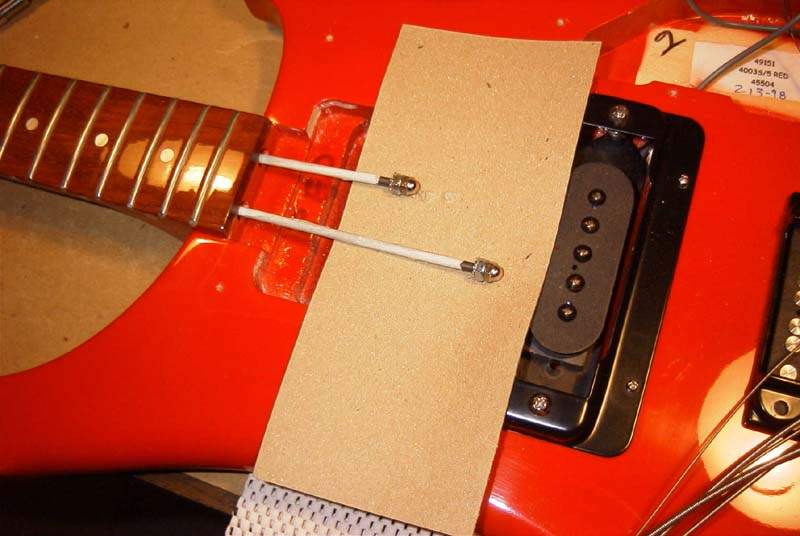


Adjustments are a little bit of a pain on my ‘78 Ric 4001, but in 2 years of owning it, I’ve only had to adjust it once, after moving to a dramatically different climate. I can’t really complain.
Thats why I stopped adjusting the truss rod or anything else 
Seriously I do set ups but since my basses are short scales I dont see the need,its been 2 years.
Seriously I do set ups but since my basses are short scales I dont see the need,its been 2 years.

I feel your pain.Seems there is never enough clearance (hex key style at the headstock).
i have a ric 4001, 1971. Two hairpin style rods. Adjusted at headstock. They are oldschool so you need to set the neck then adjust. Local shops are unfamiliar… get scared and wont do the work.
mine looked a bit old, beaten up… and uneven. I had a perfect setup on light gauge strings… had not played it for 10 years… refreshed the strings… but with something more standard gauge (lighter gauge rotasounds were unavailable at my local shop… and i was like… “it will be ok!”
Big mistake! The perfect setup was gone. One rod seemed jammed. I had no experience. With some help here and on a rick forum, i extracted them (they were fine but uneven from the factory). And the factory aluminum anchor plate was not cut/drilled even causing nut access/clearance issues.
Then i got frustrated, busy and the bass sat a few months.
So after some ordering delays i got modern remakes of the rods from england that had some design improvements. Quality was great.
i installed them… set it all up… but the washers they provided had too much external diameter and prevented me from putting on the headstock cover.
So i got frustrated and then busy so it sat at least a month.
so off it all went and i trimmed the washers. On it all went and now it is properly set up and better than ever.
oh yeah… and then intonation was off. If you know of old ric bridges… the screws to adjust intonation are in a terrible access point. One strategy is to remove strings, lift off the saddle plate, adjust, reinstall, restring, retune. Repeat. Or loosen strings, lift bridge to the max allowing screw access, adjust intonation, return bridge to original height (8.5 or 9.5 turns?), hope you get the height right, tune strings, check intonation, repeat.
May i never change string gauge again! And the newer v2 ric bridge is a massive improvement for intonation.
Last edited:
Won’t work, the bolt head is counter sunk below the center plane of the access hole. Thus, it requires the short end of the hex key. Compound that by 2, it’s dual truss rods.
If the design doesn't allow relatively easy maintenance, then your bass is the problem.
Get something else. Life's too short.

Mike Lull, Ernie Ball Music Man, and Sadowsky are all very easy to adjust.
Very much yes on the Stingrays, I do wish the Lulls had the wheel as do the Rays. Still, the Lulls are easy to access and adjust.
I was was given a most logical reason why they chose the slotted wheel over the spoked wheel. But still….

Thankfully, neither of them (1 Stingray, 2 about to be 3 Lulls) are at all difficult to adjust. They all need a little tweaking 2-3 times a year.
Last edited:
I agree about spoke wheels as best all round solution. Not surprised they were discontinued by the big F, just like the bullet nut at the headstock, which worked pretty well too.
For a while, I had an American Elite Jazz with the Fender version of the spoke wheel. While it worked, I feel like it wasn’t very well implemented. The holes in the wheel, in my opinion, weren’t drilled into the hole deep enough, making it difficult to get good leverage to move the wheel. Nonetheless, it was a good idea that I wish Fender had moved forward with instead of dropping it altogether.

You need a T handle ball driver of the appropriate size.Seems there is never enough clearance (hex key style at the headstock).
https://bondhustools.com/ItemSearch/T handle balldriver
BALL END——T handle hex wrenches usually make adjustments easier.
That's what I posted earlier, to me it's the best solution as you can pull back on the neck while tightening the truss rod and you can go in at an angle, can't beat that.


