• TalkBass has been independent since 1998. Add your voice.
    Create a free account to reply to discussions, view embedded media, and browse with fewer display ads.
    Join freeLog in
    Want zero display ads or expanded classifieds tools? Compare plans.

Double Bass Tulip poplar Kay neck...????

james condino

Spruce dork
Commercial User
Sep 30, 2007
5,443
13,478
asheville, nc
www.condino.com
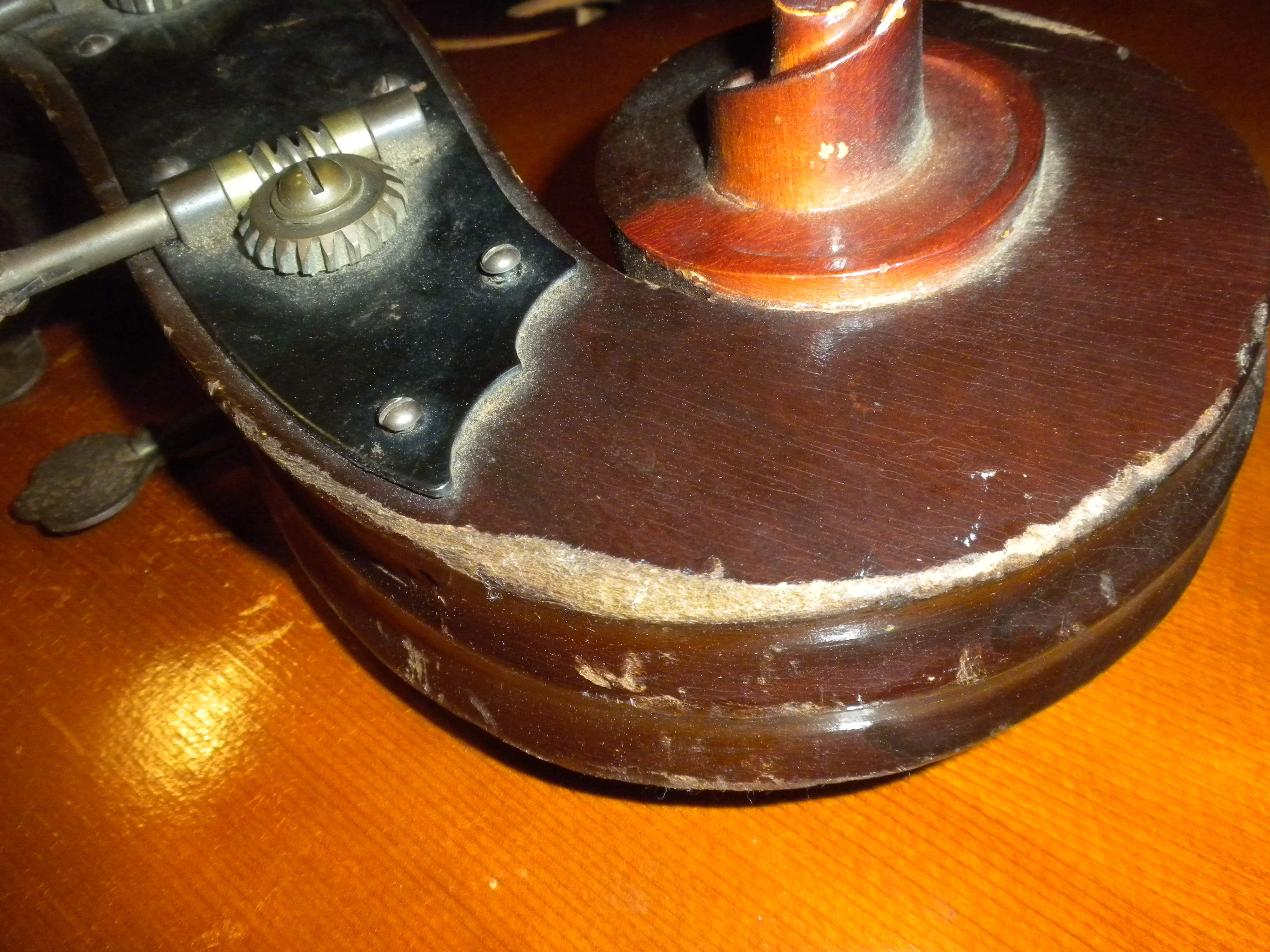
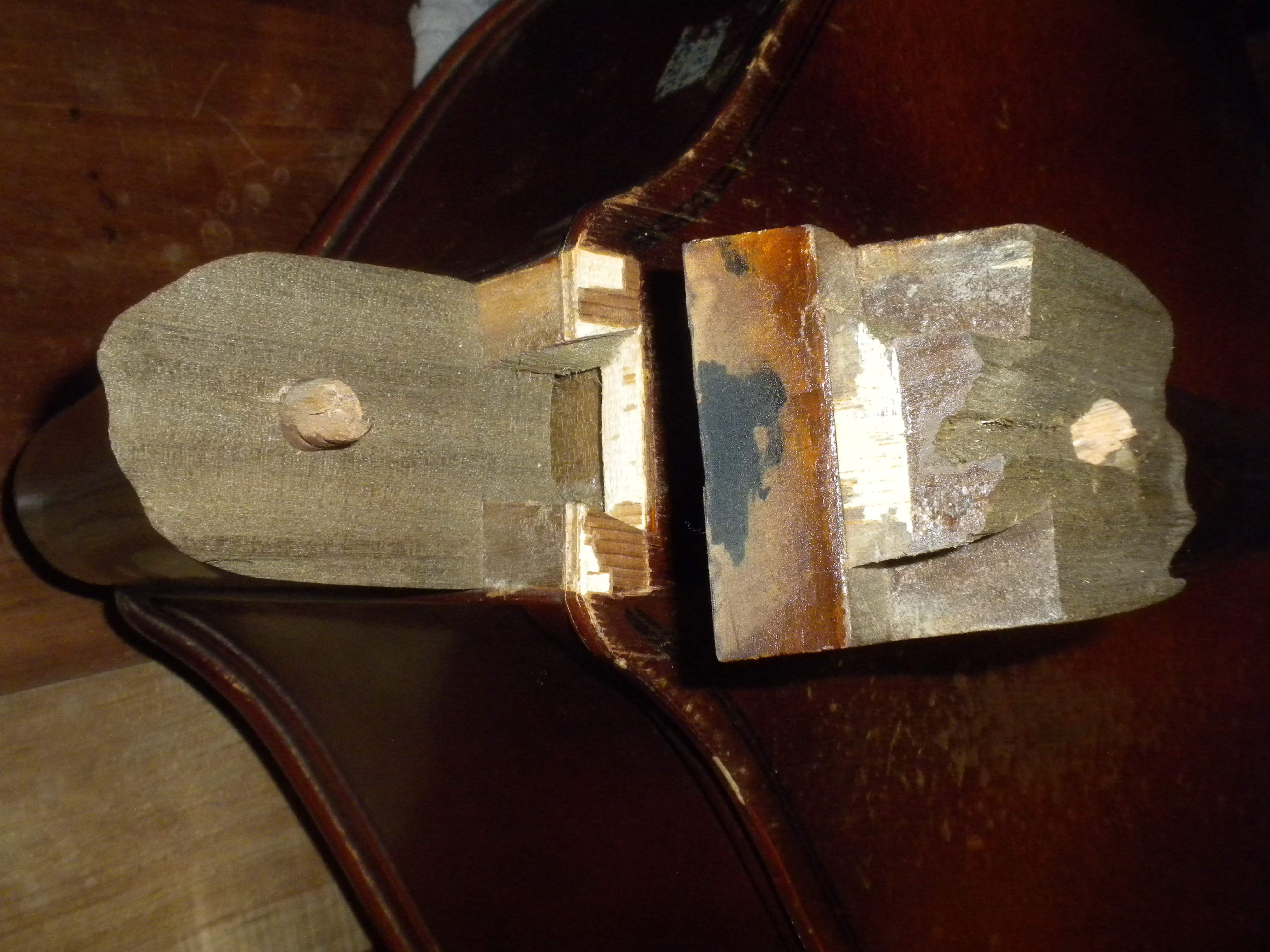
Here is a first for me: I've seen old Kay necks made from maple and walnut in one two three, five, and once 12 separate pieces all glued up, but this is the first time I have ever seen one made from domestic Tulip poplar; it is very lightweight. I have seen guitar necks made from it and all of the interior parts. The heel broke, but all of the other materials heels break there too. The heel dowel is original from the factory.The odd thing is that the scroll and pegbox are completely intact...

As much as I personally would change it to a different neck, the owner is a strong traditionalist, so he asked me to put it back to original spec. If some of my well known friends can make GREAT sounding fiddles and cellos out of balsa wood and carbon fiber, I think I can load up plenty of carbon to make this one solid and stable.

j.
facebook @kaybassrepair
kaybassrepair.com
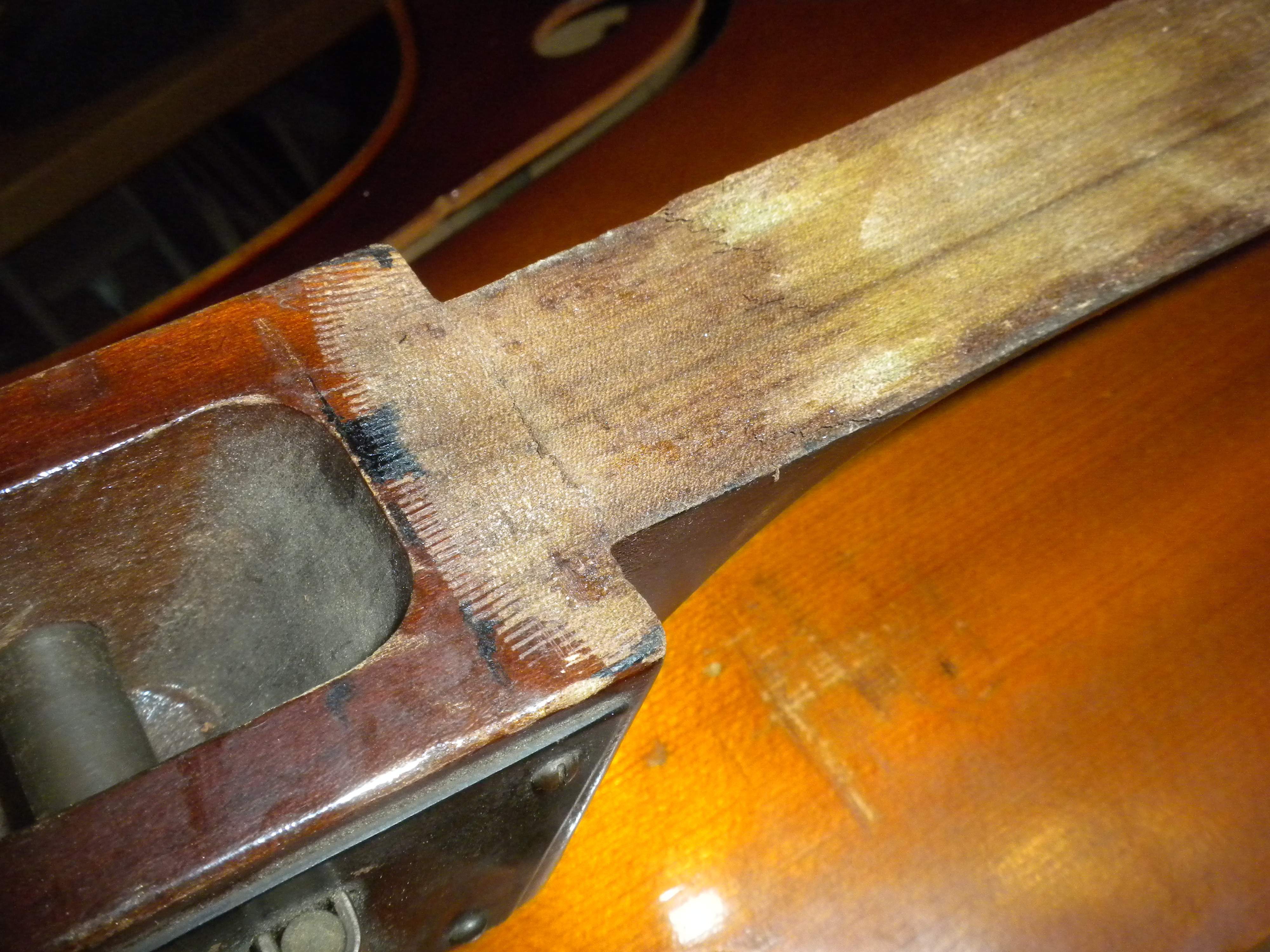
DSCN5975.JPG
DSCN5979.JPG
DSCN5981.JPG
 
Kay was not afraid to experiment or improvise. It is a very nice clear straight grain section of poplar. Back in the day this was a $225 bass, so the idea was more like, "Hey, I just used up all the maple on that last batch of guitars and this will work for a few years, and then when you can save up $400, you can go find a 200 year old Italian bass...."

They were never intended to be heirloom pieces. This particular bass is very lightweight and all the pieces seem to be selected for that, not so much a haphazard combination- perhaps an employee bass or experimental. I always laugh when I hear reasonable people comparing ancient old Italian basses made out of Lombardy poplar to the use of Tulip poplar that grows all over the eastern US....
 
Kay seems to be the queen of the "get-by" American instrument companies that made basses. The reason that so many schools bought them was because they were the least expensive option for domestic plywood basses, not because they were quality instruments. Now that the youngest of these are nearly 50 years old, the lame ill-fitting dovetail neck joints and lousy laminating of top and back plates are failing at alarming rates. The near religious ferocity with which many roots players cling to these iffy instruments compared to much better laminated basses from Europe has always escaped me. But, what the heck, if playing the same lousy instruments that appear on favorite vintage album covers is the prime motivation, then putting up with third rate materials such as poplar necks and walnut fingerboards keep it all nice and TURDitional. It continually baffles me that this is the first brand considered when King Moretone and American Standard basses by H.N. White, or vintage Epiphone or even Gibson basses can be purchased for roughly the same prices. I must be getting into the grumpy grampa demographic ... "Get off my musical lawn!"
 
Last edited:
Around here, American Standards are the benchmark and they go for at least 50% more than old Kays; often double.

You can argue tone and voice and sonority and structure all day, but it makes great business sense to be an old Kay repairman. Just like old vw mechanics- there is ALWAYS a lot of work and they made more old Kays than all of the other brands combined. Besides- everyone should have a quiver with a whole bunch of basses, not just one brand!

If you gotta ask, you are already a grumpy old grandma!
 
I'm not judging this as right or wrong, more an interesting choice. I know we can add enough carbon and make it structurally a sound cyborg. We see it on a Kay and automatically think it was a cheap error. If I showed up with a featherweight 70 year old airdried finest quartersawn tulip poplar from Stravidarious' unfinished workshop blank and then I scientifically engineered advanced modern carbon fiber configurations in conjunction with a company that builds parts for NASA and the Mars expeditions and the high tech aerospace industry....the folks at Oberlin would wet themselves and it would be published all over the place.....;)

I suggested he get a fancy bottle of tequilla, pound a few shots, pour the rest on the old bass, then light it all on fire and move on...then we came to
 
Last edited:
  • Like
Reactions: Dudaronamous
The position that Kay basses occupy in popularity among roots musicians makes about as much sense to me as would be finding out that some the notoriously unreliable vintage English cars have become the foundation of hotrod culture. Speaking of which, it is a beautiful afternoon, so it is time to done the motorcycle leathers and terrorize the mountain highways with my gang, the "Galloping Grandmas"! Tally Ho !!!
 
  • Like
Reactions: james condino
Kay seems to be the queen of the "get-by" American instrument companies that made basses. The reason that so many schools bought them was because they were the least expensive option for domestic plywood basses, not because they were quality instruments. Now that the youngest of these are nearly 60 years old, the lame ill-fitting dovetail neck joints and lousy laminating of top and back plates are failing at alarming rates. The near religious ferocity with which many roots players cling to these iffy instruments compared to much better laminated basses from Europe has always escaped me. But, what the heck, if playing the same lousy instruments that appear on favorite vintage album covers is the prime motivation, then putting up with third rate materials such as poplar necks and walnut fingerboards keep it all nice and TURDitional. It continually baffles me that this is the first brand considered when King Moretone and American Standard basses by H.N. White, or vintage Epiphone or even Gibson basses can be purchased for roughly the same prices. I must be getting into the grumpy grampa demographic ... "Get off my musical lawn!"

Boy, post something like this on the other side about Fender and see what it gets you. In many ways, the Fender Precision is the EB equivalent of Kay.
 
Boy, post something like this on the other side about Fender and see what it gets you. In many ways, the Fender Precision is the EB equivalent of Kay.

You got that right. Fender's design choices were pretty much all about making the thing easy and cheap to manufacture, NOT about tone. To see people obsessing about trying to reproduce the exact bottom-of-the-barrel components Leo picked due to lowest cost, is pretty darn amusing.

Remarkably enough, those old Precision basses sound really really good. Or maybe they sound really good to us because we've all learned that the sound of a Fender Precision is what a good EB sound is.
 
Why wouldn't Kay have chosen domestic beech as a potential substitute neck material? It is and was very economical to acquire and the european makers had and still have a lot of success using their beech for lower priced basses. Domestic poplar, on the other hand is so light and non-durable that it barely functioned as alternative neck block stock for Gibson during WWII. It was either a very poorly researched choice or some company bean counter was trying to put one over on those poor school orchestra teachers. The only Kay decision even dumber than that was buying the tooling for King Moretone and American Standard basses and then never making any.
 
You've never worked in a factory, huh??? At peak production, Kay was making close to 100,000 instruments per year. At those numbers, nobody on the production floor cares about the finess and subtleties of hand building.....This neck was likely sitting on the stack of 100s of other neck blanks and the worker pulled it off and put it into the parts run. End of story...
 
You've never worked in a factory, huh??? At peak production, .....This neck was likely sitting on the stack of 100s of other neck blanks and the worker pulled it off and put it into the parts run. End of story...

This is the absolute truth. Part of me laughs when I hear people comment on the Kay quirks. I think of a bass rolling down the line, having glue spatula’d on by one person, while another grabs a neck off the stack and slams it into the dove tail hahaha!

The poplar neck is definitely an interesting detail though - I appreciate you sharing your tales from the land of Kay repair :)
 
  • Like
Reactions: TwentyHz
You've never worked in a factory, huh??? At peak production, Kay was making close to 100,000 instruments per year. At those numbers, nobody on the production floor cares about the finess and subtleties of hand building.....This neck was likely sitting on the stack of 100s of other neck blanks and the worker pulled it off and put it into the parts run. End of story...

Well sure, but that still doesn't answer the question "why did they decide to use tulip poplar for this neck?" Were there batches of necks made from this wood, based on a decision in the purchasing department, or was this a one-off? Prototype to see if tulip poplar would work, deemed OK to sell, but they decided not to proceed with the tulip poplar after all (it might not have been performance, maybe the supplier didn't come through with the right pricing after they built one to see how it would work)?

With a lengthy career in design and manufacturing engineering for companies that mass produce things, I have certainly seen the purchasing department change specs to get a better price without bothering to check with the engineering department.
 
  • Like
Reactions: basspraiser
'... With a lengthy career in design and manufacturing engineering for companies that mass produce things, I have certainly seen the purchasing department change specs to get a better price without bothering to check with the engineering department....'

Nobody on the production floor stops and goes to ask the purchasing department or engineering when they are making sawdust. Nobody. Grab the next board an move on. In the factory I worked at, those guys called the neck "the handle"....

Rob, call me a pessimist, but I don't think anything we know today will still be around in 50 years.
 
  • Like
Reactions: JLubinsky-Mast
'... With a lengthy career in design and manufacturing engineering for companies that mass produce things, I have certainly seen the purchasing department change specs to get a better price without bothering to check with the engineering department....'

Nobody on the production floor stops and goes to ask the purchasing department or engineering when they are making sawdust. Nobody. Grab the next board an move on. In the factory I worked at, those guys called the neck "the handle"....

Rob, call me a pessimist, but I don't think anything we know today will still be around in 50 years.
Thank you all for a very educational and entertaining thread. I hope it continues.