• TalkBass has been independent since 1998. Add your voice.
    Create a free account to reply to discussions, view embedded media, and browse with fewer display ads.
    Join freeLog in
    Want zero display ads or expanded classifieds tools? Compare plans.

Double Bass Tulip poplar Kay neck...????

Nobody on the production floor stops and goes to ask the purchasing department or engineering when they are making sawdust. Nobody. Grab the next board an move on. In the factory I worked at, those guys called the neck "the handle"....

Absolutely correct. The credit or blame for the existence of this tulip poplar Kay neck resides with someone in purchasing, or "R&D" (whatever they called the people who decided to try out new and different stuff).
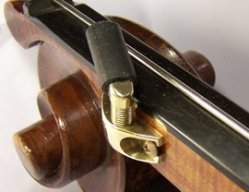
 
'
Rob, call me a pessimist, but I don't think anything we know today will still be around in 50 years.
?? You're putting me on! Everything will be quite different, yes, but some things will never change. There will always be panhandlers on the streets of major cities, and there will always be Kay basses being played in country/folk/whatever bands. And you, James, with your restoration work, are a part of that continuum!
 
  • Like
Reactions: rknea
A little follow up:

Phase 1 was to glue up what was left of the old break with hot hide glue. There were a number of sections missing, so it was a pretty poor connection- save all of those little pieces when your bass breaks! Next I made a small dowel hole running the entire heel length for alignment purposes, then sawstop guillotine the entire fractured mess in prep for a clean graft glue joint and rebuild.

DSCN6383.JPG


After that a new old seasoned piece of ugly green tulip poplar was grafted in. It's rough looking now, so I'll clean it up and show more soon...

j.
Link Removed
 
Last edited:
New tulip poplar splice finished. As much as we all have varying opinions on this for a neck material, one thing really stands out- it is exceptionally lightweight. In some instruments that translates to incredibly fast response and volume; others seem to like the 49lb Prescott approach. This one isn't mine to judge; I'm just following a customer who is asking for it to be as close as possible to original external specs but do my best to make all of it hold together. The original has a bit of color bleed into the wood, so it is a shade darker than the splice; it should all blend in well come finish time.

Next is a boatload of carbon fiber to stiffen it up both the heel and the long axis of the neck and give me the confidence to let it out the door. At the Oberlin acoustics workshops (different one from the bass nerd workshop, but they do have some overlap) I saw some very impressive instruments that proved you can go incredibly ultralight with your primary materials provided that you compensate with plenty of structurally stiff carbon fiber.

DSCN6400.JPG
 
Last edited: