
Enjoy the benefits of a premium membership!
Upgrade Account
-
TalkBass has been independent since 1998. Add your voice.
Create a free account to reply to discussions, view embedded media, and browse with fewer display ads.
Join free Log in
Want zero display ads or expanded classifieds tools? Compare plans.
You are using an out of date browser. It may not display this or other websites correctly.
You should upgrade or use an alternative browser.
You should upgrade or use an alternative browser.
Tuner detects wrong string
- Thread starter epsonecotank
- Start date
More options
Who Replied?

Guys,
The guy just joined TB and it’s his first bass.
He doesn’t know and it appears he doesn’t have anyone to help him. He might not know the strings are E, A, D, G.
He might have put his first of set of strings on and is having trouble figuring out just how far to go for fear of breaking a string.
Lets try and help him out instead of telling him this sucks and that sucks. I never had any problems with any of my Super Snarks. He just needs someone to help him in person who knows what they’re doing.
The guy just joined TB and it’s his first bass.
He doesn’t know and it appears he doesn’t have anyone to help him. He might not know the strings are E, A, D, G.
He might have put his first of set of strings on and is having trouble figuring out just how far to go for fear of breaking a string.
Lets try and help him out instead of telling him this sucks and that sucks. I never had any problems with any of my Super Snarks. He just needs someone to help him in person who knows what they’re doing.
For a beginner:
I'd recommend a tuner that 'sounds' the pitch. In other words, there's a tiny speaker and it will play the pitch of each note. This will get you in the neighborhood, and then you can fine tune it exactly via the meter or readout with the little over and under lights.
When I was starting out, I broke a few strings chasing pitch all over a tuner until that expensive 'BOING' sound occurred. So I got a tuner that would play out the note, and I still use one that does that to this day.
I'd recommend a tuner that 'sounds' the pitch. In other words, there's a tiny speaker and it will play the pitch of each note. This will get you in the neighborhood, and then you can fine tune it exactly via the meter or readout with the little over and under lights.
When I was starting out, I broke a few strings chasing pitch all over a tuner until that expensive 'BOING' sound occurred. So I got a tuner that would play out the note, and I still use one that does that to this day.

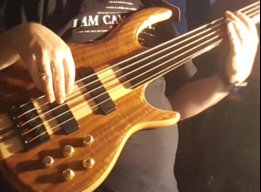
Not to be contrarian, but I use a ridiculously cheap clip on tuner that picks up all 6 of my bass's strings just fine, include the low B. It might depend on the bass being played as to how much fundamental of the tone is vibrating in the headstock.
In general though I use my helix floorboard tuner rather than a clip on unless I'm not playing the helix or not standing anywhere near it.... much faster and more accurate. But the clip ons work fine for me - I have a feeling I've been lucky, considering how many people seem to find them nearly useless here.
They work on my home made kit bass and on my warwick, both are bolt ons. When I get access to my carvin and peavey neck throughs, I'll be interested to try that too.
In general though I use my helix floorboard tuner rather than a clip on unless I'm not playing the helix or not standing anywhere near it.... much faster and more accurate. But the clip ons work fine for me - I have a feeling I've been lucky, considering how many people seem to find them nearly useless here.
They work on my home made kit bass and on my warwick, both are bolt ons. When I get access to my carvin and peavey neck throughs, I'll be interested to try that too.

I tuned it a long time ago ..
OR
The bass was in tune before I squeezed it into the gigbag, tossed it in my trunk and drove over here ..
OR
The bass was in tune before I squeezed it into the gigbag, tossed it in my trunk and drove over here ..

No! You're wrong. The TC Electronics Uni tune is very good and extremely accurate. Read the reviewsAll clip on tuners suck so I won’t single out any brand. If you want a tuner get a tuner. Or be cool with it working intermittently like all clip ons for 50 years.
And again, try the TC Electronics Uni Tune. (or poly tune)My D'Addario clipon sucks, too.

I agree and swear by the the TC Unitune.No! You're wrong. The TC Electronics Uni tune is very good and extremely accurate. Read the reviews
It reads the low open B on my sixers.
D
Like others have said, it seems unlikely that the tuner is picking up the wrong string (make sure you mute the other strings while tuning though). It seems like you've simply got your E string tuned slightly too high, to an F. Some tuners have selectable "bass" and "guitar" modes where the tuner identifies the string but in these modes the display would normally show 1-4 for 1st to 4th string, not the actual note you're playing.
If I remember correctly the Snark clip-on tuners don't have a "guitar" or "bass" mode. I think it only has chromatic mode, which means it will display the note closest to the one you're playing. If the display shows an E it means you're playing an E (or at least very close to an E). If the display shows an F it means the string you're playing is tuned to F, which of course means it's tuned slightly too high if you're playing the E-string. Tuners with a "bass" mode will guess which string you're playing. Chromatic mode won't do this.
Chromatic mode is in no way inferior to a "bass" mode. You won't get a more precise result with a "bass" mode, just a number instead of a note in the display. Chromatic mode is actually a lot more versatile as it will allow different tunings, like drop D or whatever. A "bass" mode might be slightly easier to understand for a beginner but you'll soon learn to use a chromatic tuner with no problems at all (or even just tune by ear).
Anyway, your tuner seems to be chromatic only. If your E string is tuned slightly too high the display will show the next note which is an F. Just tune down a bit and then tune back up to E.
Actually, that last bit is very imporant. Always tune UP to pitch. If you're too high, always go down a bit and then go back up to the correct note/pitch. This is particularly important on cheaper basses where the tuning mechanism may not be the best quality. If you tune DOWN to the correct pitch your tuning stability may suffer due to backlash in the tuning mechanism.
Having said that, clip-on tuners can sometimes be problematic with the lower bass strings, giving unstable readings. Moving the tuner to a different spot on the headstock may actually help in some cases (but this can sometimes cause tuning instability with the other strings...).
Personally I never use clip on tuners with electric basses except at home when I just want to grab something fast and don't want to bother with a cable. For gigs/studio/rehearsal I would personally never use a clip-on tuner with any electric instrument that has a jack output. I've tried lots of clip-on tuners but I've never found any of them 100% stable with bass (even the ones that are supposedly designed for bass). For what it's worth my favorite clip-on tuner is the Boss TU-10. Not because it's necessarily more precise than other clip-ons but because I like the form factor. It feels a lot sturdier than most other clip-on tuners and I've not managed to break it... yet.
For gigs/rehearals I would strongly recommend a pedal tuner. They give far more stable readings with bass than clip-ons. I've tried all the fancy stuff but I keep coming back to my old Boss TU-2 (the currently manufactured TU-3 is also great). It's built like a tank and I've had mine for 30 years. After hundreds of gigs and all kinds of abuse it's still good as new. Sure, there are more precise tuners out there but do we really need that level of precision for gigs/rehearsals? I've tried all the fancy strobe tuners but I found them all to be TOO precise. I could spend ages tuning my bass and the tuner would still tell me I was out of tune. When I'm on stage I need FAST and reliable tuning. The TU-2/TU-3 is more than adequate for gigs/rehearsals and will provide fast, easy and stable tuning. Some people will say that the buffer in the Boss pedal tuners have issues with "tone suck". I've never found this to be a problem at all. It's marginal at worst and probably more of an issue for guitar players as it mainly affects the higher frequencies. There is certainly no perceivable loss of lows. I actually find the Boss buffers to be good quality compared to many other pedals. There's a good chance that any other buffered pedals in your chain (or even your cables) will affect the tone far more than the Boss tuners.
In the studio or when adjusting intonation I prefer the Korg OT-120. When precision is needed I find the visual reference of the needle far better than even the most expensive strobe tuners, even though the strobe tuners are technically FAR more precise. Again, I find strobe tuners to be TOO precise. I would spend ages setting the intonation and the tuner would still tell me it's off. Lets face it, with the exception of true temperament guitars (the ones with curved frets) the intonation won't be perfect all along the neck no matter how perfect you set it at the 12th fret. Slightly imperfect intonation along the neck is actually a huge part of the sound of guitars/basses. Those true temperament guitars sound like synths to me. The Korg OT-120 isn't ideal for a pedal board though. It's my personal favorite tuner of all times and I use it every day at the workshop but it will never go anywhere near my pedalboard.
My point is, there are lots of different tuners that are suitable for different situations. It will also depend on personal taste (lots of people love those fancy strobe tuners that I personally can't stand). I have a feeling you may be happier with a pedal tuner. Maybe even get one with a selectable "bass" mode (like the Boss pedals I mentioned) for an easier learning curve. The only real advantage of a clip-on tuner is that you won't need a cable, which is great for fast tuning at home. In most other situations you will need a cable anyway so adding another cable for the tuner is a very minor inconvenience that will be outweighed by the FAR superior tuning stability of a pedal tuner (IMO, YMMV, etc).
If I remember correctly the Snark clip-on tuners don't have a "guitar" or "bass" mode. I think it only has chromatic mode, which means it will display the note closest to the one you're playing. If the display shows an E it means you're playing an E (or at least very close to an E). If the display shows an F it means the string you're playing is tuned to F, which of course means it's tuned slightly too high if you're playing the E-string. Tuners with a "bass" mode will guess which string you're playing. Chromatic mode won't do this.
Chromatic mode is in no way inferior to a "bass" mode. You won't get a more precise result with a "bass" mode, just a number instead of a note in the display. Chromatic mode is actually a lot more versatile as it will allow different tunings, like drop D or whatever. A "bass" mode might be slightly easier to understand for a beginner but you'll soon learn to use a chromatic tuner with no problems at all (or even just tune by ear).
Anyway, your tuner seems to be chromatic only. If your E string is tuned slightly too high the display will show the next note which is an F. Just tune down a bit and then tune back up to E.
Actually, that last bit is very imporant. Always tune UP to pitch. If you're too high, always go down a bit and then go back up to the correct note/pitch. This is particularly important on cheaper basses where the tuning mechanism may not be the best quality. If you tune DOWN to the correct pitch your tuning stability may suffer due to backlash in the tuning mechanism.
Having said that, clip-on tuners can sometimes be problematic with the lower bass strings, giving unstable readings. Moving the tuner to a different spot on the headstock may actually help in some cases (but this can sometimes cause tuning instability with the other strings...).
Personally I never use clip on tuners with electric basses except at home when I just want to grab something fast and don't want to bother with a cable. For gigs/studio/rehearsal I would personally never use a clip-on tuner with any electric instrument that has a jack output. I've tried lots of clip-on tuners but I've never found any of them 100% stable with bass (even the ones that are supposedly designed for bass). For what it's worth my favorite clip-on tuner is the Boss TU-10. Not because it's necessarily more precise than other clip-ons but because I like the form factor. It feels a lot sturdier than most other clip-on tuners and I've not managed to break it... yet.
For gigs/rehearals I would strongly recommend a pedal tuner. They give far more stable readings with bass than clip-ons. I've tried all the fancy stuff but I keep coming back to my old Boss TU-2 (the currently manufactured TU-3 is also great). It's built like a tank and I've had mine for 30 years. After hundreds of gigs and all kinds of abuse it's still good as new. Sure, there are more precise tuners out there but do we really need that level of precision for gigs/rehearsals? I've tried all the fancy strobe tuners but I found them all to be TOO precise. I could spend ages tuning my bass and the tuner would still tell me I was out of tune. When I'm on stage I need FAST and reliable tuning. The TU-2/TU-3 is more than adequate for gigs/rehearsals and will provide fast, easy and stable tuning. Some people will say that the buffer in the Boss pedal tuners have issues with "tone suck". I've never found this to be a problem at all. It's marginal at worst and probably more of an issue for guitar players as it mainly affects the higher frequencies. There is certainly no perceivable loss of lows. I actually find the Boss buffers to be good quality compared to many other pedals. There's a good chance that any other buffered pedals in your chain (or even your cables) will affect the tone far more than the Boss tuners.
In the studio or when adjusting intonation I prefer the Korg OT-120. When precision is needed I find the visual reference of the needle far better than even the most expensive strobe tuners, even though the strobe tuners are technically FAR more precise. Again, I find strobe tuners to be TOO precise. I would spend ages setting the intonation and the tuner would still tell me it's off. Lets face it, with the exception of true temperament guitars (the ones with curved frets) the intonation won't be perfect all along the neck no matter how perfect you set it at the 12th fret. Slightly imperfect intonation along the neck is actually a huge part of the sound of guitars/basses. Those true temperament guitars sound like synths to me. The Korg OT-120 isn't ideal for a pedal board though. It's my personal favorite tuner of all times and I use it every day at the workshop but it will never go anywhere near my pedalboard.
My point is, there are lots of different tuners that are suitable for different situations. It will also depend on personal taste (lots of people love those fancy strobe tuners that I personally can't stand). I have a feeling you may be happier with a pedal tuner. Maybe even get one with a selectable "bass" mode (like the Boss pedals I mentioned) for an easier learning curve. The only real advantage of a clip-on tuner is that you won't need a cable, which is great for fast tuning at home. In most other situations you will need a cable anyway so adding another cable for the tuner is a very minor inconvenience that will be outweighed by the FAR superior tuning stability of a pedal tuner (IMO, YMMV, etc).

I also turn the neck pup volume all the way down.Snark tuners totally suck in my experience. An inaccurate tuner is worse than no tuner at all! You're really better off just using your ear.
That said, if you have to use a Snark in an emergency, here are two tips for getting the most out of it:
- Tune with the 12th fret harmonic (not the open string).
- Make sure you are muting all the other strings.
Since you are starting out, you should learn the dying art of tuning by ear. Get yourself one of these A tuning forks and tune your A string to it Then tune your other strings to that string using harmonics.
Electric tuners have their use for tuning quickly and silently on stage. But they can also be a crutch and handicap you in the long run.
A well trained ear is what separates the pros from the hacks.

bottom few strings i tend to use the 12th fret harmonic.
some tuners, and some basses, are just funny that way. snark tuners work pretty well.
i even teach my students to use the harmonic on the low string, it's just a lot more reliable.
some tuners, and some basses, are just funny that way. snark tuners work pretty well.
i even teach my students to use the harmonic on the low string, it's just a lot more reliable.
I suggest using a clip on with Chromatic mode, just tune the right note, don't worry about the string.

My cheapo Snark works better WHEN IT'S SET TO VIBRATE and clipped to the headstock. If there's a switch labeled VIB/MIC move it to VIB. Here it's using the vibrations detected through the clip-on base instead of 'listening' through the microphone. Some models do not have this option and only use the microphone.
You can use the first four notes here
You can use the first four notes here
A tuner is a good tool for tuning AND to help you develop an ear.
Listen to the pitch who you are tuning.
Does it sound like an E or an F?
Compare what you hear to a know good reference pitch. (Use another string or another instrument).
I bough a used upright from an old timer about 10 years ago. The purchase included a bow and a tuning fork (note A).
I don’t think he only tuned his A string.
Listen to the pitch who you are tuning.
Does it sound like an E or an F?
Compare what you hear to a know good reference pitch. (Use another string or another instrument).
I bough a used upright from an old timer about 10 years ago. The purchase included a bow and a tuning fork (note A).
I don’t think he only tuned his A string.


