At least for live situations I think this is a great choice., and they are pretty affordable used. I just bought a second one from a TBer last week. I'm sure that the Petersen pedal tuner is amazing but at $180 it should be. And I hear it really eats batteries.
I haven't noticed any difference in tone and the ability to mute your instrument's signal to the amp wit the boss tu2 is invaluable.
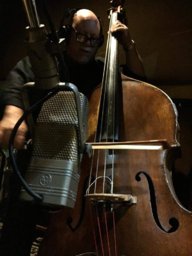
In my case, I do a lot of doubling and simply mute the upright, lean it back in it's stand and pick up the electric. In certain situations I've been known to even play an arco passage (abeit not very well!

) on double bass while having an electric hanging upside-down off of my back and then mute the double bass with the tuner, lean it into the stand, flip the electric over my shoulder, turn the volume knob up and and play electric. Sounds more dangerous than it actually is. I couldn't do it with out the mute function of the Boss Tu-2, and it tracks low notes as quickly as anything I've seen.
Word to the wise: any tuner just gets you close with an upright.
Use it to get your bass close to pitch and then trust your ears. I don't use one on gigs, but I absolutely understand why people use a tuning fork. When using a tuner, try to remember what the difference between the tuner's idea of in tune is and what your ear is telling you. For me, the D string open is always reading just a little flat on the tuner because of the prevalence of overtones. I tune the D to read just a hair sharp and I'm in buisiness. I suspect that this will change with each bass and different strings. Also, Arco for me always reads just a hair sharp as compared to a good strong pizz attack on the same note, I think it's because of the pressure of the bow on the string shortening the length ever so slightly.
And remember- Ron Carter rarely played in tune and he's still one of the greatest- cuz he just played and meant it. Don't let the challenge of playing such a beast of an instrument in tune prevent you from enjoying the music you are making.