
Enjoy the benefits of a premium membership!
Upgrade Account
-
TalkBass has been independent since 1998. Add your voice.
Create a free account to reply to discussions, view embedded media, and browse with fewer display ads.
Join free Log in
Want zero display ads or expanded classifieds tools? Compare plans.
You are using an out of date browser. It may not display this or other websites correctly.
You should upgrade or use an alternative browser.
You should upgrade or use an alternative browser.
Double Bass Tuning peg broken
- Thread starter ampharosy
- Start date
More options
Who Replied?
Brief intermission:
Not to derail the spirit of your original post, but a small vice-grip (NFI) might get you playing again immediately... Not very formal looking, but at least you can tune the string.
Back to our normal broadcast...
Question: Do you have the "key" piece that is broken off?
Not to derail the spirit of your original post, but a small vice-grip (NFI) might get you playing again immediately... Not very formal looking, but at least you can tune the string.
Back to our normal broadcast...
Question: Do you have the "key" piece that is broken off?
Last edited:
As an Amazon Associate, TalkBass may receive commissions from qualifying purchases made via links on this site.

It was a lucky break in that the shaft's intact. It's not a big deal to cut out a replacement key, remove the old rivets that held the key to the shaft, and install the new one. Unless you're fortunate enough to find someone cannibalizing an old American Standard, it'll be easier to make a new key than to try to fit a replacement set.
Seems like it's always the D tuner - seems to hang up on the bag.
Seems like it's always the D tuner - seems to hang up on the bag.
I love a for-now fix! Thank you for that.
I do not have the original key, the bass was given to me with the broken key.
I do not have the original key, the bass was given to me with the broken key.
Brief intermission:
Not to derail the spirit of your original post, but a small vice-grip (NFI) might get you playing again immediately... Not very formal looking, but at least you can tune the string.
Back to our normal broadcast...
Question: Do you have the "key" piece that is broken off?
As an Amazon Associate, TalkBass may receive commissions from qualifying purchases made via links on this site.

I'll concur with @misterbadger, unless you want to replace both sides with a generic modern tuning set, my approach would be to drill out the rivet, cut a new handle and rivet it in. Doing it up nice would require plating it first, too, but that gets into a thing. Do you know any metal artisans?

Sheet brass, coping saw with fine blade. (Buy a bunch of spare blades, they're cheap).
If it's riveted and not silver soldered you could even buy a piece of sheet nickel-silver (does not actually contain silver) and then the color would be essentially the same. I would think a jewelry makers' supply house would have nickel-silver sheet.
You don't even have to take the tuner plate off. If you decide to replace the shaft and worm gear you're going to have to pull the whole plate off and then drill out the rivets that hold the shaft bearings at each end, then re-rivet - and good luck finding a new key/worm assy that will fit without a bunch of fettling.
If those are the original tuners I would not replace the whole thing unless there's a real good reason to.
If it's riveted and not silver soldered you could even buy a piece of sheet nickel-silver (does not actually contain silver) and then the color would be essentially the same. I would think a jewelry makers' supply house would have nickel-silver sheet.
You don't even have to take the tuner plate off. If you decide to replace the shaft and worm gear you're going to have to pull the whole plate off and then drill out the rivets that hold the shaft bearings at each end, then re-rivet - and good luck finding a new key/worm assy that will fit without a bunch of fettling.
If those are the original tuners I would not replace the whole thing unless there's a real good reason to.
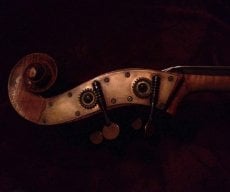
First thing’s first, the bass you have and don’t know much about is a collectible classic and one of the most highly regarded double basses ever made in America.
That makes it worth taking care of, because looking after it will affect what your bass is worth.
If you replace the machines, you will significantly devalue the instrument even if the scroll doesn’t have to be modified to fit new machines. Call jewelers and metal shops. What you want is to connect with someone who can cut you a copy of the grip on the three intact gears and braze it onto the shaft.
This is a common repair. The grips on HN White machines are flimsy and frequently break.
That makes it worth taking care of, because looking after it will affect what your bass is worth.
If you replace the machines, you will significantly devalue the instrument even if the scroll doesn’t have to be modified to fit new machines. Call jewelers and metal shops. What you want is to connect with someone who can cut you a copy of the grip on the three intact gears and braze it onto the shaft.
This is a common repair. The grips on HN White machines are flimsy and frequently break.

A replacement Englehardt neck with White tuning machines and an American Standard body......WT#???
Those machines have a street value of approx. $250 in good working order. They also have a unique spacing, so they are worth fixing proper. I'd bet the extra tension from a misaligned hole is the main culprit. It is not my favorite task, but very manageable repair; I do it often....
There should be no plating on that button, just mid grade steel.
Remove the old machine from the neck. Drill out the remains of the old button- remove the old key section and cut out with a Dremel if necessary. DO NOT SIMPLY CHOP OFF THE WHOLE END. Find a donor button- plenty of old Pbass style single machines will work fine. Take the unit to a jeweler or bicycle frame builder who does good silver soldering- don't misrepresent the name- silver soldering is more like a high temp braze than a low temp electronics solder. Silver solder up the two parts, clean up, re install....
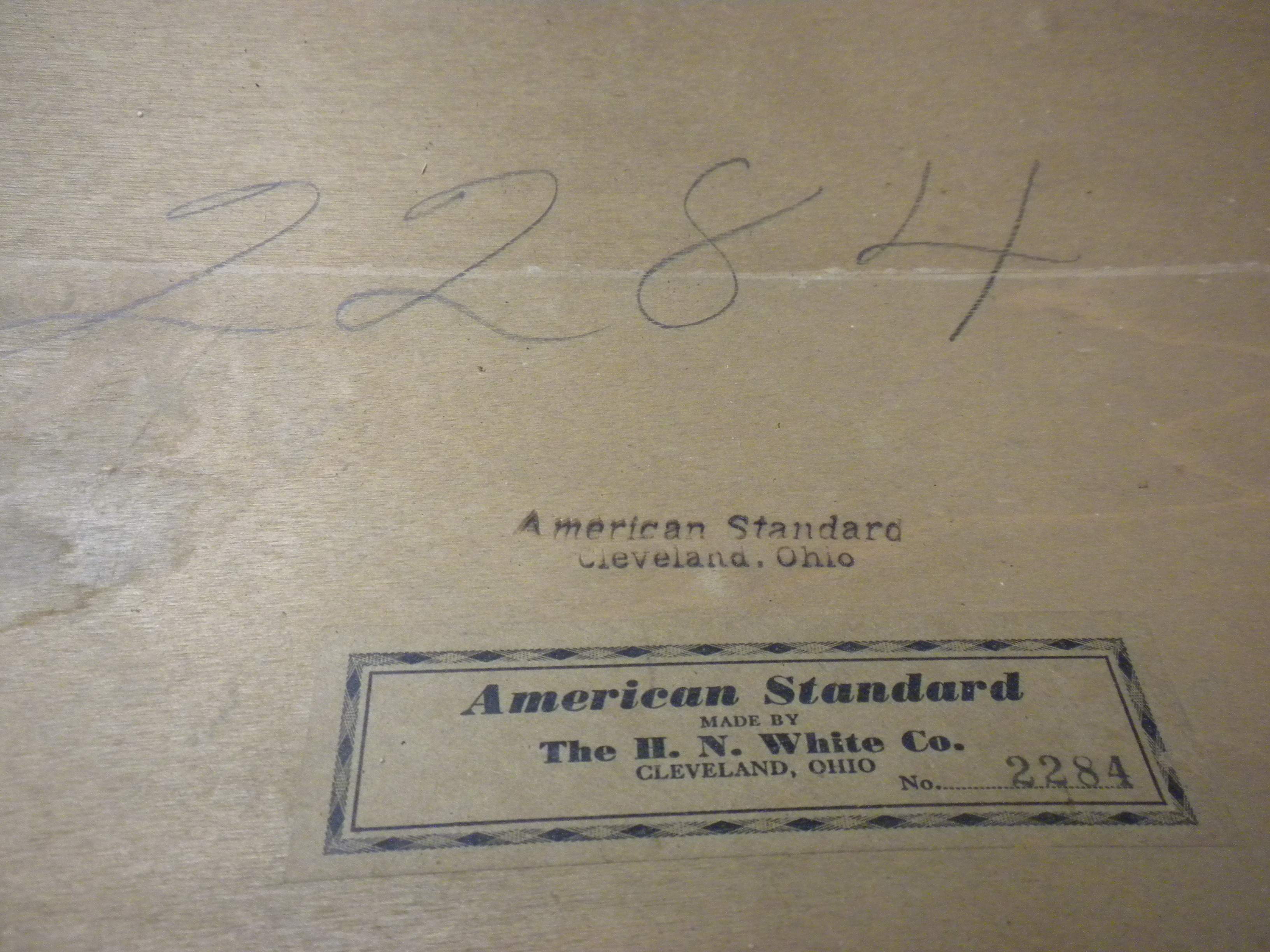
Those machines have a street value of approx. $250 in good working order. They also have a unique spacing, so they are worth fixing proper. I'd bet the extra tension from a misaligned hole is the main culprit. It is not my favorite task, but very manageable repair; I do it often....
There should be no plating on that button, just mid grade steel.
Remove the old machine from the neck. Drill out the remains of the old button- remove the old key section and cut out with a Dremel if necessary. DO NOT SIMPLY CHOP OFF THE WHOLE END. Find a donor button- plenty of old Pbass style single machines will work fine. Take the unit to a jeweler or bicycle frame builder who does good silver soldering- don't misrepresent the name- silver soldering is more like a high temp braze than a low temp electronics solder. Silver solder up the two parts, clean up, re install....
Last edited:
Thank you for setting me straight! I was a school orchestra student and never often looked at or learned about the different basses. This is my first bass I own myself, I’m glad to know it’s a nice one! The previous owner painted the bass himself so unfortunately I have to imagine the bass’s value is already significantly less than it should be. I really appreciate the advice, I’ll look into finding someone that can help me.
First thing’s first, the bass you have and don’t know much about is a collectible classic and one of the most highly regarded double basses ever made in America.
That makes it worth taking care of, because looking after it will affect what your bass is worth.
If you replace the machines, you will significantly devalue the instrument even if the scroll doesn’t have to be modified to fit new machines. Call jewelers and metal shops. What you want is to connect with someone who can cut you a copy of the grip on the three intact gears and braze it onto the shaft.
This is a common repair. The grips on HN White machines are flimsy and frequently break.
- Aug 1, 2005
- 3,546
- 1,421
- Disclosures
- Private Inventor - Bass Capos
James,
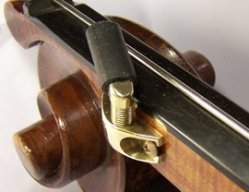
Are those things really soldered in? They look simply riveted to me. Also, isn't brazing without removal from the lacquered brass plate is gonna cause a whole lot of polishing work?
Are those things really soldered in? They look simply riveted to me. Also, isn't brazing without removal from the lacquered brass plate is gonna cause a whole lot of polishing work?

James,
Are those things really soldered in? They look simply riveted to me. Also, isn't brazing without removal from the lacquered brass plate is gonna cause a whole lot of polishing work?
In the picture I don't see any rivets. Soldering as mentioned above seems to be the way to go. I acquired a used Yamaha Silent Bass with the A string tuner being slightly bent and the plate grip replaced and cut from some sheet aluminum (I think). No rivets on any of the tuners hold the grip plates in place. It had obviously taken a fall. When I got it the grip plate replacement was loose so I just epoxied it in place. Works great but not what I would do in this instance.
- Aug 1, 2005
- 3,546
- 1,421
- Disclosures
- Private Inventor - Bass Capos
Take a close look at the picture on a screen larger than your phone. You will clearly see rivets, or I would describe the joint as "pinned". I'm not saying there wasn't soldering as well, but I see no evidence of it.
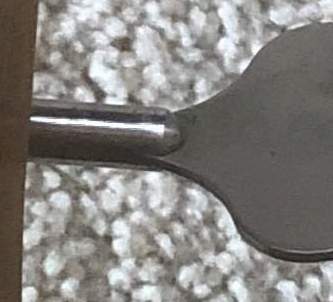
Nevermind the tuner key...Look at the NUT! A small bird could fly between the space between the strings and fingerboard.
This bass needs some TLC (Tender Luthier Care), ASAP, IMFO.
Just being my usual helpful self.
Thanks.
This bass needs some TLC (Tender Luthier Care), ASAP, IMFO.
Just being my usual helpful self.
Thanks.
- Aug 1, 2005
- 3,546
- 1,421
- Disclosures
- Private Inventor - Bass Capos
Mein Gott! I didn't even notice that. There are exotic cars which could slip through that gap without touching anything!Nevermind the tuner key...Look at the NUT! A small bird could fly between the space between the strings and fingerboard.
This bass needs some TLC (Tender Luthier Care), ASAP, IMFO.
Just being my usual helpful self.
Thanks.
- Aug 1, 2005
- 3,546
- 1,421
- Disclosures
- Private Inventor - Bass Capos
Just going back to James' comment. What is involved in removing the rivets holding the pillow blocks to the plates? If these tuners are really that precious, it might be worth doing this so you could more easily refinish the brass plates and then replace the missing key without the hassle of having the worm gear attached to something during the process?
When I first got my Alcoa the D tuner had lost its key and had a quarter inserted into the slot instead. I purchased some brass stock and spent hours hand-cutting/filing a new key for it.
These are pressure-fit and channeled keys and in solid brass they are pretty stout and tough to work; the one I made had to be carefully tapped into place when ready and it has stayed without movement very nicely.
Not having an original key to use as a template, I had to eyeball it and actually produced a slightly smaller, slightly different shape than the originals, but it works and from 20 feet it doesn't look much different than the other keys.
Fortunately none of my keys are plated so the key I made has darkened nicely to match the others.
These are pressure-fit and channeled keys and in solid brass they are pretty stout and tough to work; the one I made had to be carefully tapped into place when ready and it has stayed without movement very nicely.
Not having an original key to use as a template, I had to eyeball it and actually produced a slightly smaller, slightly different shape than the originals, but it works and from 20 feet it doesn't look much different than the other keys.
Fortunately none of my keys are plated so the key I made has darkened nicely to match the others.

I appreciate everyone’s comments! I’ve definitely got some work cut out for me, after thanksgiving I’ll start looking into everything more.
Oy! It's like there aren't any slots at all!Mein Gott! I didn't even notice that. There are exotic cars which could slip through that gap without touching anything!
Was this supposed to be the "steel bass"?
Here ya go!It's going to be a lot of fun playing in F or Bb with that nut!


