• TalkBass has been independent since 1998. Add your voice.
    Create a free account to reply to discussions, view embedded media, and browse with fewer display ads.
    Join freeLog in
    Want zero display ads or expanded classifieds tools? Compare plans.

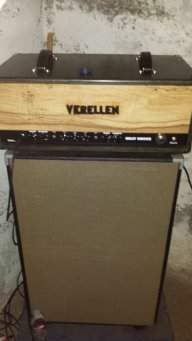
Turn down your Ampeg! LOL

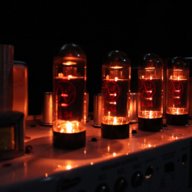
BY53^^^Oh, hey, thanks. Way to get me GASing for a 450-lb. head with 37 tubes in it...plus a cabinet that can do it justice.

(turns away, sniffles a little bit, checks wallet to see if there might be a a bunch of stray hundies hiding in there)
 
Recently I saw a local metal band that I am friends with, hadn't seen them in over a year. They are kind of doomy, the singer/1st guitarist's girlfriend is the bassist. They got up on stage and the guy started playing his guitar slowly, a clean riff with an ominous tritone in it. I thought they were just doing a sound check. After he played it like 4 times, BOOM! The rest of the band crashed into the riff exactly on time and hit me in the face like a ton of bricks. Fantastic, that's the way you are supposed to play metal. The impact of the drums, bass and second guitar was so powerful.

Anyone who says that there is no need for being loud has no freaking idea what they are talking about.
 
Do you think maybe its because field recording equipment and processes have come a long way? Maybe a 57 year old recording isnt a fair judge of sound quality. Id be more interested to hear someone whose been to boths opinion on what stuck with them more.

A lot of things have to come together to produce a good reissue. There are many older recordings that were done properly, good signal chain from high end mics and preamps to the recorders. Quality can be as good or better than many products released today. The equipment that people used back then is sought after today, the tonal qualities of some older audio transformers can not be matched today.

Proper preservation of the tapes is important. As far as restoration, digital editing and processing can produce spectacular results. There has to be the budget and time to do it properly.

The Cream recordings had the writing, the musicianship, and the recording quality to provide a good base to work with. Potential sales justified the expense of the restorations. They will be mining the wealth of material in their catalog, nothing being produced today seems to be able to compete with what they And other good bands accomplished. Fresh Cream, their first album, has been expanded into a four disk set. Hopefully they will inspire the current generation. At least those that can afford it.


Ive theorized on this before and i wonder how much the advent of lower volume shows have effected live crowd turnout. People turn out to live shows for theatre not for the music. They want to be blasted with volume and to experience something they dont get in their home, rather than coming to the show to listen to a slightly worse version of a song they could have bought off itunes for 99 cents. The show is what sticks in peoples minds and obscene volume that shakes your insides can do alot for a show.

Music used to be important. People went to shows for the music. Today, more often than not, shows are social gatherings. People stand in groups talking, taking selfies, not even paying attention to the performance, the music is secondary. Of course, there are many examples where this isn't the case. Especially the smaller more intimate shows, good sound but not over the top. But the trend is moving away from music enjoyment at larger shows, especially outdoor ones.
 
Last edited:
A lot of things have to come together to produce a good reissue. There are many older recordings that were done properly, good signal chain from high end mics and preamps to the recorders. Quality can be as good or better than many products released today. The equipment that people used back then is sought after today, the tonal qualities of some older audio transformers can not be matched today.

Proper preservation of the tapes is important. As far as restoration, digital editing and processing can produce spectacular results. There has to be the budget and time to do it properly.

The Cream recordings had the writing, the musicianship, and the recording quality to provide a good base to work with. Potential sales justified the expense of the restorations. They will be mining the wealth of material in their catalog, nothing being produced today seems to be able to compete with what they accomplished.. Fresh Cream, their first album, has been expanded into a four disk set. Hopefully they will inspire the current generation.


Music used to be important. People went to shows for the music. Today, more often than not, shows are social gatherings. People stand in groups talking, taking selfies, not even paying attention to the performance, the music is secondary. Of course, there are many examples where this isn't the case. But the trend is moving away from music enjoyment at these shows.

Its true that the studio equipment from then is still sought after and the recording quality was high. But im talking about specificaly live recordings. Did they use the same equipment live as in the studio?

I mean is that a cause or a symptom for people at live shows? I find personally with higher volume comes more immersion. If i can hear people talking at the back of the venue during the quiet parts it can ruin my enjoyment od the music.
 
  • Like
Reactions: Sartori
I found Mr. Hull's message to be thoughtful and well crafted, and as relevant today (if not more so) as it was when it was first published, which I'm assuming was sometime in the 1950s or 60s.

I hope today's musicians will take a moment to think about what Mr. Hull was saying. Music should be about quality, not quantity, and amplifiers should be used with careful consideration for the overall sound presentation.

Thanks for posting this timeless message.
Well - he's right about the battle for volume making musicians sound worse - but as far as "loud music" (meaning rock and roll) not being able to swing - well, if he means literally "swing" as in jazz, no it doesn't, but having a groove and feel - he's wrong.

Old Everett is notorious for hating Rock and Roll, but he was a smart enough businessman to cater to its needs producing progressively louder amps for both guitars and bass - including the V9 which is essentially (over-simplifying wildly here) an SVT aimed at guitarists - with not 8 but 9 10 inch speakers! Can you imagine having to compete with a guitar pushing 300 tube watts into distortion with even more (not much but still more) speaker area than an SVT cab? (I have read that it was actually THESE that the stones used for guitar not actual SVTs, but haven't done the research to confirm if either is actually the case). I know a lot of this super loud stuff is POST EH, but he started Ampeg down the road. But hey - Leo never anticipated Rock and Roll neither.
 
  • Like
Reactions: Sartori
Its true that the studio equipment from then is still sought after and the recording quality was high. But im talking about specificaly live recordings. Did they use the same equipment live as in the studio?

I mean is that a cause or a symptom for people at live shows? I find personally with higher volume comes more immersion. If i can hear people talking at the back of the venue during the quiet parts it can ruin my enjoyment od the music.
Well, you shouldn't hear people at the back of the hall - but you SHOULD be able to hear what they other people in the band are doing - it makes the whole band play better - a lot of muscians (and our favourite whipping posts, guitar players tend to this more than most) set up so they mostly hear themselves on stage. I mean you need to HEAR yourself, but you should have a pretty good idea of what's coming out of your speaker without earing it anyway - it IS coming out of your hands.
(Note: I say "you" as in "a person", not specifically you.)
 
Its true that the studio equipment from then is still sought after and the recording quality was high. But im talking about specificaly live recordings. Did they use the same equipment live as in the studio?

I mean is that a cause or a symptom for people at live shows? I find personally with higher volume comes more immersion. If i can hear people talking at the back of the venue during the quiet parts it can ruin my enjoyment od the music.

It depends. Some did insist on top of the line equipment. Big bands back then were big money, they didn't skimp on the live show recording technology. The fuzzy image below is Chuck Berry in 1958. he's singing into a top of the line Neumann studio condenser microphone. This was unusual but he insisted on quality when live shows were being recorded.

There were, and are, remote recording trucks with equipment that is the same as that used in studios. In the past, bands rented these trucks to record albums at odd locations. Same for live shows. Today it is even easier because many don't carry bulky 24 track recorders. A studio can be set up anywhere. Bands that can afford it and want to get away from studios, sometimes rent a house or building and set up a studio just to record a project. Live consoles and equipment of top touring bands are studio grade. They often record all their live shows so they want quality.


Neumann mic:
IMG_1573.JPG


I've been to many concerts where I've wondered why people in the audience bothered to show up. I was there for the music, a lot of people were there to socialize and say that they were there. They didn't seem to have much interest in the music. Very distracting for my enjoyment to say the least. I don't think that it came down to the volume level or the quality of the sound. Just a lot of self absorbed people.
 
Last edited:
  • Like
Reactions: TheRealKong
He hated rock music? Everett Hull sounds like a real square.

Roger Waters explains it here with Syd.


Hate to take anything away from someone who made music as well as my pal roger but, "liking it loud" is not a justification - if you can get it loud enough to get THAT sound AND hear each other well enough to play well and introduce nuance and subtlety - THEN you have something. Just loud for the sake of loud is not beneficial to ANY type of music - LOUD does sound inherently good to the human ear, but not as good as GOOD does. Loudness is like sweetness it is just simply enjoyable, but at a certain point it just overpowers all the other flavours and you might just as well be eating sugar.

Summary - Loud is not bad, quiet is not good, but controlled volume with the ability to truly hear the other musicians and interact with them IS good.
 
  • Like
Reactions: Downunderwonder
I found Mr. Hull's message to be thoughtful and well crafted, and as relevant today (if not more so) as it was when it was first published, which I'm assuming was sometime in the 1950s or 60s.

I hope today's musicians will take a moment to think about what Mr. Hull was saying. Music should be about quality, not quantity, and amplifiers should be used with careful consideration for the overall sound presentation.

Thanks for posting this timeless message.
Agreed - there is a reason why small guitar amps are having a renaissance. Musicians have realized that guitar amps sound good when you turn them up till they scream, but that it hurts both your ears and your music when you do that with a full Marshall stack or Twin (or even an AC30 come to that). 15 watts and a 12" are enough to be hard over a drum set in today's more idstrtion friendly times when even a "clean tone" has a significant amount of THD in it.
I always find it amusing to hear other musicians compliment my Old man's signature tone which is a Strat or Les Paul into a Tube Screamer into whatever amp he's sing usually turned up a little as they always compliment his "nice clean tone". I mean they're right - he sounds "clean" and is anything but running high gain, but his sound is significantly more distorted than say Keith Richards without a Fuzz pedal.
My take on it is, to today's ears, the equivalent of a strat into a Twin is like a LP Junior into an AC - what our collective ears have adjusted to is much more THD (and I don't think that's a bad thing - my fave tone personally was an old 2x12 Bassman just before it farted out, it just wasn't loud enough to compete) than the people who created Rock and Roll. So to our ears a Cham on the verge of flames is a "clean" tone and a Marshall set at equal ferocity is a Blues tone.
 
I've discovered it works better for me to simply refuse to turn up when a guitarist gets too loud for the setting we're playing in.

I have yet to meet a loud guitarist who doesn't want a wall of sonic bass sludge to prop them up when they're off on yet another interminable spate of genius and free expression. I refuse to stoke that fire for them. ;)
While I won't stereotype guitarists quite a broadly as you have, but I agree that most musicians (and guitarists most of all) want to hear themselves and a bit of throb underneath for "beef".
I also, took a volume stand in my last years of playing a lot (I hope to bring them back, but my mortgage-paying career needs the attention right now). I downsized to a 175 watt 1x15 combo SWR Workingman's 15) and let it be - I realized that in any situation where I needed more volume than it could produce (it was a LOUD combo) would have FOH support and more volume would actually make the soundguy's job more difficult. Of course, the type of music I was playing allowed for such stand (small bar R&R and Theatre Shows) but realistically even for "loud" music if you can't get by with that (maybe with the extension cab attached) you are probably just plain TOO LOUD.
 
Sounds like a person who has no idea how the equipment works - volume control specifically. While I might not be as capable on the bass as your former bassist, I'll assure you it doesn't require an Ampeg rig to to play obnoxiously loud, and I'm confident I could recreate that frustration with my Mesa, Berg, Aguilar or GK gear. :)

Respectfully, I believe that playing too loud is a choice, not an accident or uncontrollable side effect of the brand of equipment you use.
Exactly, including the fact that if you have equipment that ONLY plays (or sounds good) when it is too loud for the band/situation - that is a CHOICE you made when you got an amp that is too loud. In the same show band when I downsized, the guitar player was playing through a late silverface twin - so one of the 110 watters and he could never get the sound he wanted without making his volume virtually uncontrollable for the FOH guys. He REFUSED to try something like a Deluxe because it didn't "sound the same" - of course it didn't it wasn't 120 dB blaring in his old deaf ears - but a big part was he simply didn't spend the time getting to know what sounded good on a different model of amp - and a Deluxe is hardly a bad sounding amp or incapable of big Fender cleans - it just MIGHT be the most recorded amp in the world because it's loud enough to do clean in a room with drums when need and quiet enough to be controllable (also many people say it's the BEST sounding Fender due to the 6V6s which many people consider sweeter sounding than the 6L6s in a Twin.
That's another thing - so many musicians expect to plug the same guitar into a different amp and get exactly the same sound as through their own without tweaking the knobs - they either say "my bass goes at 6," etc., or don't touch the knobs AT ALL before they judge whether they like the sound or not. I mean, if everything sounded exactly the same right out of the box you A. wouldn't need different model and brands and B. wouldn't need knobs.
 
  • Like
Reactions: Al Kraft
He REFUSED to try something like a Deluxe because it didn't "sound the same" - of course it didn't it wasn't 120 dB blaring in his old deaf ears - but a big part was he simply didn't spend the time getting to know what sounded good on a different model of amp - and a Deluxe is hardly a bad sounding amp . . .

Obligatory reference here to Neil Young's famous setup of a tweed Deluxe with mechanical servos to change the knob settings based on what stomp switch is pressed. Neil seems to have no trouble being loud and sounding good. :) (And as hard as that poor little amp has been worked over the years, I have to wonder just how much maintenance has gone into it.)
 
"Quantity has a quality all its own." this applies to volume too.
Orchestras are loud, the big bands of the Swing era were loud.
The jazz fusion bands (the last time when jazz was exciting) were loud (this was ever the complaint of the purists).
Go to the typical dance club or rave and the DJ is cranking it louder than most concerts.
An important element of Rock music has been, is and will always be high volume.

Exciting music is less exciting played quietly. Hell, go see a movie, during the exciting/dramatic parts the soundtrack is mixed louder.

Does this mean that live performances must be excruciatingly loud? Of course not, (unless you're Sunn O)) but that is a different conversation) loudness is scalable to the venue. Modern technology allows for clarity to be achieved at higher volume than in the past and the effective use of loudness (as separate from dynamics) is another aspect of performance that musicians must learn to utilize.

I know that it's a cliché but if you think that it's too loud, maybe you are too old. :D
 
Obligatory reference here to Neil Young's famous setup of a tweed Deluxe with mechanical servos to change the knob settings based on what stomp switch is pressed. Neil seems to have no trouble being loud and sounding good. :) (And as hard as that poor little amp has been worked over the years, I have to wonder just how much maintenance has gone into it.)
Yeah, and Young's Deluxe is a TWEED Deluxe - so about 12 Watts. If that's loud enough for Neil, it's loud enough for ANYONE.
 
While I won't stereotype guitarists quite a broadly as you have, but I agree that most musicians (and guitarists most of all) want to hear themselves and a bit of throb underneath for "beef".

I don't think I'm broadly stereotyping quite as much as you think. I confined the comment to "loud" guitarists (you know the type I'm speaking about) based on roughly 50 years of playing music with other musicians and…uh…people who happen to own a musical instrument. ;)

I also have a rock/blues guitarist SO. And she wouldn't let me get away with swipes at guitar players as a tribe unless she felt they were justified. So I have a built in check on what I can get away with saying about guitarists. :smug:
 
  • Like
Reactions: danosix