If a cabinet has two parallel inputs does that mean it could handle two different amp head simultaneously? I have two jack's on my bass and thought I could process the signals separately then send to one cabinet. Maybe people do this all the time and it's a dumb question, I've never heard of it though so I thought there may be a good reason not to.

Enjoy the benefits of a premium membership!
Upgrade Account
-
TalkBass has been independent since 1998. Add your voice.
Create a free account to reply to discussions, view embedded media, and browse with fewer display ads.
Join free Log in
Want zero display ads or expanded classifieds tools? Compare plans.
You are using an out of date browser. It may not display this or other websites correctly.
You should upgrade or use an alternative browser.
You should upgrade or use an alternative browser.
Two amp heads, one cabinet?
- Thread starter PTSD
- Start date
More options
Who Replied?
JeezyMcNuggles
Inactive
- Feb 23, 2018
- 14,723
- 20,970
- Disclosures
- I suck, but nobody really notices
NoIf a cabinet has two parallel inputs does that mean it could handle two different amp head simultaneously? I have two jack's on my bass and thought I could process the signals separately then send to one cabinet. Maybe people do this all the time and it's a dumb question, I've never heard of it though so I thought there may be a good reason not to.



The only way to do it is with something like this, otherwise you'll fry your heads. This is assuming you want to be able to use both amps at the same time and switch back and forth
Headbone VT - Radial Engineering

Headbone VT - Radial Engineering
Last edited:
The other option would be to plug each amp into each side of a stereo cabinet, but this makes several assumptions. This is also used more as a space saving measure at home or on a small stage.
1. Your cabinet is indeed stereo
2. Each side of the cabinet matches the impedance of the amps being plugged in
3. Each side of the cabinet can handle the wattage of the amp being plugged in.
4. Your intent is NOT to use both amps at the same time and switch back and forth. You can use both at the same time but you have to keep moving your cable back and forth to each amp input jack. or have a guitar plugged into each amp.
1. Your cabinet is indeed stereo
2. Each side of the cabinet matches the impedance of the amps being plugged in
3. Each side of the cabinet can handle the wattage of the amp being plugged in.
4. Your intent is NOT to use both amps at the same time and switch back and forth. You can use both at the same time but you have to keep moving your cable back and forth to each amp input jack. or have a guitar plugged into each amp.
From what it appears your situation is, no, not the same cab.


No cabinet has two inputs. One is an input and the other is a parallel contact for daisy chaining.
Never connect two amplifiers to one cabinet. Severe damage to the equipment will result.
Unlike others, I will discourage trying anything elaborate until you understand simple setups.
Never connect two amplifiers to one cabinet. Severe damage to the equipment will result.
Unlike others, I will discourage trying anything elaborate until you understand simple setups.

No.
Why?
The parallel inputs on the speaker cabinet are wired hot to hot and ground to ground. So if you plug both amps in together the speaker outputs on the two amps are connected together which will destroy both of them
Why?
The parallel inputs on the speaker cabinet are wired hot to hot and ground to ground. So if you plug both amps in together the speaker outputs on the two amps are connected together which will destroy both of them

Maybe this will help.
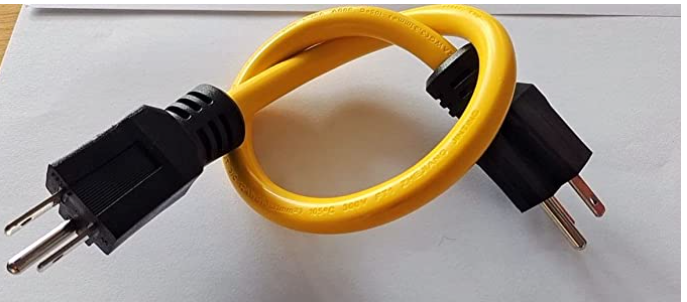
I'm joking, this won't help, but it obtusely represents what OP is wanting to do. Don't do this. Or that.
I'm joking, this won't help, but it obtusely represents what OP is wanting to do. Don't do this. Or that.


You could output the preamp of one head into another head if you just wanted to show 2 heads. That would not damage anything. Be mindful of the levels.
But, please, if you do it against all advice, record it with your phone and post it here, OK? 

Your cabinet, like most, has two JACKS - that makes it easy to connect a second cabinet with a jumper cable from the first cabinet to the second - keeps thing tidier than running 2 cables from the head.
If you connect two amplifiers, you are likely to damage at least one of the amplifiers, maybe both, and possibly even take out the speaker(s) in the cabinet in the ensuing electrical firestorm. It's a VERY bad idea, and none of the equipment manufacturers involved warranties their gear against that. But as specified above, if you decide to do it anyway, film it, and make sure you say "watch this!" before you destroy all your gear in one fell swoop. That way, someone else can earn from your mistake.
If you connect two amplifiers, you are likely to damage at least one of the amplifiers, maybe both, and possibly even take out the speaker(s) in the cabinet in the ensuing electrical firestorm. It's a VERY bad idea, and none of the equipment manufacturers involved warranties their gear against that. But as specified above, if you decide to do it anyway, film it, and make sure you say "watch this!" before you destroy all your gear in one fell swoop. That way, someone else can earn from your mistake.


It can be done with a current Ampeg SVT 810E.
One of the jacks on this cab is switching and breaks it into essentially two 410s. I would call it dual mono rather than stereo.
The Ampeg Heritage 810 manual is attached.
From p. 5.
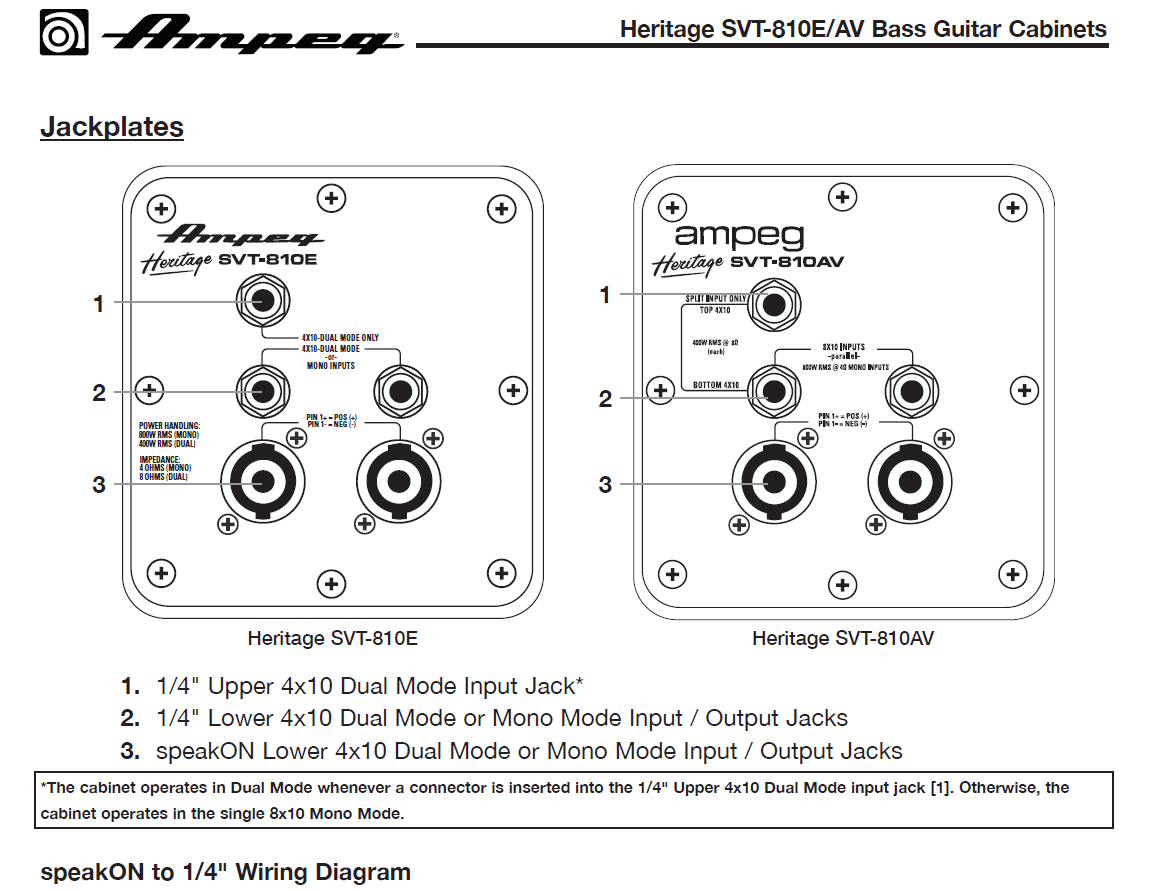
The top 1/4" jack (labeled 1) is the switching jack. If you insert a plug into jack 1, it opens a switching contact so the cab functions as two 410s. Only jack 1 connects to the top 410 (at 8 ohms) All other jacks connect to the bottom 410 (at 8 ohms).
If a plug is not inserted into jack 1, the cabs operates as an 810 (at 4 ohms).
One of the jacks on this cab is switching and breaks it into essentially two 410s. I would call it dual mono rather than stereo.
The Ampeg Heritage 810 manual is attached.
From p. 5.
The top 1/4" jack (labeled 1) is the switching jack. If you insert a plug into jack 1, it opens a switching contact so the cab functions as two 410s. Only jack 1 connects to the top 410 (at 8 ohms) All other jacks connect to the bottom 410 (at 8 ohms).
If a plug is not inserted into jack 1, the cabs operates as an 810 (at 4 ohms).

No, 2 parallel inputs on your cab is for daisy chaining another bass cabinet not for plugging in another amp head. I've never done it nor do I know of anyone who has but, and I'm only guessing, it would probably damage the heads and or the speaker.