• TalkBass has been independent since 1998. Add your voice.
    Create a free account to reply to discussions, view embedded media, and browse with fewer display ads.
    Join freeLog in
    Want zero display ads or expanded classifieds tools? Compare plans.

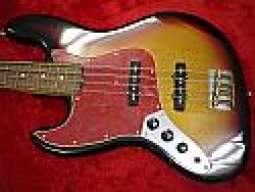
Two Pups Wide Open

I dislike the tone from 2 Jazz pickups on full in general, that scooped, muted sound works only for slap IMHO. The bridge pickup sounds nice and growly on it's own, and the neck pickup is kinda wooly by itself(makes it nice for that acoustic driven song, but in rock it gets buried) but the 2 together wide open=:rollno: that's just me though, and you also I see, line6man. :D
 
Most of the time I run with both pup's on full, sometimes with only the bridge on full if playing something more melodic/expressive and want to cut through the mix better. That said, while practicing with headphones one night last week, I didn't care for either tone, and eventually dialed in a full neck/half bridge blend that worked for me. YMMV as they say.
 
Although not a commonly used term anymore, "potential divider" is correct and is the source of the term "potentiometer". A potentiometer is simply a device for measuring potential (voltage) against a known voltage source. It is, in effect, a voltage divider - or a potential divider.

As used in the world of guitar volume and tone controls, it serves the same purpose of dividing the potential of the incoming signal (from the pickup) ratio-metrically.

No it isn't.
Pot is short for potentiometer.

I'm not sure where you heard that.
 
It's not that I couldn't the stand of my Jazz bass with only one pick-up on at a time, but I just NEVER found a use for the sound of anything other than both full on. I had a three knob set up, but there was no taper at all on the two volume knobs, so there was no blend of just bringing in a little bit of one of the pickups, and then it was just a pain to deal with 2 volume knobs in order to kill the output on stage. So i put a 3 way switch on both my Jazz basses, in between the master volume and tone. And that stays in the middle position all the time, so i'm thinking about removing that as well and just leaving both pickups on all the time permanently.

The "Jaco" bridge sound is too thin for my purposes (I hardly ever solo), and the neck sound is too woofy/indistinct (some people seem to think that gets a Jazz closer to a P sound, but not to my ears), so i just leave them both on. One less thing to worry about.
 
Although not a commonly used term anymore, "potential divider" is correct and is the source of the term "potentiometer". A potentiometer is simply a device for measuring potential (voltage) against a known voltage source. It is, in effect, a voltage divider - or a potential divider.

As used in the world of guitar volume and tone controls, it serves the same purpose of dividing the potential of the incoming signal (from the pickup) ratio-metrically.

It's technically correct, but it just seems like an odd name for a passive electromechanical component.

I don't think I've ever seen a potentiometer referred to as a "potential divider" in any electrical theory books, unless it was the description of what a pot did or something.:hyper:
 
The two soapbars in my Washburn are full on all the time...literally. As both are wired direct to the jack. No preamp, no volume or tone controls. Just full on.

It sounds killer. Personally I feel having both pups full on allows for more tonal control by hand placement/positioning. It seems my bass is much more sensitive to where I play...near the neck, nearer to the bridge or directly over one or the other pickup.

I love it.
 
all but two of my basses are pj's, so i guess i don't count. but i like them pretty much whatever i do with them...both on full, or p only, or j blended slightly below the p, or j blended slightly above the p (that one i like only occasionally because it's too jaco-y, but now and then it sounds good for solos).

basically i like it all and see no reason to make a choice.
 
My main player is a Nordy vJ4 with passive big singles... with a VVT arrangement. I have about four ways I set up the volumes on my bass depending on the song: both volumes full on; both at about 8.5, neck pick-up about 20% behind the bridge pick-up; and the neck pick-up about 20% behind the bridge pick-up. Sometimes I run the neck pick-up solo, with the bridge at 0.

So, I guess I'm kind of all over the place. But, the Nordy with big singles just gets so many good tones, I have to use them all!
 
It's technically correct, but it just seems like an odd name for a passive electromechanical component.

I don't think I've ever seen a potentiometer referred to as a "potential divider" in any electrical theory books, unless it was the description of what a pot did or something.:hyper:

I've never really seen it used much either. But then, who uses the term "potential" when referring to voltage? Physicists. And possibly Englishmen. :hiding:

Back on topic... Regarding 2 pickups full up, it really depends on the style of music, the venue, the band, etc. Usually live, I don't like to play a Jazz bass because the bass had a tendency to get lost in the mix more easily. However, if it's the right band with lots of space, the Jazz works great. Sometimes I'll roll the bridge pickup back a little for a bigger sound, and the neck pickup off for a more focused sound. Or I play a Pbass or a fretless MM-style in single-coil mode (or parallel if it's too noisy).

My G&L 5s get a lot of use with both pickups full up in parallel mode and outer-coils-only SC mode. In series mode, I tend to use one or the other pickup, but rarely both at the same level. The G&L MFDs don't suffer from the same phase cancellation and mid-cut that regular jazz pickups suffer from. They are spaced a little closer together and have more meat in the mids, so they cut through a wall of drums and guitars with no problems. Certainly better than my Jazz.

In a recording situation, the Jazz with both pickups full-up sounds good just about everywhere. I'll use other basses to record, but the Jazz is ALWAYS a good option in the studio (and goes to most sessions with me, unless it's a fretless-only session).

I just traded a Jazz V for a MM SR5, so we'll see how I like the MM. I've played them a few times, but never gigged one. I'll probably take it to the studio with me next week and try it against my tried-and-true L2500.
 

Latest posts