Simple and cool! For an electric bass version, I'd make the saddle from a bar of 1/4" square aluminum. Saw the slot 1/4" wide x 1/8" deep. Set the angle of the slot to get the approximate intonation positions, then do "angle filing" at each string notch to fine-tune the intonation of each string.
And drill it for 5 screws to attach it to the body.
I think you're following the general concept and idea very well.
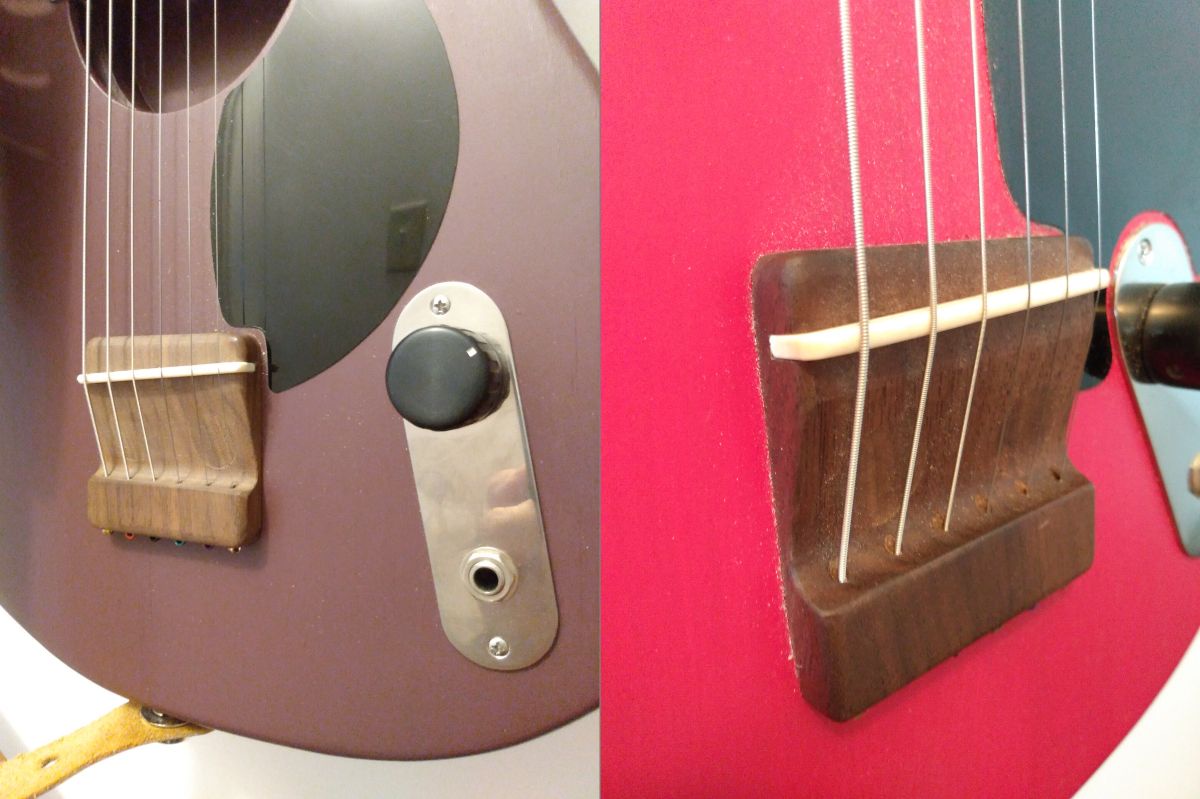
My thought was to use a 1/4" wide bone blank that would permit the stopping point of the string to be shifted forward or to the rear slightly for those who feel the need to micro-adjust intonation.
In actual practice I've found no need to adjust the pre-set intonation for my 6 string guitars, and they should in theory have a greater need for that than a bass.
As long as reasonable care is used in positioning the saddle there are definitely advantages to using 1/8" wide material.
First, if the slot is cut just a bit deeper then a standard 1/8" undersaddle piezo transducer can be installed. This can be OK, and I have one of these guitars that has nylon strings, so the piezo is useful for that. I've also found that a piezo undersaddle actually works pretty well for bass, but that's a discussion for another time.
Second, it's very easy to change "action" by calculating amount of change needed, loosening strings, and sliding the old saddle out and sliding a newly cut one into place.
Third, it's cheaper.

The "five screw attachment" is an interesting idea, but there's secret sauce to this design.
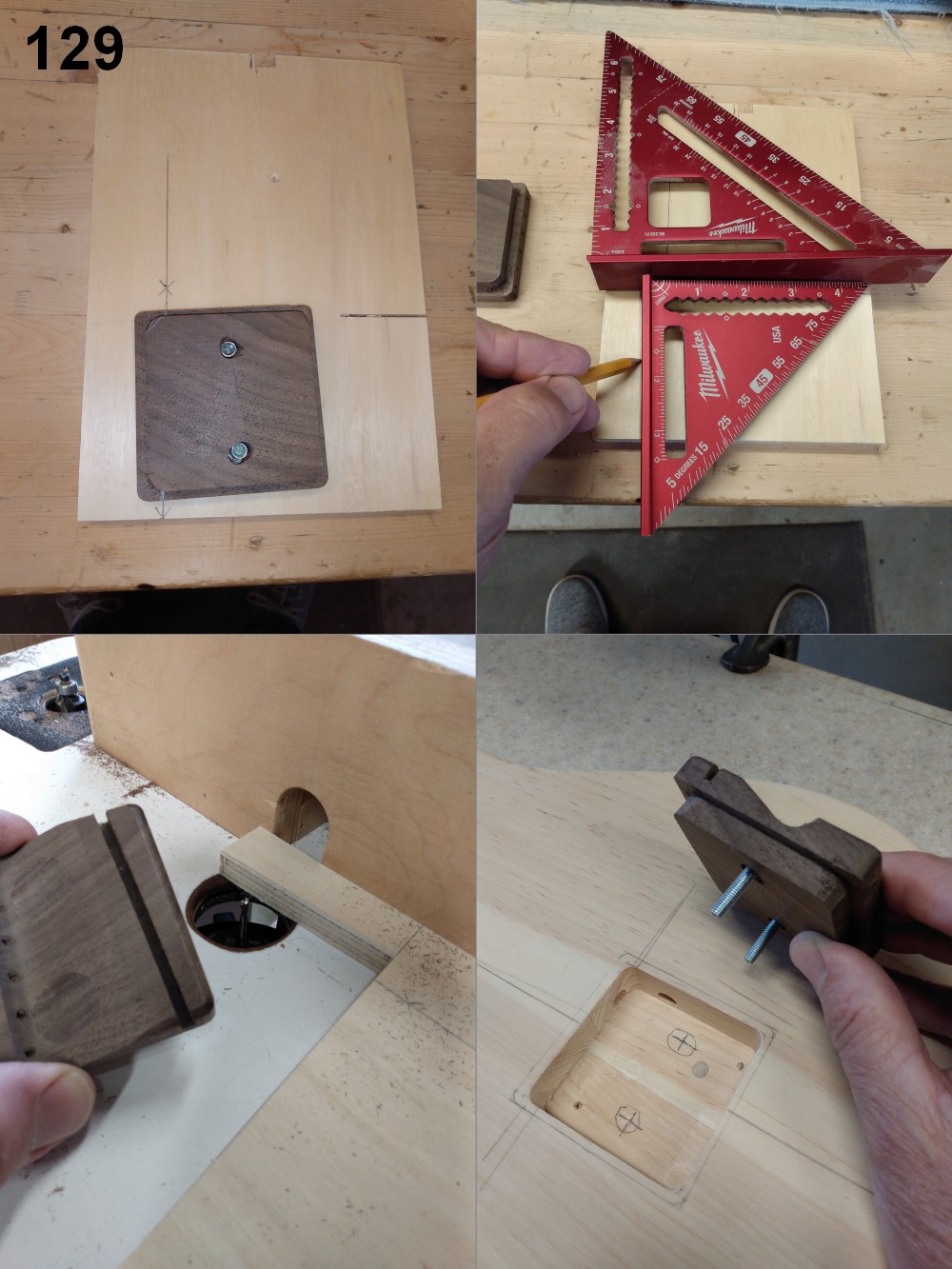
If you look carefully you can see the 3/4" plugs that cover the flanges of two #10-32 tee nuts. The bridge block is passed over a bit on the router table to create a 3/8" by 3/8" lip around the outer perimeter of the bridge block. This drops into a matching cavity routed into the top and firmly locks the block in position. The majority of string tension is held by the front lip as it bears against the body mortise.
Two #10-32 stainless steel pan head machine screws are inserted from the rear of the body to lock the bridge in place. The force vectors presented by the strings have only a very small amount of force applied in a direction that works to lift the bridge out of its mortise.








 (Not for me, I fiddle too much hehe, but that's just me...)