I had a gig last night and was aware at one point that the bass sounded particularly good and natural. I looked at my rig settings, which were in their usual spots. I was trying to figure out what was different when I realized that the wall plug had been kicked out somehow and I was playing totally acoustically! It wasn't a loud gig but there were drums and electronic keys so I was doing my usual thing in that situation. I was playing with my usual softer touch that I'm using these days and wasn't aware of any problem hearing myself or being heard. It took me back to my earliest days of bass playing and was a reminder that the instrument does put out a good amount of sound on its own.

Enjoy the benefits of a premium membership!
Upgrade Account
-
TalkBass has been independent since 1998. Add your voice.
Create a free account to reply to discussions, view embedded media, and browse with fewer display ads.
Join free Log in
Want zero display ads or expanded classifieds tools? Compare plans.
You are using an out of date browser. It may not display this or other websites correctly.
You should upgrade or use an alternative browser.
You should upgrade or use an alternative browser.
Double Bass Unknowingly Unamped!
- Thread starter Bruce Calin
- Start date
More options
Who Replied?

Yesterday I was playing at my usual Sat morning jam, sitting in the corner. For whatever reason, the guitarist to my left and I bumped instruments a couple of times, so I repositioned such that the top of my bass was angled towards the wall to my right. BOY - I couldn't believe how loud it was! I often wonder how well the other folk can hear me. I'd suggest - pretty darned well!... a reminder that the instrument does put out a good amount of sound on its own.
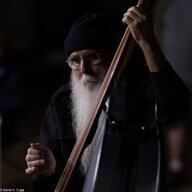
As you guys know, bluegrass -- jams in particular -- are normally not amplified. We get used to that. Even for shows, we practice acoustically and often prefer no monitors on stage, and while it might be easier to just send a piezo to the FOH, we prefer the sound of our acoustic instruments through mics. This is all regional, things change depending on where we are, but generally for bluegrass, acoustic sound is the desired sound.
That said, in jams it can be hard for the bass player to penetrate. As a banjo/mandolin/occasional Dobro and DB player I'm pretty sensitive to that. Get 3 bluegrass banjos and a loud Dobro in a jam and it gets pretty tough to hear anything else. Generally if there are already 2 banjos in a jam, I'll put my banjo away and get out the mandolin; I'm not a high-level Dobro player so especially if volume is already an issue, I'll leave that to other players. Happily you can have a lot of mandolin players before they start sounding obnoxious.
Of course if I'm lucky enough to be the one DB player for a jam, I'll mention if the levels are too high for me to hear myself. Often I can aim my DB sound into an opposite corner or something and help remedy that, but again, with more than 2 banjos, especially if the banjo players have not learned to play sensitively, things can get difficult. Guitars, fiddles and mandolins can be loud too, but the banjos and Dobros of course cut through everything.
Last night I was in a couple of jams at a bluegrass association Christmas party. Unfortunately I didn't bring my DB, I figured there would be plenty of DB players, but there was only one -- I could have played DB all night if I had brought mine.
Anyway, the one DB player there played in 2 of the 3 jams for a couple of hours and then went on into a more intimate 4-person jam in a tight venue. The two other jams were big circle jams, probably 10 to 15 people. I was on mandolin for a while in one of the jams. -- there were 3 banjos, 2 fiddles, 3 mandos, a Dobro and probably 5 guitars. Even with sensitive playing, as I sat opposite the DB player I noticed it was hard to hear him sometimes...
He's a great DB player with a plenty loud DB, and I got a sense he was intentionally playing quietly to try to encourage people to lower volume -- and it worked -- If you wanted to hear the DB, you had to play more sensitively. I've seen other DB players do that in a bluegrass jam, sometimes successfully, sometimes not. It only works in a large jam if people generally have learned to interact with a DB; if they aren't at that experience level they'll just go on without hearing the DB.
In a more intimate high level jam or band situation, typically people know the importance of the DB and will play sensitively to balance volume with all the instruments and voices. It can be a huge pleasure to play DB with people like that.
That said, in jams it can be hard for the bass player to penetrate. As a banjo/mandolin/occasional Dobro and DB player I'm pretty sensitive to that. Get 3 bluegrass banjos and a loud Dobro in a jam and it gets pretty tough to hear anything else. Generally if there are already 2 banjos in a jam, I'll put my banjo away and get out the mandolin; I'm not a high-level Dobro player so especially if volume is already an issue, I'll leave that to other players. Happily you can have a lot of mandolin players before they start sounding obnoxious.
Of course if I'm lucky enough to be the one DB player for a jam, I'll mention if the levels are too high for me to hear myself. Often I can aim my DB sound into an opposite corner or something and help remedy that, but again, with more than 2 banjos, especially if the banjo players have not learned to play sensitively, things can get difficult. Guitars, fiddles and mandolins can be loud too, but the banjos and Dobros of course cut through everything.
Last night I was in a couple of jams at a bluegrass association Christmas party. Unfortunately I didn't bring my DB, I figured there would be plenty of DB players, but there was only one -- I could have played DB all night if I had brought mine.
Anyway, the one DB player there played in 2 of the 3 jams for a couple of hours and then went on into a more intimate 4-person jam in a tight venue. The two other jams were big circle jams, probably 10 to 15 people. I was on mandolin for a while in one of the jams. -- there were 3 banjos, 2 fiddles, 3 mandos, a Dobro and probably 5 guitars. Even with sensitive playing, as I sat opposite the DB player I noticed it was hard to hear him sometimes...
He's a great DB player with a plenty loud DB, and I got a sense he was intentionally playing quietly to try to encourage people to lower volume -- and it worked -- If you wanted to hear the DB, you had to play more sensitively. I've seen other DB players do that in a bluegrass jam, sometimes successfully, sometimes not. It only works in a large jam if people generally have learned to interact with a DB; if they aren't at that experience level they'll just go on without hearing the DB.
In a more intimate high level jam or band situation, typically people know the importance of the DB and will play sensitively to balance volume with all the instruments and voices. It can be a huge pleasure to play DB with people like that.
Without getting too nostalgic for the old days, I played in a club for several years in the late 60s before amplified DB was a common thing. I had a corner spot on the bandstand that helped project the bass and everyone seemed perfectly happy with the level of sound. I also recall that the overall volume was much less than what would be common in a similar situation now. There was a mike for the vocalist but that was it. We had drums and acoustic keys. I also played in some dance bands that had horns but still all acoustic except for vocals. Older bass players would give me tips on ways to produce the maximum bang for the buck, and it didn't mean playing as hard as possible but most efficiently. It worked well then, but I believe that the general noise level of life now is significantly higher and audiences expect more impact in that type of venue.

Man, I love hearing about the days before pickups and amps! Always curious to know how it felt and how everyone managed. I always assumed that people, drummers in particular, played quieter back then. I do think gigs are often louder than they need to be these days, but everyone's used to it I guess so there's no going back.Without getting too nostalgic for the old days, I played in a club for several years in the late 60s before amplified DB was a common thing. I had a corner spot on the bandstand that helped project the bass and everyone seemed perfectly happy with the level of sound. I also recall that the overall volume was much less than what would be common in a similar situation now. There was a mike for the vocalist but that was it. We had drums and acoustic keys. I also played in some dance bands that had horns but still all acoustic except for vocals. Older bass players would give me tips on ways to produce the maximum bang for the buck, and it didn't mean playing as hard as possible but most efficiently. It worked well then, but I believe that the general noise level of life now is significantly higher and audiences expect more impact in that type of venue.
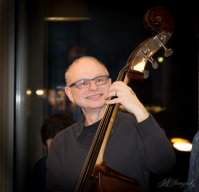
I have often noticed that the key to hearing myself in a band situation, whether on electric or upright, is not to play louder but instead to play more quietly, and usually (not always!) people will notice and try to match the level so they can hear the bass. One of the issues with playing double bass is that we stand behind the instrument and don’t really hear how much it projects out in front of us.
Mot just gigs, but plays and musicals. I'm a big fan of un-amped - or sharing one mic in all but the larger, noisier spaces....I do think gigs are often louder than they need to be these days, but everyone's used to it I guess so there's no going back.
I won't subject you to a lot of old guy stories except to say that in groups of that type there was acoustic piano or guitar with small amp and much lighter drum kits( they were drum sets back then). Pianists often had it worst- forced to play on an old, beat up, out of tune spinet or baby grand. There was a story going around back then about the pianist who pushed the piano off the stage in a ballroom in Iowa. Playing in those halls was fun because they were generally quite bass-friendly and easy to hear what you were playing in. It also helped to realize that even if you couldn't hear yourself that well given the usual issues ,others could and you depended on knowing what you were playing and hearing it in your "virtual ear", if that makes any sense. Also, in most playing situations the bass wasn't supposed to play too many notes at the expense of rhythmic clarity. Sound and pulse were most important. The best players were considered those who played clearly and had great time. I wasn't the most technical player back then, but apparently did what was called for well enough. Amps took some of that necessity away, but IMO contributed, along with many other factors, to increased expectations of volume in general.Man, I love hearing about the days before pickups and amps! Always curious to know how it felt and how everyone managed. I always assumed that people, drummers in particular, played quieter back then. I do think gigs are often louder than they need to be these days, but everyone's used to it I guess so there's no going back.
Last edited:
All true, but I gotta say I'm old enough to have heard most of the unamplified (and gut string) jazz bassist heroes live, and by the time I heard them they were all using amps (and steel) even in quiet duo settings. Charlie Haden was the exception as far as strings (he was half and half) but I never saw him unamplified. All those guys must have known something. The great exception was a younger guy, Dennis Irwin, who pulled off the no amp thing very very well.
I recall interviews with the big jazz players discussing when and why they switched to amped and steel. Practicality and increased volume expectations had a lot to do with it, IMO. It made life easier and more complicated at the same time. A guitar player I worked with back then hated the change. He liked the sound of acoustic bass and thought amping ruined that. I also recall that more contemporary music styles assumed more sound level than the older stuff. The older dance bands trying to update to newer material often made for hilarious results. Times change, and the professional players of the day changed with them. I wouldn't want to go back even if it was possible: there have been too many changes. It is the sound most of us still try for IMO, and it's nice to be able to be reminded occasionally.All true, but I gotta say I'm old enough to have heard most of the unamplified (and gut string) jazz bassist heroes live, and by the time I heard them they were all using amps (and steel) even in quiet duo settings. Charlie Haden was the exception as far as strings (he was half and half) but I never saw him unamplified. All those guys must have known something. The great exception was a younger guy, Dennis Irwin, who pulled off the no amp thing very very well.
Please do! I’ve tried to talk to everyone I meet from that era about this stuff. I don’t wanna go back to guts without an amp but love hearing about what it was like.I won't subject you to a lot of old guy stories
I agree. These are memories worth documenting. (And worth us reading and understanding them in context.)

It's been said that it takes a pretty good drummer to be better than no drummer.
I now realize, that's also true of soundmen - and amps.
I recently did my very first bluegrass gig. I brought in my amp for rehearsal out of habit, and they were looking at me like I had 3 legs. I turned it off after a song or two and the natural blend was freaking fabulous. The vibe got to be so relaxed & fun, we all burst out laughing at the end of one tune! (I can't remember that ever happening before in 35 years of playing plugged in.)
I now realize, that's also true of soundmen - and amps.
I recently did my very first bluegrass gig. I brought in my amp for rehearsal out of habit, and they were looking at me like I had 3 legs. I turned it off after a song or two and the natural blend was freaking fabulous. The vibe got to be so relaxed & fun, we all burst out laughing at the end of one tune! (I can't remember that ever happening before in 35 years of playing plugged in.)
Yesterday I watched a video about playing ampless by Matt Rybicki on YouTube. Coincidently, I played a concert last night with a jazz group of five saxophones and rhythm section. After intermission we played a tune with only one sax player, and midway through I realized I had forgotten to turn the amp back up and was playing totally acoustically. It took me once again back to the old days and how much that can be a functional situation. It was with an acoustic grand piano and tasteful drummer, which certainly helped. Mr. Rybicki has a point. I believe that the fact that I originally learned that way and had that concept helped develop what I think of a good bass sound. I' m not a hardcore MBOL person and it is refreshing to be able to experience the real thing, even accidentally.

Earl
Supporting Member
Dennis used a pickup and amp when needed, in fact he had three pickups on his bass. But yes, his no amp playing was glorious.All true, but I gotta say I'm old enough to have heard most of the unamplified (and gut string) jazz bassist heroes live, and by the time I heard them they were all using amps (and steel) even in quiet duo settings. Charlie Haden was the exception as far as strings (he was half and half) but I never saw him unamplified. All those guys must have known something. The great exception was a younger guy, Dennis Irwin, who pulled off the no amp thing very very well.
I saw Charlie play with Metheny at the Vanguard and his amp was not working so the set was delayed. Finally Lorraine the owner went up to him and said 'Charlie, just play without it like you used to do', and he answered 'I can't.'

I heard Richard Davis with the Thad Jones- Mel Lewis band Unamped at the Village Vanguard in 1968. I was sitting pretty close to the stand(almost on the piano bench with Sir Roland Hanna) and could hear Mr. Davis perfectly. The band played at a volume level that was appropriate for a room that size and I don't believe there were mics for anything, even announcing. There was even acoustic guitar. That's the big band sound I've always liked the best. Later bands of this size, several that I heard and played in, were much louder and "brassier", and a lot of the subtlety and dynamics were lost IMO.

As a pro upright player I used an amp the vast majority of the time. When I first turned pro I used an amp for big band, but played acoustically for classical with a concert band. Eventually the concert band conductor suggested using the amp for classical as well. I reluctantly agreed to give it try. After the rehearsal he said he wanted me to continue using the amp, and over time I figured out how to make it sound a lot better. I have to say, the amp made playing in concert band much more enjoyable for me. However, I wouldn't consider using an amp in a symphony orchestra for classical repertoire.
Late in my career we had a big band leader who was really down on close mic'ing. He wanted the dynamics and tone of an acoustic ensemble. The audio tech adopted more of a distance mic technique. When I cross trained to audio, I experimented and (IMHO) improved on his approach. I used three AKG C414s on the saxes and a pair of RE20s on the bones. I also had a pair of mics on the trumpets, but usually the sax and bone mics picked up enough trumpet, so they were not on for section work. The horns mics were placed at a distance of about 4' from their respective sections. This approach definitely produces a more natural sound than having the mics stuffed down the bells, which I think sounds awful, but is very common.
This particular big band had soloist walk up front to take a ride. The solo mic was a C414 on a mic stand with a quick adjust clutch, so each player could place the mic at an appropriate height.
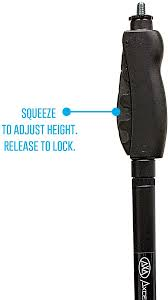
The mic was tilted down at about 45 degrees. This improved how well it picked up sax and took the edge off for trumpet. I spiked the floor with gaff tape to mark where the soloist should stand to keep the desired distance from the mic.
Distance mic'ing typically works well as long as the players don't expect a monitor. If a monitor is required, the mic has to be pretty close to the horn to get sufficient gain before feedback.
Eventually I was asked to mic the full concert band for indoor events. To my surprise I was often able to improve on the clarity, tone, and balance of a large acoustic ensemble without adding significantly to the volume.
Regarding dynamics. Flat dynamics somewhat correlate to using a PA, but IMHO a band can still have great dynamics even when they are mic'ed. I.E. correlation is not equivalent to causation. IMHO the responsibility for flat dynamics falls on the music direction and musicianship.
I don't have any sort of problem with people playing acoustically. IMHO, do whatever is best for the performance.
Late in my career we had a big band leader who was really down on close mic'ing. He wanted the dynamics and tone of an acoustic ensemble. The audio tech adopted more of a distance mic technique. When I cross trained to audio, I experimented and (IMHO) improved on his approach. I used three AKG C414s on the saxes and a pair of RE20s on the bones. I also had a pair of mics on the trumpets, but usually the sax and bone mics picked up enough trumpet, so they were not on for section work. The horns mics were placed at a distance of about 4' from their respective sections. This approach definitely produces a more natural sound than having the mics stuffed down the bells, which I think sounds awful, but is very common.
This particular big band had soloist walk up front to take a ride. The solo mic was a C414 on a mic stand with a quick adjust clutch, so each player could place the mic at an appropriate height.
The mic was tilted down at about 45 degrees. This improved how well it picked up sax and took the edge off for trumpet. I spiked the floor with gaff tape to mark where the soloist should stand to keep the desired distance from the mic.
Distance mic'ing typically works well as long as the players don't expect a monitor. If a monitor is required, the mic has to be pretty close to the horn to get sufficient gain before feedback.
Eventually I was asked to mic the full concert band for indoor events. To my surprise I was often able to improve on the clarity, tone, and balance of a large acoustic ensemble without adding significantly to the volume.
Regarding dynamics. Flat dynamics somewhat correlate to using a PA, but IMHO a band can still have great dynamics even when they are mic'ed. I.E. correlation is not equivalent to causation. IMHO the responsibility for flat dynamics falls on the music direction and musicianship.
I don't have any sort of problem with people playing acoustically. IMHO, do whatever is best for the performance.
I don't object at all to miking anything when called for. My comment referred more to the way the band played and the way I perceived the overall sound. To me it was less "in your face" even though on the occasion I referred to it was literally "in my face" I was so close. The players simply weren't trying to play so loud. I heard several name bands a few years later, and also played in some of similar size, when everyone seemed to be playing as loud as they could most of the time. It felt to me like the feel was lost for the sake of sheer power and volume. At the risk of sounding like an old codger, I never needed ear plugs in this type of band early on, but within a few years they became essential. I think it was a change in peoples' musical tastes and perception of appropriate sound levels and listening habits.
... a change in peoples' musical tastes and perception of appropriate sound levels ...
Yup... The advent of blue tooth ear buds has had a marked effect on how well a large degree of the population hears.
Not to say other hobbies and habits don't also damage hearing (don't ask how I know
 ).
).


