
Enjoy the benefits of a premium membership!
Upgrade Account
-
TalkBass has been independent since 1998. Add your voice.
Create a free account to reply to discussions, view embedded media, and browse with fewer display ads.
Join free Log in
Want zero display ads or expanded classifieds tools? Compare plans.
You are using an out of date browser. It may not display this or other websites correctly.
You should upgrade or use an alternative browser.
You should upgrade or use an alternative browser.
Unknown Bass Guitar
- Thread starter Johan Heyns
- Start date
More options
Who Replied?

devnulljp
Supporting Member
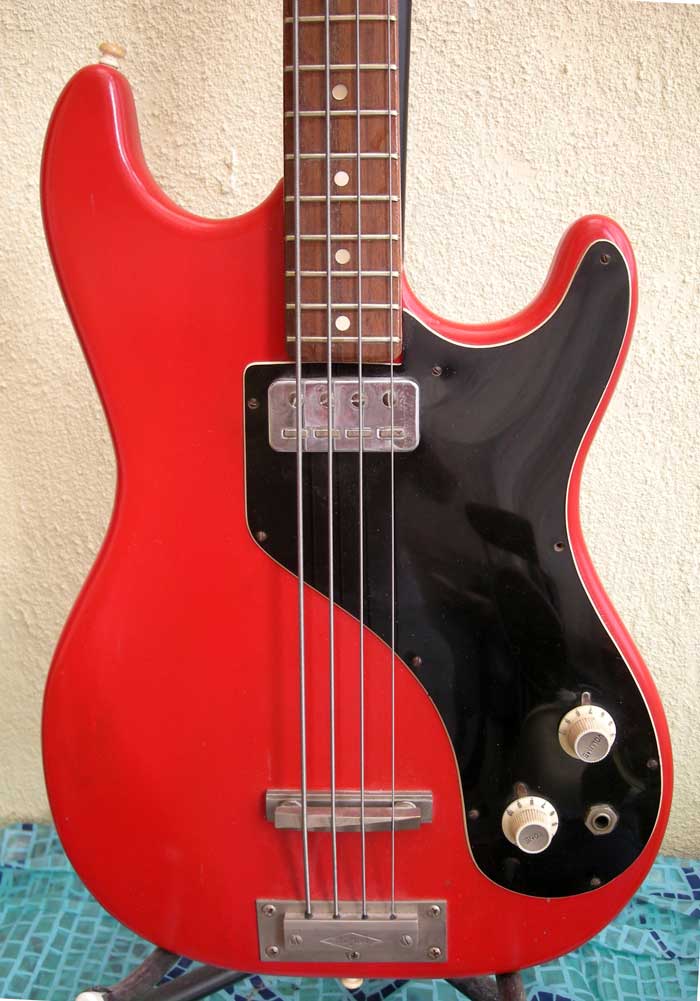
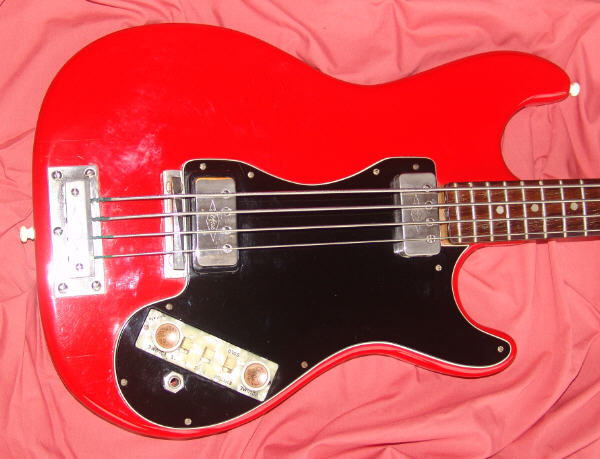
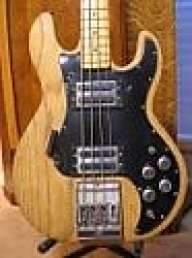
Those look like Hofner pickups. I'd say maybe some kind of Hofner 18x or Professional variant?

Last edited:

Did Hofner and Burns of London join forces?Hey guys have you ever seen this bass? Do you know the name of it or any info?

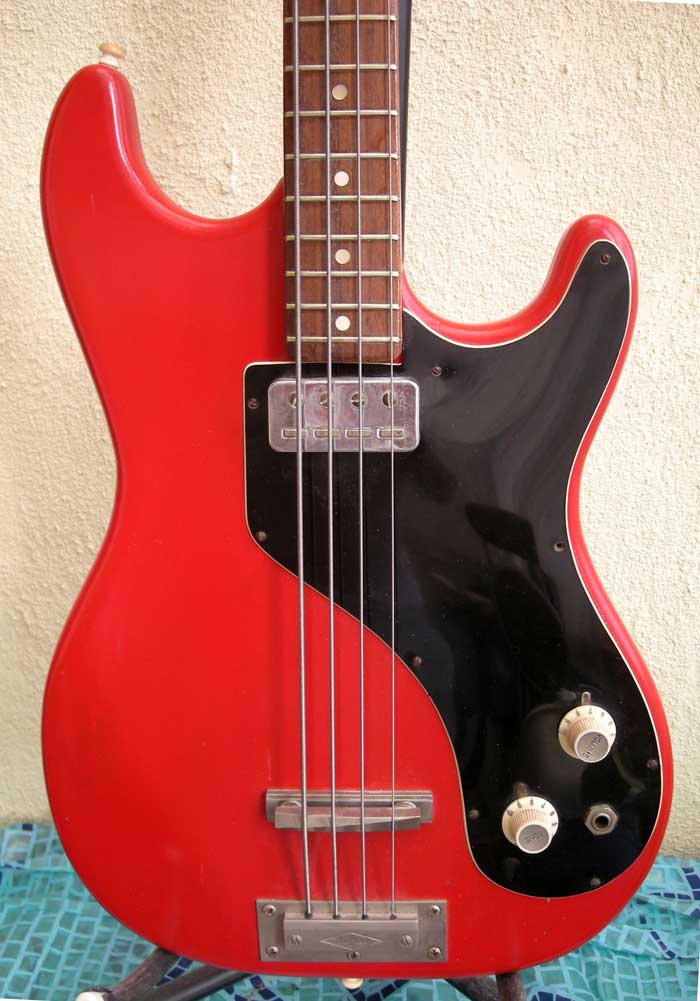
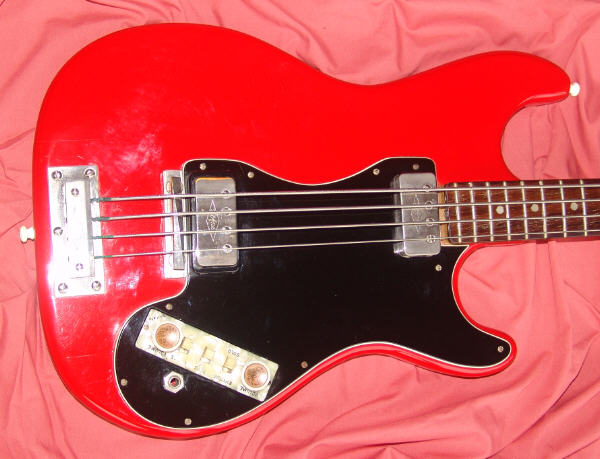
Good eye, pickups, tailpiece and pick guard are very similar to the op bass. The body shape is a little different, at least the bass-side horn seems to be a bit skinnier, and the bridge itself is different, I'd venture to guess this a modified Hofner 182, or perhaps a step up from that, I'm not too familiar with Hofners.Those look like Hofner pickups. I'd say maybe some kind of Hofner 18x or Professional variant?

devnulljp
Supporting Member


Over the past two decades, as the well of vintage American guitars has gradually dried, and prices have spiraled even higher, there has been a growing interest among collectors in instruments built in Europe and Japan. During the 1960's Hofner was one of the largest manufacturers of electric guitars outside of America, and, while few would claim they produced instruments to rival Gibson, Fender, or Gretsch, they are now viewed as increasingly desirable to collect.
Violin maker Karl Hofner founded the company in Schonbach, Germany, in 1887. Establishing a reputation for craftsmanship and innovation, Hofner-later joined by his two sons, Josef and Walter-quickly became the largest manufacturer of stringed and fretted instruments in Germany.
In the prewar years, Hofner's small guitar production concentrated on low-cost student instruments, but from the 1950s attempts were made at producing upmarket archtop acoustics and solid body electric guitars and basses.
Most early Hofners were variations on standard Fender designs. Launched in 1960, the Galaxie featured three humbucking pickups with an unusual array of controls, Notably dedicated on/off switches and a rotary tone wheel for each pickup.
The Hofner story cannot, of course, be told without mention of the most famous pop group of them all-The Beatles. Just as the patronage of John Lennon and George Harrison had turned Rickenbacker into a household name. Hofner would enjoy the pall McCartney effect.
By the end of World War II, Walter Hofner, a creative buissnessman as well as innovative guitar and violin maker, was running the company. In 19555 he used his expertise to create the extraordinary model 500/1, a semi-hollow bass guitar with a violin shaped body.
In 1961, while The Beatles were serving a grueling apprenticeship in the nightclubs of Hamburg's Reeperbahn, bass guitarist Stu Sutcliffe was ejected from the band. Paul McCartney agreed a switch from guitar and hastily began checking out Hamburg's music stores for a bass of his own. The problem for the left-handed McCartney was that all of the right handed bass guitars he tried felt awkward when turned upside down... until he found the symmetrical 500/1, which could be played either way.
McCartney would use a Hofner bass throughout his Bealtes career, providing Hofner with the kind of publicity that no money could ever buy.
Source:
Burrows, Terry. Guitars Illustrated: A Stunning Visual Catalog Charting the Origins of over 200 of the Most Influential Makes and Models. New York City: Watson-Guptill, 2011. 160-161. Print.

Smooth_bass88
vaxx!
- Oct 31, 2006
- 12,122
- 16,793
- Disclosures
- have been on nationally released albums, charting on the Billboard 200
Probably not worth much at all. Looks weird, probably doesn't sound all that good. May need work. If you end up not liking it, now you gotta deal with getting rid of it, all the while it'll be taking up space. I'd pass.


Probably not worth much at all. Looks weird, probably doesn't sound all that good. May need work. If you end up not liking it, now you gotta deal with getting rid of it, all the while it'll be taking up space. I'd pass.
Or with a little TLC you could have found a hidden gem! It's only $50 for heaven's sake! I've spent more than that on taking my wife to see a crappy movie!
$50 is not bad for any bass, if you're looking at it just for fun or as a project do it if you dare, but if you're looking for a main player I'd pass
Smooth_bass88
vaxx!
- Oct 31, 2006
- 12,122
- 16,793
- Disclosures
- have been on nationally released albums, charting on the Billboard 200
Remember the old saying... "You can't polish a piece of ____"
I agree though, don't buy the bass

Buy it. If you don't like it you can get what you've paid for it. Its also so cheap you can practice setups, repairs, pickups, etc on it.

Going by the one picture it does seem to be a Höfner 182 with modded controls, refinished and probably reshaped (upper horn). As marketed by Selmer in the UK, the 182 was known as the Solid Bass.
Those are good pickups for a sixties-type sound, and easily worth the price of the whole bass.
Those are good pickups for a sixties-type sound, and easily worth the price of the whole bass.


