• TalkBass has been independent since 1998. Add your voice.
    Create a free account to reply to discussions, view embedded media, and browse with fewer display ads.
    Join freeLog in
    Want zero display ads or expanded classifieds tools? Compare plans.

Double Bass Unwinding Spirocore...Safe?

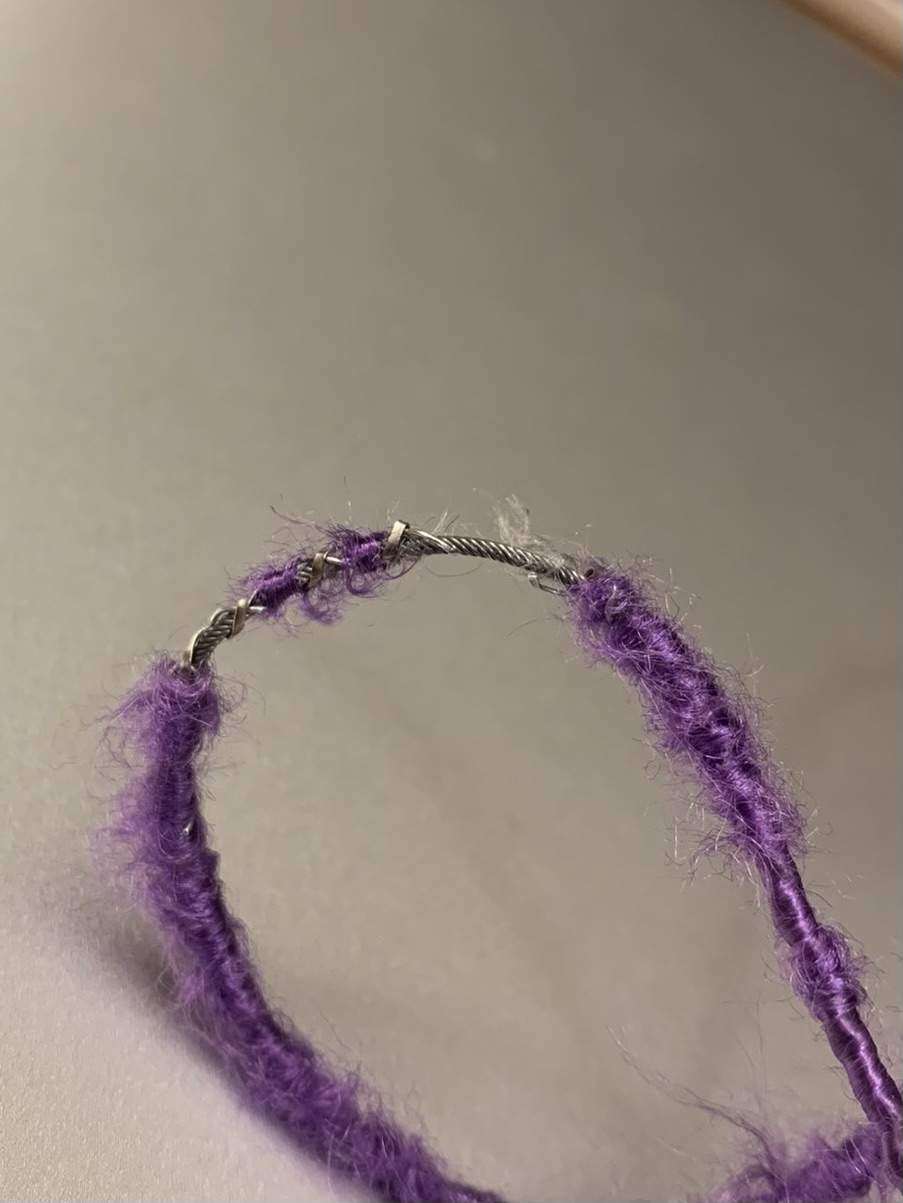
I've been in the mood to put the rest of my Spiros on (been running a Belcanto/Spiro mix). I took a closer look at the D string, and it appears some of the top layer of wire has separated. Though this doesn't seem to be the winding itself, I fear that the string may be compromised. Spirocores are hard to kill but knowing my luck, I'd snap it on a gig. Perhaps I'm being overly paranoid but I don't know enough about DB string anatomy to make an educated decision. While I'm not opposed to buying a new D string (can't justify buying a full set), I'd really hate to ditch this one as the set has been very nicely broken in. It has been on at least 3 different basses in its life and it's about to go on a 4th if I'm brave enough...thoughts? Maybe it would be just the right sauce to make me play the right notes. :D

IMG_2403.jpeg
 
No problem at all. There is enough silk left to keep the windings from unraveling. This is pretty normal for Spiros which have been taken off and on several times.
The biggest risk is hurting your fingers from the broken winding.
The string won’t snap because the whole tension of the string is on the core.
That string can still go for decades as long as the core isn’t damaged.

I tried shrinking tube from an electronics store over such a part. It helps for a while, but gets damaged too. No problem with the lighter heat to shrink the tube with Spiros. Would at least think twice if I had synthetic core strings.

It might be helpful to wind the string in a certain manner onto the peg.
I do a half peg winding towards the side where the string is on the fingerboard to clamp the string end there, then do the windings away from that side, about one winding diagonally over the previous ones until I reach the winding free part on the other side of the peg hole and do one to three final windings there. That way I avoid that the string touches the peg box cheeks and winding height is minimal. It is also ordered well and surface friction might be lower than with other methods.
 
Last edited:
I have a set of 10 year old Dominants and just yesterday, the A string kind of did what it looks like happened in the OP, but between the Tailpiece and bridge. The tuning had dropped a 4th overnight. I tuned, it up, expecting it to break, but it held through the practice session yesterday and today. I have an extra set and will probably change them out this weekend, but has anybody else experienced this?
 
I have a set of 10 year old Dominants and just yesterday, the A string kind of did what it looks like happened in the OP, but between the Tailpiece and bridge. The tuning had dropped a 4th overnight. I tuned, it up, expecting it to break, but it held through the practice session yesterday and today. I have an extra set and will probably change them out this weekend, but has anybody else experienced this?
I think when that happens, the core is compromised and the string's being held together by the windings. Time to replace the set.
 
  • Like
Reactions: Francois Blais
I have a set of 10 year old Dominants and just yesterday, the A string kind of did what it looks like happened in the OP, but between the Tailpiece and bridge. The tuning had dropped a 4th overnight. I tuned, it up, expecting it to break, but it held through the practice session yesterday and today. I have an extra set and will probably change them out this weekend, but has anybody else experienced this?
I had a similar thing happen to a Dominant E, but in the pegbox. It dropped significantly (maybe a fourth or so). I thought the string was toast, but I tuned it back up and it held. I sold the bass a few months later with the E still installed and still holding pitch. I guess I should've replaced the string, but it seemed okay, so I just kept on keeping on. Sorry, no real answer or solution here :)
 
  • Like
Reactions: Chris Fitzgerald
Here's the tailpiece end:
Tailpiece end.JPG


Replaced the string today and found this in the pegbox end:

Pegbox end.JPG


Yikes!

The new string is settling quickly and holding pitch well. Thank god for those string winders that attach to a drill. I will doubtless spend the rest of the day obsessing over whether to change out the rest of the set, or whether to see how long it takes me to get sick of playing a 1 string banjo + 3 string bass.
 
Here's the tailpiece end:
View attachment 7533430


Replaced the string today and found this in the pegbox end:

View attachment 7533431

Yikes!

The new string is settling quickly and holding pitch well. Thank god for those string winders that attach to a drill. I will doubtless spend the rest of the day obsessing over whether to change out the rest of the set, or whether to see how long it takes me to get sick of playing a 1 string banjo + 3 string bass.
How TF did your afterlength silks get so ragged???
Do you have a rodent problem in your studio?
Just askin'.
;)
 
  • Haha
Reactions: Luca Visconti
Well, I went full banjo. I figured 10 years was a pretty good run, and I even changed the Stark E. Gawd, the bass roars like a beast now! It's actually not as bad as a set of new red hots, and I think it will be OK for the recording session coming up in a couple of weeks. I'm also surprised that more people don't play Dominants. They sound so much better than Spiros to me right out of the gate.

I've always hated changing strings, but I thought about how easy our Lluthier friends make it look because they always have a raised bench with a neck cradle to put the bass on, and of course they always have those powered string winders. So I fashioned a bass work table out of the grand piano, and it was a total breeze. So much easier than all of those times I helped students change strings in my office where there's nowhere to lay a bass.

String changing table.JPG
 
Thomastik uses the worst silk of them all; it frays just looking at it. It's the same for EB strings.

I don’t know if this is true, but yeah, their silks can get pretty ragged. OTOH, I think they make the best strings in the business, so I’ll take that trade off!
 
@james condino quick question: when I changed the Stark E, there was some minor scarring of the fingerboard under its path. Part of that was the usual schmutz you expect after a string has been on for 10 years, but even after I wiped that down/off I could still see the path of the string in the ebony. Is this normal? I’m not really worried about it because the string sounds so good, just curious.