• TalkBass has been independent since 1998. Add your voice.
    Create a free account to reply to discussions, view embedded media, and browse with fewer display ads.
    Join freeLog in
    Want zero display ads or expanded classifieds tools? Compare plans.

Double Bass "Upright" or "Double" Bass?

Good point about having pictures on the business card.

I do, however, have two kinds of business card, and my other one's a guitar pick - no room for pictures on that, just a very few words, and I"ve got to order another batch of those, too. I think I'm going to go with "double bass" this time where I had "upright bass" last time and see how that works.

-S-
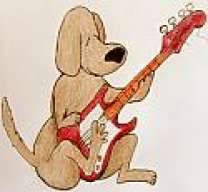
Shouldn't you have a bow as a business card? No wonder people are confused if you use a pick on an upright / double / contre / bullfiddle / ......
 
I'm seeing more two-sided business cards, and I like 'em.

One friend has a two-sided business card with the his restaurant on one side, and his glass blowing business on the other side. I'm planning to do something similar: woodworking on one side, music on the other.

Another friend has a two-sided business card with his name, company name, logo, and mission statement on one side, and a mini company directory on the other side listing key contacts and their email and phone info.

Lots of professionals I know provide an appointment confirmation form printed on the backs of their business cards.

A young acquaintance gave me a business card the other day that included one of the new "bar codes" designed to be scanned by a cell phone.

The times they are a changin'...
 
I prefer the one sided business cards. People like to use the back side to make notes.

Back to the topic, I call it a double bass or a contrabass if the speaker's first language is not English. I agree with the other posters who don't like "upright" or "stand-up"; I see those terms as a re-naming of the instrument by a Johnny-come-lately. It doesn't irritate me unless they refer to the pork chop as a "standard" bass. ***, junior?

The *** was Whiskey Tango Foxtrot.
 
I thought 'double' referred to the register?
Ah, that makes sense.

I'm going to go with "double bass" on this batch of guitar picks.

I play and teach electric and upright/double/contra bass, piano, guitar, French Horn, trumpet, and I'm probably forgetting something - that's a lot of stuff to get onto a guitar pick. :)

-S-
 
I'd really like to say "double bass" but most people (my age at least) will think I'm a heavy metal drummer. Contrabass sounds pretentious for the sort of gigs I play. Upright is not my favorite name for the instrument, but for better or worse its what its called colloquially. When I can, I'll just say "bass."
Now, if you want to make my cry inside, ask "so, do you play the regular bass too?"
 
What about "Bull Fiddle?" does anyone feel any particular way about that one?

It's certainly descriptive enough if the listener is thinking. I can see where it would work in bluegrass settings or any other music where a violin is referred to as a "fiddle" (where'd that come from, and why did it pick up so much steam?). I wouldn't use it myself, tho.

"Double bass" works fine for me, and as with others who've posted here, if there's any confusion, the hand movements will clarify.
 
I’ve always referred to the instrument as a “Double Bass”. Classical bassists I’ve worked with refer to as a either a “Contrabass” or a “String Bass” if a [Invalid or Expired Link Removed] has been in the ensemble.

In Jazz I’ve only ever know it referred to as an “Upright Bass” and in various Folk and Bluegrass bands I’ve heard it referred to as a “Bass Fiddle” or “Bass Violin” and once or twice heard it called a “Doghouse Bass”. I’ve never heard a bassist call it a “Stand-Up Bass”.
 
You really should say Upright, because more than once I've been confused because someone said they're bringing a "double bass", and they mean the drum part. This is coming from someone who doesn't play Upright, but it's another huge bug in musician vocabulary.
 
Pretty ignorant bunch out here… but never mind, you may call it whatever you like.

Now for the OP's question, a sniff of music history.

In a classic string quartet (1st violin, 2nd violin, viola, violoncello) , the violoncello was the bass. In the 18th century the string quartet became a string orchestra by multiplying these four instruments. To reinforce the bass parts, the contrabasso was added, doubling (!!) the violoncello part one octave below.