• TalkBass has been independent since 1998. Add your voice.
    Create a free account to reply to discussions, view embedded media, and browse with fewer display ads.
    Join freeLog in
    Want zero display ads or expanded classifieds tools? Compare plans.

Using a dremel as a router?

The standard Dremel is useful for routing binding ledges, too. Perfect for all those Ric-influenced bass bodies!
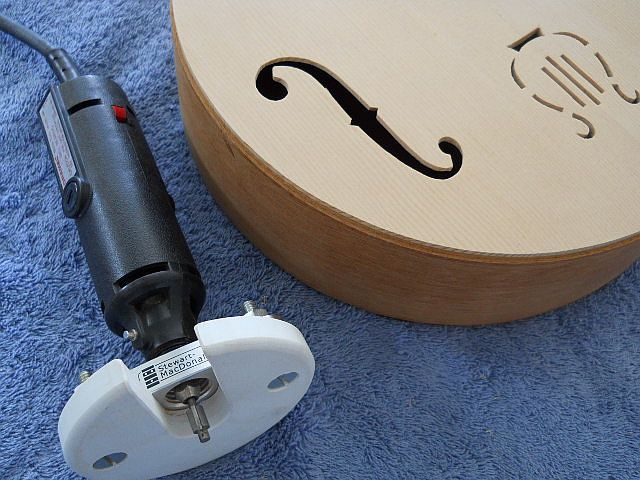
DR2rvL7.jpg


I almost always control my Dremel tools with a foot operated momentary switch so I have both hands to control them, as shown in post #15.
 
Last edited:
Thank you for your responses, everyone. I should say I was interested in a rotary tool (AKA Dremel) as a router alternative because of a perceived finesse owing to its smaller size. Cost wasn't a factor, per se. I have a cheap trim router from harbor freight, but I've only used it once so far, so I'm still learning.

Depends what you want to use them for. Routing cavities for inlay, they're fine. Cavities for pickups, forget it.
I don't think I'll ever be doing this kind of detail work. However, it may not be a bad option if I decide to make a custom pickguard or control plate or some such.
 
  • Like
Reactions: DrThumpenstein
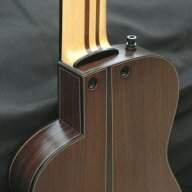
Edit:I did use a Dremel to lengthen the route on this bass a bit!
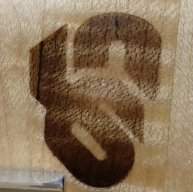
I have to ask, where did you get the oval MOP inlays from? I searched high and low to find some for my Hossenfeffer III build, a "fauxlembic" of sorts, and came up dry. I ended up making them (less than perfectly) out of raw MOP pieces. I did use the crappy plastic Dremel branded plunge router base for this. Once you have it dialed in it works OK, but the height adjustment is fiddly and imprecise, and the whole thing is just too flexible to be super accurate.
G4aivNL.jpg

NJEobnG.jpg
 
Last edited:
  • Like
Reactions: definenredefine
Thank you for your responses, everyone. I should say I was interested in a rotary tool (AKA Dremel) as a router alternative because of a perceived finesse owing to its smaller size. Cost wasn't a factor, per se. I have a cheap trim router from harbor freight, but I've only used it once so far, so I'm still learning.


I don't think I'll ever be doing this kind of detail work. However, it may not be a bad option if I decide to make a custom pickguard or control plate or some such.

Based on what you said here, I would strongly advocate for ignoring Dremel tools and just focusing on legitimate routers. Even a small, weak trim router will be more powerful, stiffer, and more accurate than a Dremel. Dremels have tiny shafts with pretty poor bearings so there's a lot of slop and a lot of flexing. It's fine if you are freehanding very delicate work, like a pocket for an inlay. I would go so far as to say that a Dremel is ideal for that. But for any significant work a router will typically be a much better tool. You'll get faster and more accurate cuts with a much better selection of appropriate bits and accessories.

Since you already have a trim router, just focus on learning to use it. If you have money to burn, invest it in bits and other accessories for your router.
 
  • Like
Reactions: definenredefine
I have to ask, where did you get the oval MOP inlays from? I searched high and low to find some for my Hossenfeffer III build, a "fauxlembic" of sorts, and came up dry. I ended up making them (less than perfectly) out of raw MOP pieces. I did use the crappy plastic Dremel branded plunge router base for this. Once you have it dialed in it works OK, but the height adjustment is fiddly and imprecise, and the whole thing is just too flexible to be super accurate.
G4aivNL.jpg

NJEobnG.jpg
They are part of that bass.
They were not put in by me.
 
Based on what you said here, I would strongly advocate for ignoring Dremel tools and just focusing on legitimate routers. Even a small, weak trim router will be more powerful, stiffer, and more accurate than a Dremel. Dremels have tiny shafts with pretty poor bearings so there's a lot of slop and a lot of flexing. It's fine if you are freehanding very delicate work, like a pocket for an inlay. I would go so far as to say that a Dremel is ideal for that. But for any significant work a router will typically be a much better tool. You'll get faster and more accurate cuts with a much better selection of appropriate bits and accessories.

Since you already have a trim router, just focus on learning to use it. If you have money to burn, invest it in bits and other accessories for your router.
That's ultimately where I think I landed. I'm planning to practice with the router when I have more off time.
 
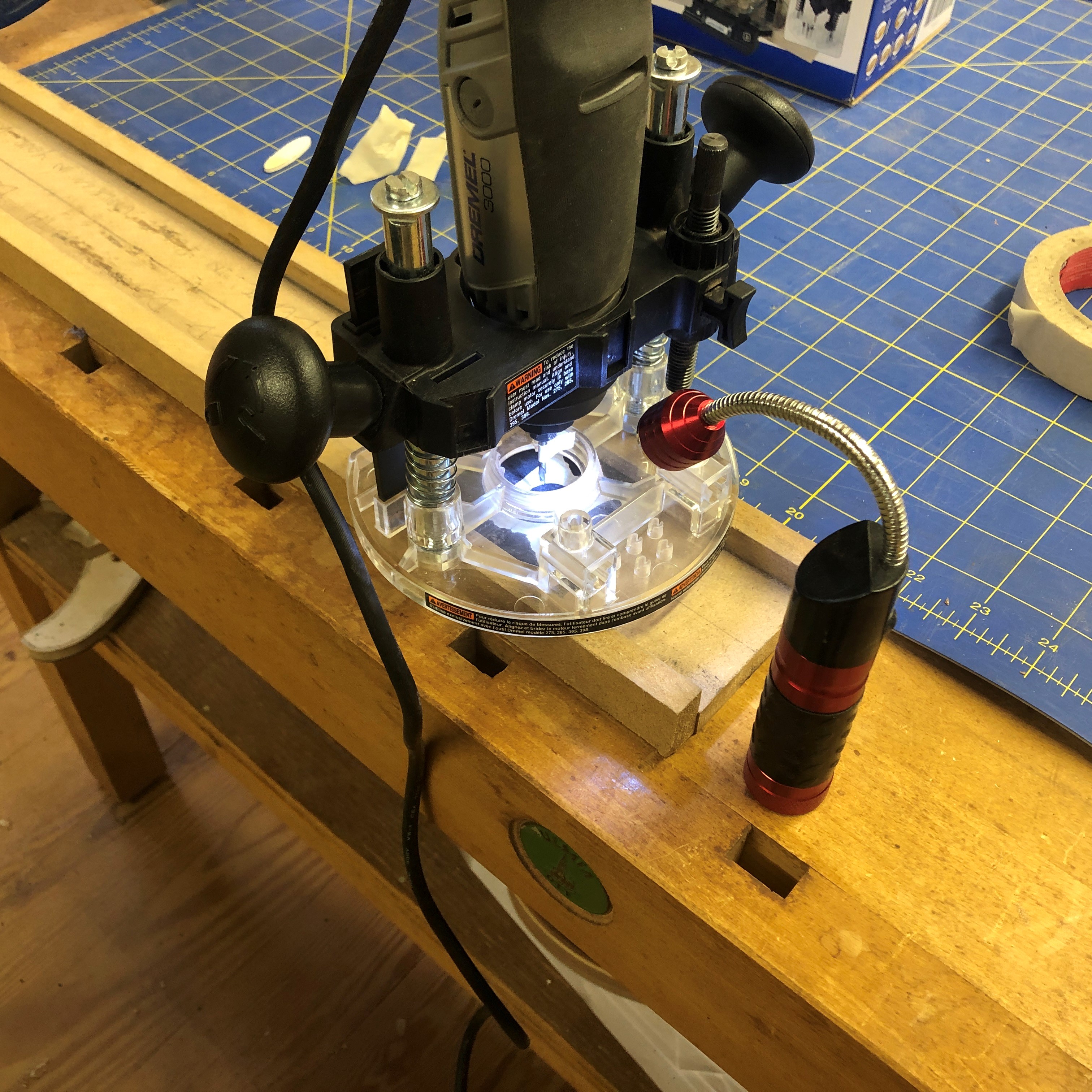
I use mine for various jobs. I have a Stewmac router base for which I made a larger transparent base plate and modified the edge guide. It works well for cutting binding rebates in a headstock.
View attachment 4764123
View attachment 4764125
I use it with abrasive drums for refining a cut-out.
View attachment 4764135
And with a simple home-made copying contraption to cut the cavities for inlays.
View attachment 4764138
View attachment 4764139
View attachment 4764141
"Simple". Dude. I can only hope to get like halfway to your skill level.
 
  • Like
Reactions: definenredefine