Most string manufactures?
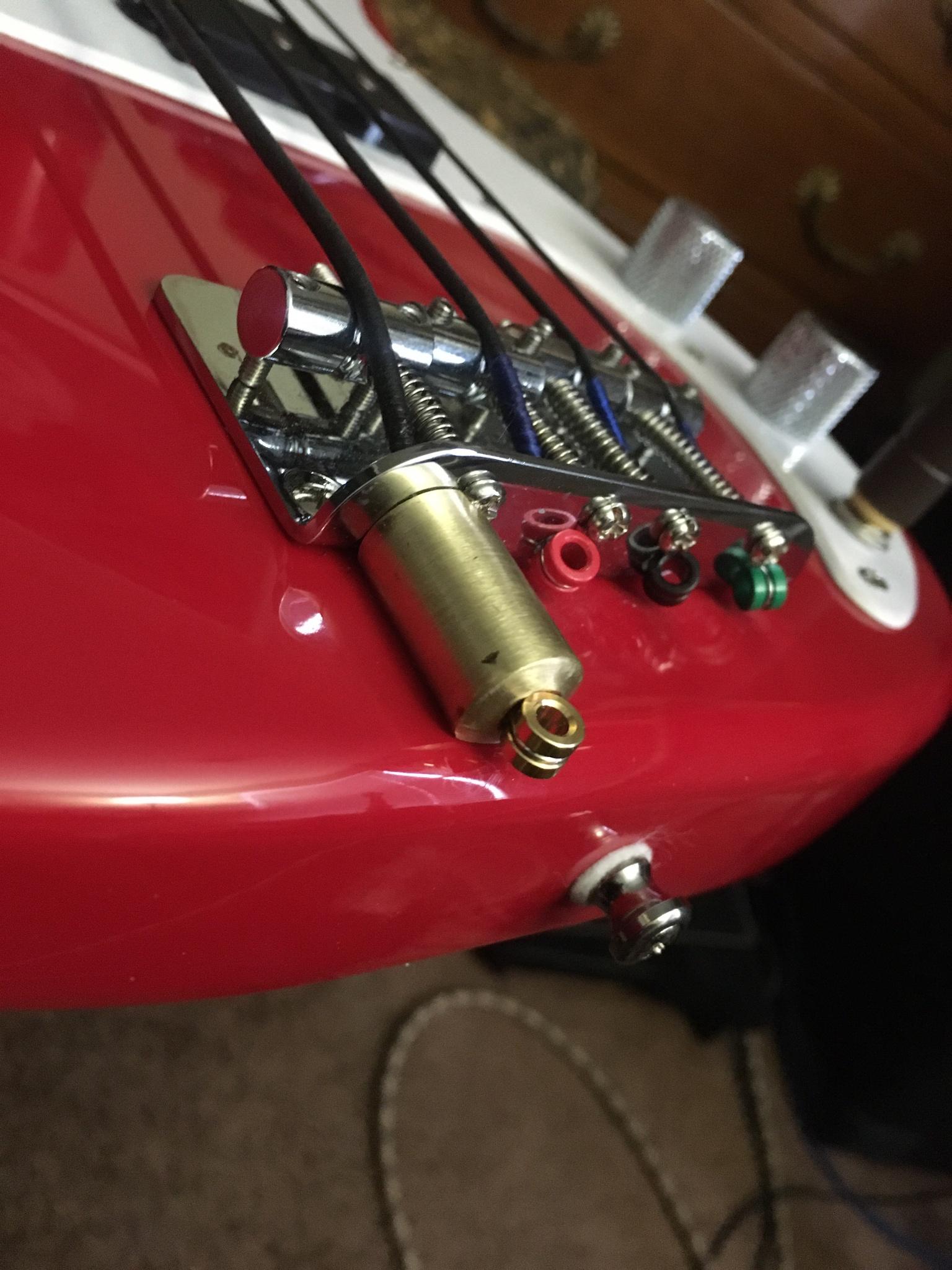
La Bella is the only company I know of who explicitly warns against having non-silked part of their flats wrap around the post as well as stringing them thru-body..
View attachment 7144507
I don’t think it’s just La Bella. This from a Strings Direct article:
“
We asked several of the big bass string manufacturers about this particular topic and without fail, each one cited the strings not tapering at the optimum spot as one of the main reasons you shouldn’t trim down a longer scale bass set.
Link Removed
Aside from the fact that we run the risk of the string not even fitting our machineheads, there are other pitfalls we need to be mindful of.
Jack Dunwoody of [Invalid or Expired Link Removed] pointed out that bending a thick string around the capstan runs the risk of the strings’ outer windings separating.
Both Neil Silverman of Newtone Strings and Adam Ironside from
D’Addario UK added that as the windings separate, “they can also become bent and crimp and may even start to cut into one another.”
As you can imagine, this isn’t ideal and it would only be a matter of time before we started to hear some degradation in tone, or worse, for a string to break altogether.
The above is especially true for flatwound strings. If you’ve ever taken a close eye at the outer surface of a flatwound string, you’ll notice that the windings are wound seamlessly adjacent to one another creating that beautifully smooth, flat surface (see image below left). But, if any windings become separated from one another, it will expose the inner core of the string and will inevitably lead to string breakage.
Link RemovedLeft: a perfectly smooth surface found on a flatwound string
Right: Wrapping the wound portion of the flatwound string around our tuners has caused the windings to separate.
As part of our research we also spoke to our friends over the pond at
La Bella in New York. When we asked whether it’s possible to trim down longer scale strings to fit onto shorter scale basses their answer was a resounding
“Absolutely not!!... especially for flatwound strings.”
They went on to explain that if any metal portion of the string is wrapped around the tuner, the windings of a flatwound string separate and the string will start to unravel.
An unravelling string is never a good thing of course and it goes without saying that no string is fundamentally designed to do this. However, if a string does start to unravel, the longevity and tonality will start to become compromised fairly rapidly.
Again, it wasn’t just
La Bella that raised concerns about unravelling, many of the other string brands we spoke to had the same misgivings.
In fact, Jack Dunwoody of [Invalid or Expired Link Removed] gave us some great insight into the tonal implications of an unravelled string;
“As the string unravels, you often hear the string start to buzz. Thicker gauge bass strings are made up of several layers of windings built up around the central core and the buzz that you hear occurs between these layers as they start to become detached from one another.”
So as you can see, whilst you might be able to scrape by and make a cut down set of long scale bass strings work in the short term, one day you’re bound to come across one of these issues and your bass certainly won’t be performing or sounding at its full potential. Not great if this all starts booting off mid gig either!!
We asked several of the big bass string manufacturers about this particular topic and without fail, each one cited the strings not tapering at the optimum spot as one of the main reasons you shouldn’t trim down a longer scale bass set.
Link RemovedAside from the fact that we run the risk of the string not even fitting our machineheads, there are other pitfalls we need to be mindful of.
Jack Dunwoody of [Invalid or Expired Link Removed] pointed out that bending a thick string around the capstan runs the risk of the strings’ outer windings separating.
Both Neil Silverman of Newtone Strings and Adam Ironside from
D’Addario UK added that as the windings separate, “they can also become bent and crimp and may even start to cut into one another.”
As you can imagine, this isn’t ideal and it would only be a matter of time before we started to hear some degradation in tone, or worse, for a string to break altogether.
The above is especially true for flatwound strings. If you’ve ever taken a close eye at the outer surface of a flatwound string, you’ll notice that the windings are wound seamlessly adjacent to one another creating that beautifully smooth, flat surface (see image below left). But, if any windings become separated from one another, it will expose the inner core of the string and will inevitably lead to string breakage.
Link RemovedLeft: a perfectly smooth surface found on a flatwound string
Right: Wrapping the wound portion of the flatwound string around our tuners has caused the windings to separate.
As part of our research we also spoke to our friends over the pond at
La Bella in New York. When we asked whether it’s possible to trim down longer scale strings to fit onto shorter scale basses their answer was a resounding
“Absolutely not!!... especially for flatwound strings.”
They went on to explain that if any metal portion of the string is wrapped around the tuner, the windings of a flatwound string separate and the string will start to unravel.
An unravelling string is never a good thing of course and it goes without saying that no string is fundamentally designed to do this. However, if a string does start to unravel, the longevity and tonality will start to become compromised fairly rapidly.
Again, it wasn’t just
La Bella that raised concerns about unravelling, many of the other string brands we spoke to had the same misgivings.
In fact, Jack Dunwoody of [Invalid or Expired Link Removed] gave us some great insight into the tonal implications of an unravelled string;
“As the string unravels, you often hear the string start to buzz. Thicker gauge bass strings are made up of several layers of windings built up around the central core and the buzz that you hear occurs between these layers as they start to become detached from one another.”
So as you can see, whilst you might be able to scrape by and make a cut down set of long scale bass strings work in the short term, one day you’re bound to come across one of these issues and your bass certainly won’t be performing or sounding at its full potential. Not great if this all starts booting off mid gig either!!