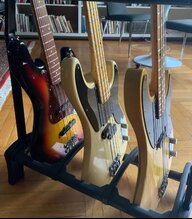
I have two, a 64 and 65. Sound absolutely fantabulous!
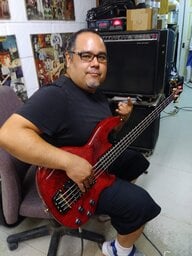
64 on a gig last week.
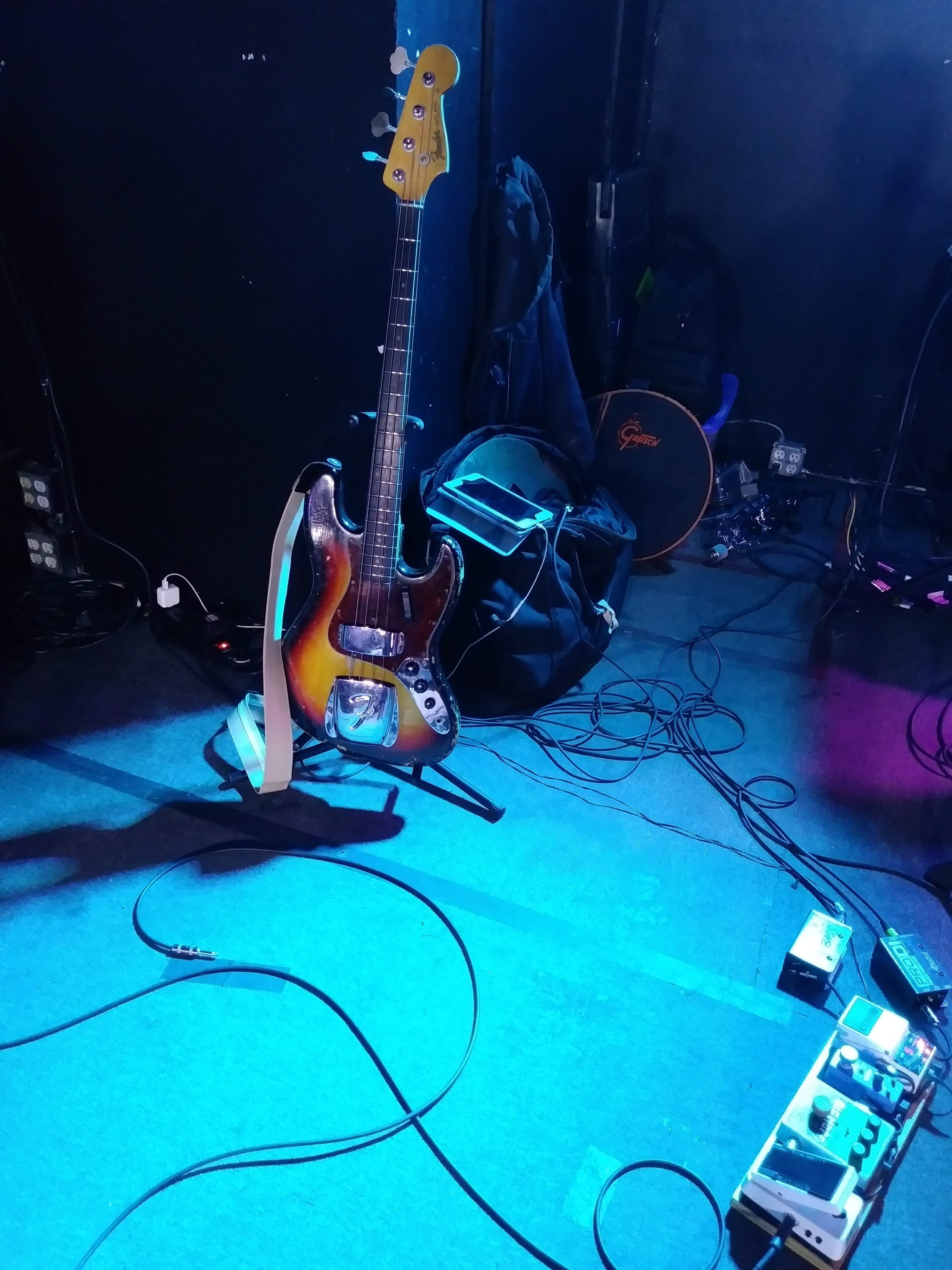
64 on a gig last week.

TalkBass has been independent since 1998. Add your voice.
Create a free account to reply to discussions, view embedded media, and browse with fewer display ads.
Join free Log in
Want zero display ads or expanded classifieds tools? Compare plans.



Do you know for a fact that early Fenders were made with carefully selected pieces of wood with the proper grain tightness and orientation? Some say Leo was a cheapskate, some say he just used whatever was available at the time, some say he selected the best of the best.
I find it suspicious that everything before 19xx is considered the best. Often we're talking about inferior production processes or, like in the case of guitar effects, inferior tech for the components, yet everything made before a certain year is perceived to be better.
Did manufacturing take a global hit at one point in history? Is it because in the 70s currencies were disconnected from gold reserves and capitalism was freed form any constraint and companies abandoned pride in their work to chase profits exclusively? Or is it just a case of "they don't make 'em like they used to" nostalgia?
The above has nothing to do with whether or not vintage Fenders objectively sound better.

Thanks, I've heard this story before and it makes a lot of sense.No, not really. But there was a time - that some of us Old Farts can still remember - when even the construction grade lumber in our local lumberyard was dense; straight as a string; and wasn't as full of knots as swiss cheese is full of holes. We can remember when lumber was cut from big, old trees, and had been air dried/seasoned for years. When Leo Fender started making basses and guitars, he didn't have to "select the best" for production instruments. Most of the wood that was available to him back then, was far better for making anything than the majority of wood is, today. Back then, a tree that was cut down last Tuesday, didn't become 2x4s on a construction site 3 weeks from now. Trees that get that treatment today, wouldn't even have been cut down back then. They weren't worth the effort; and nobody with a lick of sense would have used "green" lumber to make anything, anyway. Not like a lot of companies do today...
No, not really. But there was a time - that some of us Old Farts can still remember - when even the construction grade lumber in our local lumberyard was dense; straight as a string; and wasn't as full of knots as swiss cheese is full of holes. We can remember when lumber was cut from big, old trees, and had been air dried/seasoned for years. When Leo Fender started making basses and guitars, he didn't have to "select the best" for production instruments. Most of the wood that was available to him back then, was far better for making anything than the majority of wood is, today. Back then, a tree that was cut down last Tuesday, didn't become 2x4s on a construction site 3 weeks from now. Trees that get that treatment today, wouldn't even have been cut down back then. They weren't worth the effort; and nobody with a lick of sense would have used "green" lumber to make anything, anyway. Not like a lot of companies do today...
I rest my case...

27385542[/URL], member: 200841"]
The real question is, if the players back in the 60s and 70s had the kind of choices we have today, would so many have played Fenders?
Fenders weren't as dominant back then as you might think. Biggest 2 bands of that era - what basses were played? Hofner, Framus, Rickenbacker.
I started in the 70's, and through 46 years, have owned a lot of basses. Not a single Fender. I've played a lot of them in stores, but none has called me.



Indeed, British bands. The Brits couldn't get Fenders for some time due to an import ban. One little facet of the popularity of Hank Marvin and the Shaddows was that ... they had a Fender Strat!
The Beatles variously spoke about how they lusted after Fenders (especially George Harrison). And of course, guys like Keith and Clapton (and many others) later went on to become strongly linked to their Fenders. Things are not always quite as they seem.
That's right, Clapton favored Gibsons early in his career (and got some memorable sounds from them). I was pointing out that a very significant reason for the scarcity of Fenders in the Brit bands, according to their own words, was that they were nearly impossible to find, and consequently expensive if they were found. Eventually those became more accessible, and many of those musicians adopted their use.Whenever some dunce says to me: "OMG! Cream! What a band! That iconic Bass sound! And Clapton's Black 'Strat!"
I suggest they should go watch "Fresh Cream".
Clapton didn't have a Strat (I think) until right before he came to America with (?)Delaney & Bonnie(?)

That's right, Clapton favored Gibsons early in his career (and got some memorable sounds from them). I was pointing out that a very significant reason for the scarcity of Fenders in the Brit bands, according to their own words, was that they were nearly impossible to find, and consequently expensive if they were found. Eventually those became more accessible, and many of those musicians adopted their use.

The San Francisco sound was mostly Gibson and then Guild.Fenders weren't as dominant back then as you might think. Biggest 2 bands of that era - what basses were played? Hofner, Framus, Rickenbacker.
I started in the 70's, and through 46 years, have owned a lot of basses. Not a single Fender. I've played a lot of them in stores, but none has called me.




Because you get a free year's membership in The More Money Than Sense Club.
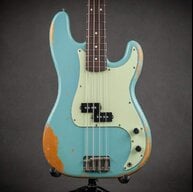
Buy a new Fender Custom Shop in their 'aged relic' finishes ( . . . just look how realistic that cigarette burn and that rusted bridge seem so real!), and you get Free Lifetime Membership.
If these things float your boat, that's great. But I'll never understand the supposed mojo in these old, weary axes that is somehow unobtanium, unless you pay crazy money to build a brand new instrument that looks old and weary and I guess has repro mojo.
I must be missing something . .

Authenticity. Same reason art museums buy the real the paintings instead of the reprints they sell in the gift shop. Collectors from vintage cars to comic books want real history, and are willing to pay for it. Musicians sometimes want particular instruments from certain eras for how they sound but can't afford or don't care to pay for real ones, so reproductions work for them. Not for everyone, not for you, and that's cool too.Because you get a free year's membership in The More Money Than Sense Club.
Buy a new Fender Custom Shop in their 'aged relic' finishes ( . . . just look how realistic that cigarette burn and that rusted bridge seem so real!), and you get Free Lifetime Membership.
If these things float your boat, that's great. But I'll never understand the supposed mojo in these old, weary axes that is somehow unobtanium, unless you pay crazy money to build a brand new instrument that looks old and weary and I guess has repro mojo.
I must be missing something . .