

Enjoy the benefits of a premium membership!
Upgrade Account
-
TalkBass has been independent since 1998. Add your voice.
Create a free account to reply to discussions, view embedded media, and browse with fewer display ads.
Join free Log in
Want zero display ads or expanded classifieds tools? Compare plans.
You are using an out of date browser. It may not display this or other websites correctly.
You should upgrade or use an alternative browser.
You should upgrade or use an alternative browser.
More options
Who Replied?
What fret sizes you you guys go with?
I am currently “piecing together” my future build (I have no idea when it will actually happen) which will be modeled after the Fender Marcus Miller signature 5-string, but with some caveats...
I have pickups out of a Miller bass, a Pensa 2-band preamp (which was in my L2500 for 20 years), and all the necessary hardware components. All I need is the neck, body, control plate and PG.
I am stuck on which fret size to choose.
I have a Squier VM Jazz V which has frets the same size as their 6150:
104”w x .047”h (I measured with a caliper)
The frets seem kind of small to me...sometimes
My L2500 has pretty huge frets:
.115”w x .054”h, only slightly smaller than the 6100’s, which are .118”w x .058”h.
But the L2500 also has a baseball bat neck and it all feels well-suited.
I noticed some of the builds here have 6100 frets...how do they actually feel?
I wish there was something in between the 6150 and 6100 - something maybe .105 x .050...
I am currently “piecing together” my future build (I have no idea when it will actually happen) which will be modeled after the Fender Marcus Miller signature 5-string, but with some caveats...
I have pickups out of a Miller bass, a Pensa 2-band preamp (which was in my L2500 for 20 years), and all the necessary hardware components. All I need is the neck, body, control plate and PG.
I am stuck on which fret size to choose.
I have a Squier VM Jazz V which has frets the same size as their 6150:
104”w x .047”h (I measured with a caliper)
The frets seem kind of small to me...sometimes
My L2500 has pretty huge frets:
.115”w x .054”h, only slightly smaller than the 6100’s, which are .118”w x .058”h.
But the L2500 also has a baseball bat neck and it all feels well-suited.
I noticed some of the builds here have 6100 frets...how do they actually feel?
I wish there was something in between the 6150 and 6100 - something maybe .105 x .050...

Zu viel denken. You will be happy with the 6150 frets, don't worry. Here are my 6150s:What fret sizes you you guys go with?
I am currently “piecing together” my future build (I have no idea when it will actually happen) which will be modeled after the Fender Marcus Miller signature 5-string, but with some caveats...
I have pickups out of a Miller bass, a Pensa 2-band preamp (which was in my L2500 for 20 years), and all the necessary hardware components. All I need is the neck, body, control plate and PG.
I am stuck on which fret size to choose.
I have a Squier VM Jazz V which has frets the same size as their 6150:
104”w x .047”h (I measured with a caliper)
The frets seem kind of small to me...sometimes
My L2500 has pretty huge frets:
.115”w x .054”h, only slightly smaller than the 6100’s, which are .118”w x .058”h.
But the L2500 also has a baseball bat neck and it all feels well-suited.
I noticed some of the builds here have 6100 frets...how do they actually feel?
I wish there was something in between the 6150 and 6100 - something maybe .105 x .050...
I used to think I liked jumbo or extra jumbo frets. Then, I played a Dingwall.What fret sizes you you guys go with?
I am currently “piecing together” my future build (I have no idea when it will actually happen) which will be modeled after the Fender Marcus Miller signature 5-string, but with some caveats...
I have pickups out of a Miller bass, a Pensa 2-band preamp (which was in my L2500 for 20 years), and all the necessary hardware components. All I need is the neck, body, control plate and PG.
I am stuck on which fret size to choose.
I have a Squier VM Jazz V which has frets the same size as their 6150:
104”w x .047”h (I measured with a caliper)
The frets seem kind of small to me...sometimes
My L2500 has pretty huge frets:
.115”w x .054”h, only slightly smaller than the 6100’s, which are .118”w x .058”h.
But the L2500 also has a baseball bat neck and it all feels well-suited.
I noticed some of the builds here have 6100 frets...how do they actually feel?
I wish there was something in between the 6150 and 6100 - something maybe .105 x .050...
Now I won't go any larger than 6230. Shorter frets = lower action and less clank.

I used to think I liked jumbo or extra jumbo frets. Then, I played a Dingwall.
Now I won't go any larger than 6230. Shorter frets = lower action and less clank.
Yes, I agree, I have 6230 size frets on all my Warmoth builds...Love that fret size


I found Lakland first, then Dingwall, and some Fenders have vintage sized wire. I was a convert to small, low frets from the first time I laid my hands on them.I used to think I liked jumbo or extra jumbo frets. Then, I played a Dingwall.
Now I won't go any larger than 6230. Shorter frets = lower action and less clank.

Just for reference, what's the fret size on a Fender American Pro (Jazz or P)?
I believe that the description on the old American Standards was "medium jumbo."
I believe that the description on the old American Standards was "medium jumbo."
Last edited:
Per my search: current Am Pro have narrow and tall 6105 fret wire (.095" x .047").Just for reference, what's the fret size on a Fender American Pro (Jazz or P)?
6230 is .080" x .037" . I prefer frets that are as short as possible. The narrowness is secondary to the height, for me. But, I definitely do not want a wide and low fret! They're very difficult to crown, with the tools that I currently have.
Honestly, does the smaller fret size really make a difference? I use 6150, but since the strings never actually touch the fretboard when I fret a string, I don't see where it makes a difference.
Yes, HUGE difference! I would venture to say that Lākland and Dingwall would have never seen the success, that they currently have, without the tiny frets. If you’ve ever played a fretless with a super straight neck and very close action, that’s how tiny frets feel... the string rests on the wood behind the fret, when you play a note. It requires more precise fretting. But, the downward pressure won’t change the pitch of the note, like tall frets can. And, it makes close action feel that much closer.Honestly, does the smaller fret size really make a difference? I use 6150, but since the strings never actually touch the fretboard when I fret a string, I don't see where it makes a difference.

does anyone know if there is a service that does routes for the dinky Jazz pickguard in other than the j route? Like a precision, or a soap bar pickup?
Thanks for the response... but I still don't get it. If I understand what you're saying, the dinky frets allow you to actually touch the fretboard with the string when you fret a note, and that prevents the note from bending. Also, that simulates the feel of a fretless, sort of.Yes, HUGE difference! I would venture to say that Lākland and Dingwall would have never seen the success, that they currently have, without the tiny frets. If you’ve ever played a fretless with a super straight neck and very close action, that’s how tiny frets feel... the string rests on the wood behind the fret, when you play a note. It requires more precise fretting. But, the downward pressure won’t change the pitch of the note, like tall frets can. And, it makes close action feel that much closer.
But I never have an issue with bending notes when I fret, even though I use 6150 (medium?) jumbo frets. I can't press hard enough with my fingers to get the string to touch the fretboard, and I have pretty strong hands, so that part of the case for dinky frets doesn't make sense to me.
To me, close action has to do with the relationship between the strings and the top surface of the frets, regardless of how big the frets are. When I was having the bass built that became my main player for the past six years or so, I had it PLEK'ed before I ever got it, so it was essentially perfect from the moment I first held it.
If your style of playing makes you notice the fret ends more, or even the frets more as you play, then I kinda get it from a tactile perspective. But that has more to do with the feel of the instrument. I don't notice it when I play, so for me, I think the advantages of small frets would be outweighed by the disadvantages.
Last edited:
Thanks for the response... but I still don't get it. It's 90% personal preference, and maybe 10% actual (debatable) benefit. Play a US or newer PLEKd Skyline Lakland, with a great setup, and see if you like how "fretless-y" it can feel.
But I never have an issue with bending notes when I fret, even though I use 6150 (medium?) jumbo frets. I can't press hard enough with my fingers to get the string to touch the fretboard, and I have pretty strong hands, so that part of the case for dinky frets doesn't make sense to me. You can definitely press the string against the fretboard, between taller frets, on a bass. Maybe not above the 15th fret, but down low it's easy. Turn on a tuner and watch a note go out of tune high as you press harder on a fretted note. Then watch it come back in tune as you lighten up. It's a real thing that I've seen many times while messing around with intonation. It's not a real issue though, unless you're in a studio and the engineer can hear or see your notes being out of tune from excess pressure.
To me, close action has to do with the relationship between the strings and the top surface of the frets, regardless of how big the frets are. I agree, but tiny frets bring the strings closer to the fretboard, and closer to the back of the neck, making action SEEM closer and the overall thickness of a neck a smidge thinner... it's minor. But, given the choice, I prefer tiny. When I was having the bass built that became my main player for the past six years or so, I had it PLEK'ed before I ever got it, so it was essentially perfect from the moment I first held it.
If your style of playing makes you notice the fret ends more, or even the frets more as you play, then I kinda get it from a tactile perspective. But that has more to do with the feel of the instrument. I don't notice it when I play, so for me, I think the advantages of small frets would be outweighed by the disadvantages. The only disadvantages would be they are more difficult to shape during a crown and polish. And, if abused, tiny frets can wear out quicker. I say abused because my Lakland frets seem indestructible, while my other basses with larger frets get dents, in time. I have a theory as to why. I think the fretboard gets a lot of the down pressure on my tiny fret basses, while jumbo frets get all of the pressure.
Thanks again for responding. As I see it, the disadvantages to small frets include faster wear of both the frets themselves and the surface of the fretboard. Plus, if the neck wood ever starts to deviate from its original shape in a way that a truss rod adjustment won't fully fix, taller frets provide some margin for correction whereas smaller frets won't. But I get what you're saying about smaller the fretboard taking some of the pressure, and therefore some of the wear, that would otherwise go completely on larger frets.
Ultimately, I agree it's mostly personal preference. I'll probably still go with the jumbo frets on all future projects, but on the basis of this conversation, I'll keep an open mind about trying out a bass with smaller frets.
(You mentioned a PLEKd Skyline Lakland -- do Laklands come from the factory PLEK'd? I normally wouldn't expect it, but Mike Lull basses come from the factory already PLEK'd, so it's not unheard of.)
Ultimately, I agree it's mostly personal preference. I'll probably still go with the jumbo frets on all future projects, but on the basis of this conversation, I'll keep an open mind about trying out a bass with smaller frets.
(You mentioned a PLEKd Skyline Lakland -- do Laklands come from the factory PLEK'd? I normally wouldn't expect it, but Mike Lull basses come from the factory already PLEK'd, so it's not unheard of.)
Yes, Skylines are PLEKd in Chicago where they go through the last steps of assembly..... they are mostly assembled in Indonesia, and finished in Chicago.You mentioned a PLEKd Skyline Lakland -- do Laklands come from the factory PLEK'd? I normally wouldn't expect it, but Mike Lull basses come from the factory already PLEK'd, so it's not unheard of.
US Laklands get the hands on fret treatment. If you talk to Carl Pedigo, one of their original luthiers, he will tell you that his fretwork is better than a PLEK. I can't disagree, having owned many! Although, I can't find any room for improvement with my latest Skyline (a 2020 build).
Oh my
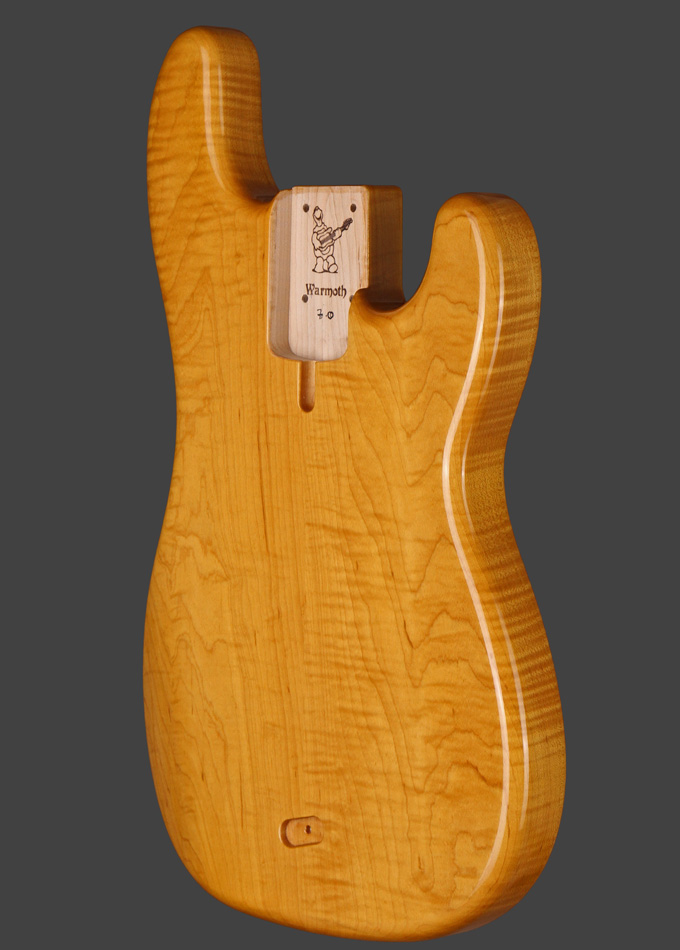
Invalid Link Removed
7 lbs !
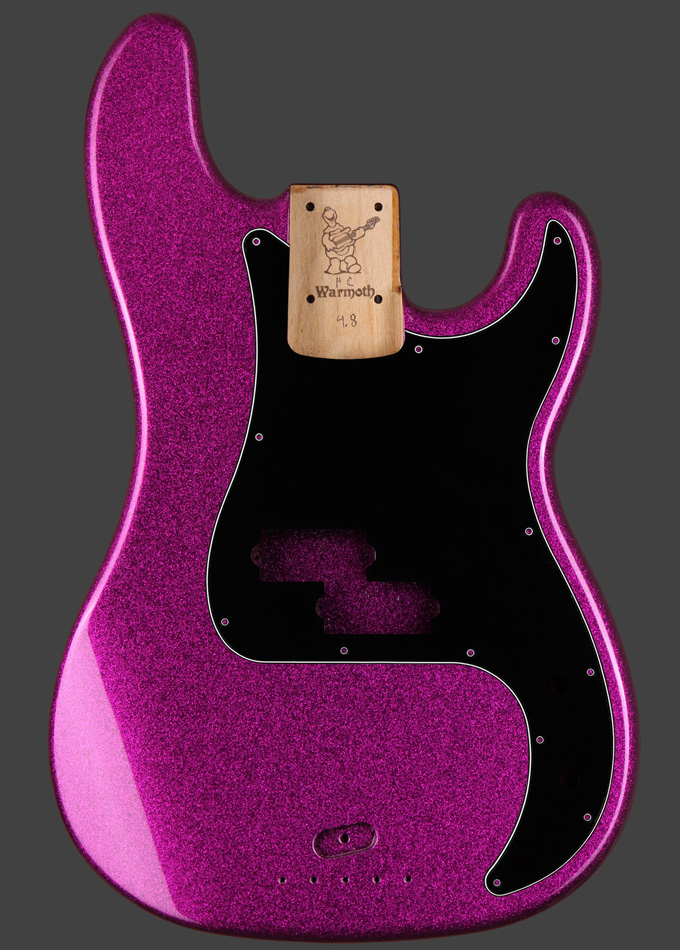
Invalid Link Removed

Invalid Link Removed
Invalid Link Removed
7 lbs !
Invalid Link Removed
Invalid Link Removed

I received my shipping notice yesterday for a custom body and neck that I ordered on May 6th.
Really excited to get this next week and start putting the bass together!
Really excited to get this next week and start putting the bass together!
Yeah, I eyeballed that body a few days back and quickly moved on. I don’t want any more 10lb plus basses!7 lbs is a NO


