Hey folks,
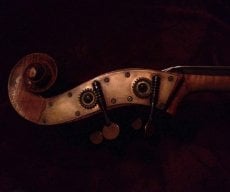
I have an early '60s meisel URB. This summer I had a full set up, with the biggest amount of work being leveling the fingerboard, specifically removing some material close to the bridge that was causing a buzz.
Doing some recording I have noticed that the buzz is coming back, specifically when i fret an 'E' note on the D string, starting about .25 seconds after I pluck it. If I have someone push the end of the fingerboard back to towards the body then the buzz goes away. I have the bridge cranked up as high as I can stand.
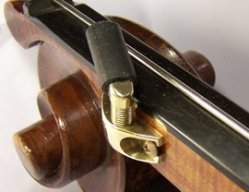
Bi annual set ups are out of the question, partly because the nearest bass luthier is 250 miles away. Is there anything I can do to keep the cantilevered fingerboard from warping up? The fingerboard is a non-remarkable chunk of rosewood (not ebony) and I am tempted to cut it back a few inches, but that would suck if it did not fix it. I have also considered gluing a brace to the back to keep it stable and sanding it back. I am fairly handy and have worked on other instruments but not basses much.
Thanks in advance for the help!
I have an early '60s meisel URB. This summer I had a full set up, with the biggest amount of work being leveling the fingerboard, specifically removing some material close to the bridge that was causing a buzz.
Doing some recording I have noticed that the buzz is coming back, specifically when i fret an 'E' note on the D string, starting about .25 seconds after I pluck it. If I have someone push the end of the fingerboard back to towards the body then the buzz goes away. I have the bridge cranked up as high as I can stand.
Bi annual set ups are out of the question, partly because the nearest bass luthier is 250 miles away. Is there anything I can do to keep the cantilevered fingerboard from warping up? The fingerboard is a non-remarkable chunk of rosewood (not ebony) and I am tempted to cut it back a few inches, but that would suck if it did not fix it. I have also considered gluing a brace to the back to keep it stable and sanding it back. I am fairly handy and have worked on other instruments but not basses much.
Thanks in advance for the help!