
Enjoy the benefits of a premium membership!
Upgrade Account
-
TalkBass has been independent since 1998. Add your voice.
Create a free account to reply to discussions, view embedded media, and browse with fewer display ads.
Join free Log in
Want zero display ads or expanded classifieds tools? Compare plans.
You are using an out of date browser. It may not display this or other websites correctly.
You should upgrade or use an alternative browser.
You should upgrade or use an alternative browser.
Weber 12in Bass Speakers?
- Thread starter PDavis
- Start date
More options
Who Replied?
They only have one 12" driver (4, 8 and 16ohms) Invalid Link Removed
Without measurements and Thiele-Small parameters one can't tell (without) hearing them how they will perform.
They write the following:
Ted Weber Speakers are built with tighter, more concentric voice coil gaps, and lower carbon, machined steel parts in the magnet circuits which yield a stronger, more controlled tone at all volumes, particularly in the low end at high volumes.
Ted Weber Speakers are hand-built to order, to ensure the best attention to detail is paid to your speaker. We build them one at a time, on a table - not hundreds at a time on an assembly line. This allows us to reduce the margin for error and produce an overall higher-quality speaker.
This is all anecdotal, I would like to see some real specs....
Not bashing Weber, these are probably fine loudspeakers but the info is to scarce.
Without measurements and Thiele-Small parameters one can't tell (without) hearing them how they will perform.
They write the following:
Ted Weber Speakers are built with tighter, more concentric voice coil gaps, and lower carbon, machined steel parts in the magnet circuits which yield a stronger, more controlled tone at all volumes, particularly in the low end at high volumes.
Ted Weber Speakers are hand-built to order, to ensure the best attention to detail is paid to your speaker. We build them one at a time, on a table - not hundreds at a time on an assembly line. This allows us to reduce the margin for error and produce an overall higher-quality speaker.
This is all anecdotal, I would like to see some real specs....
Not bashing Weber, these are probably fine loudspeakers but the info is to scarce.

I tried to get info out of them for about 2 years. They always "had a guy testing tham this week" for parameters. Probably good speakers but, you dmy know how to build a cab for them without specs. They really pissed me off.
Parameter testing requires a laptop, a $100 piece of hardware and thirty seconds, so either they're incredibly inept or the specs are so bad that they don't want to reveal them. A Devil's Advocate would deduce that they're content to sell them to newbies who don't know what T/S specs are, and know that they wouldn't sell any to anyone who does know what they are and how to use them, so they've nothing to gain by posting them.I tried to get info out of them for about 2 years. They always "had a guy testing tham this week" for parameters. Probably good speakers but, you dmy know how to build a cab for them without specs. They really pissed me off.
They used British speakers, mainly Celestion and Fane.Isn't that what Marshall used in bass cabs back in the day?
I think they are just used to guitar speakers where you can almost throw them in any box.
That would almost be true with their 10FL(light), this 10" driver will have a highish Qes so it can be used in a sealed cabinet somewhere between 0.6-1cu ft (they claim it works perfectly in a classic style 810).
It looks like the 10FH and 12 have a stronger motor resulting in a lower Qes, for optimal results they should be used in a ported cab but then you really need the TSP's else you can't design a proper tuned system.
The 15" driver looks like it will have a moderate high Qes, making it suitable for closed cabs and larger ported ones.
So the only driver I would buy without having TSP's would be the 10FH (when I would want to build a sealed enclosure)
Lo and behold, I've got the TSP's for the 12" driver:
Fs = 56hz
Qms = 20
Qes = 0.46
Qts = 0.45
Vas = 71liters
One parameter that stands out is the low Rms of 0.78, for a 12" driver this very low, this is related to the high Qms. This means that this driver has low mechanical losses.
One parameter that's missing is the xmax (voice-coil lenght and air gap depth).
The TSP's look useful for a ported cab, I'll do some simulations later on.
Fs = 56hz
Qms = 20
Qes = 0.46
Qts = 0.45
Vas = 71liters
One parameter that stands out is the low Rms of 0.78, for a 12" driver this very low, this is related to the high Qms. This means that this driver has low mechanical losses.
One parameter that's missing is the xmax (voice-coil lenght and air gap depth).
The TSP's look useful for a ported cab, I'll do some simulations later on.
Lo and behold, I've got the TSP's for the 12" driver:
Fs = 56hz
Qms = 20
Qes = 0.46
Qts = 0.45
Vas = 71liters
One parameter that stands out is the low Rms of 0.78, for a 12" driver this very low, this is related to the high Qms. This means that this driver has low mechanical losses.
One parameter that's missing is the xmax (voice-coil lenght and air gap depth).
The TSP's look useful for a ported cab, I'll do some simulations later on.
Happen to get a chance to get an update? I really am new to this but I am learning its very important. I'd love to hear your(and others) takes on what the simulations mean. Weber is fairly local to me and they've been great to me. I've used their guitar speakers a ton but as I have transitioned to more of a bass player in the past couple years, I'd really like to give them a chance... But, I want to do it right so I'd like to know these are decent!


Lo and behold, I've got the TSP's for the 12" driver:
Fs = 56hz
Qms = 20
Qes = 0.46
Qts = 0.45
Vas = 71liters
One parameter that stands out is the low Rms of 0.78, for a 12" driver this very low, this is related to the high Qms. This means that this driver has low mechanical losses.
One parameter that's missing is the xmax (voice-coil lenght and air gap depth).
The TSP's look useful for a ported cab, I'll do some simulations later on.
off the top of my head Fs seems a bit potentially high, Vas doesn't seem too bad though. For ported I could see something working fairly well, but Fs seems in the range of some of the Celestion PA drivers out there, so it might be optimal in a very small ported box, but with a high F3, and then be good enough in a decently sized ported box for bass. I'm a bit new to doing the math myself, so correct me if I'm wrong. This particular driver might actually be fairly similar to the TF1220 or maybe the TF 1225e that I've been looking at for a bit of a thought exercise, might be a bit of a "better" driver too.
edit: I should also note that I've been eyeballing their 5F1 kits for a while now.
Last edited:
off the top of my head Fs seems a bit potentially high, Vas doesn't seem too bad though. For ported I could see something working fairly well, but Fs seems in the range of some of the Celestion PA drivers out there, so it might be optimal in a very small ported box, but with a high F3, and then be good enough in a decently sized ported box for bass. I'm a bit new to doing the math myself, so correct me if I'm wrong.
You need to look at the combination of the Fs and Qes.
Fs may be high but Qes is also highish, with a relative large enclosure you can get an F3 below Fs.
For ported cabs you can use this rule of thumb:
Qes = 0.37 - 0.40 then the optimal enclosure size will be approx the same as Vas and F3 will be approx the same as the Fs
When Qes > 0.40 then you need an enclosure size larger then Vas, in this case it's possible to get an F3 lower then Fs
When Qes < 0.37 then you need an enclosure size smaller then vas, in this case F3 will be higher then Fs
A simulation in AJhorn shows the following results for the Weber 12:
-ideal cab size is approx 82liters
-tuning 47hz
-F3 = 42hz
Last edited:
You need to look at the combination of the Fs and Qes.
Fs may be high but Qes is also highish, with a relative large enclosure you can get an F3 below Fs.
For ported cabs you can use this rule of thumb:
Qes = 0.37 - 0.40 then the optimal enclosure size will be approx the same as Vas and F3 will be approx the same as the Fs
When Qes > 0.40 then you need an enclosure size larger then Vas, in this case it's possible to get an F3 lower then Fs
When Qes < 0.37 then you need an enclosure size smaller then vas, in this case F3 will be higher then Fs
A simulation in AJhorn shows the following results for the Weber 12:
-ideal cab size is approx 82liters
-tuning 47hz
-F3 = 42hz
View attachment 690641
That was very informative, thank you!
would you have any recommended reading on the subject, so that I can improve?
would you have any recommended reading on the subject, so that I can improve?
Thiele/Small - Wikipedia, the free encyclopedia
And of course there are some books available:
Loudspeaker Design Cookbook: Vance Dickason: 9781882580477: Amazon.com: Books
As an Amazon Associate, TalkBass may receive commissions from qualifying purchases made via links on this site.
Thiele/Small - Wikipedia, the free encyclopedia
And of course there are some books available:
Loudspeaker Design Cookbook: Vance Dickason: 9781882580477: Amazon.com: Books
thank you, it's much appreciated, I've gotten a couple of formulas from an old celestion document for calculating cabinet sizes, as well as doing some readings from my old University's engineering databases, but it's great to get some more specific things.
As an Amazon Associate, TalkBass may receive commissions from qualifying purchases made via links on this site.
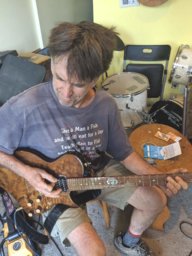
jammin through a 10fh as we speak, not badThey only have one 12" driver (4, 8 and 16ohms) Invalid Link Removed
Without measurements and Thiele-Small parameters one can't tell (without) hearing them how they will perform.
They write the following:
Ted Weber Speakers are built with tighter, more concentric voice coil gaps, and lower carbon, machined steel parts in the magnet circuits which yield a stronger, more controlled tone at all volumes, particularly in the low end at high volumes.
Ted Weber Speakers are hand-built to order, to ensure the best attention to detail is paid to your speaker. We build them one at a time, on a table - not hundreds at a time on an assembly line. This allows us to reduce the margin for error and produce an overall higher-quality speaker.
This is all anecdotal, I would like to see some real specs....
Not bashing Weber, these are probably fine loudspeakers but the info is to scarce.
almost hangs with the ev15b in a separate box 8 plus 8 equals 4


