• TalkBass has been independent since 1998. Add your voice.
    Create a free account to reply to discussions, view embedded media, and browse with fewer display ads.
    Join freeLog in
    Want zero display ads or expanded classifieds tools? Compare plans.

Weekend Warrior Stage Lighting Discussion

I've been reading through this thread all day. It's evergreen!

Our band has been together for almost 10 years, and for a lot of that time, we've just thrown two ColorStrip Minis on top of our mains and that was it.

I saw a band recently that had a great light show, and now I'm working on setting up lights for our band.

I bought a DMXIS controller, and I like it so far. I've been able to set up some presets with the ColorStrips, but they are difficult to use. I've ordered a 4Bar which will arrive tomorrow.

I'm looking forward to playing around with this new stuff, and learning more from the folks here.

Thanks for the great advice, and I'm happy to share my experiences as well.
 
That's awesome! 4Bars are a great way to step up your band's lighting and they're so easy to set up! We started with one but we now have two 4Bar Tri and two older 4Bars.

Be sure to check out Learn Stage Lighting's DMXIS tutorials here:
I think there are 12 videos in all.

If you haven't looked at these Donner wireless DMX receivers and transmitter I would definitely invest. So much better than dealing with cables! https://www.amazon.com/Donner-Wirel...=wireless+dmx&qid=1562877720&s=gateway&sr=8-6
 
As an Amazon Associate, TalkBass may receive commissions from qualifying purchases made via links on this site.
  • Like
Reactions: musicman7722
Thanks for that info! Yes, I've seen those videos and actually bought DMXIS based on the recommendation of "Learn Stage Lighting." I like that it's very capable, and yet simple. I'm even working on using it with TouchOSC on an iPad so my wife can potentially run lights while she's sipping her beer! (Tap for song1, tap for song2, etc.)

I'm digging the idea of wireless DMX. We have enough cables on our stage as it is!
 
Dmxis is great. We played to a click and automated the whole show using its sister programme, Show Buddy, for a time, but I then controlled things with a couple of Boss pedals. Very easy just to scroll through your scenes, one after another. I found running DMXIS via midi a bit cranky. Will be interested to hear how you get on with OSC.
 
  • Like
Reactions: RonHoss
Wireless DMX is GREAT !! check out my previous post #355

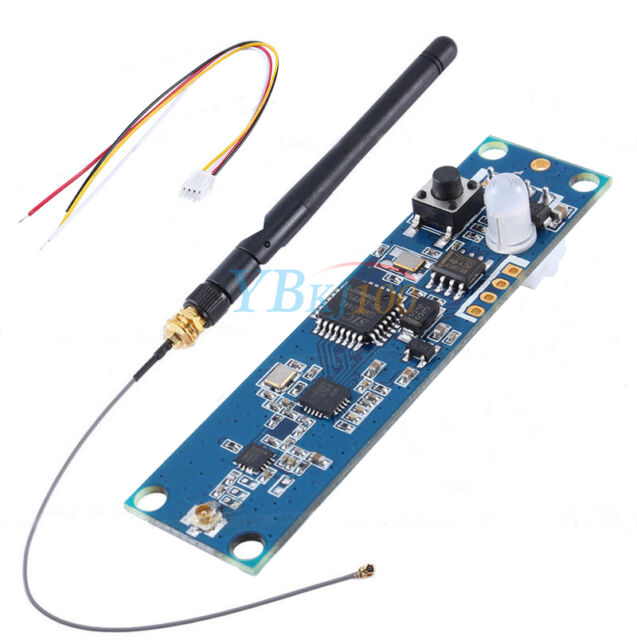
For you DIY'ers, cheap wireless DMX barebones modules can be found on eBay for less than USD $9
Invalid Link Removed
s-l640.jpg


Install one of these in each lighting bar (I installed inside the lighting PARCAN and used the lights internal 5 volt controller supply, the DMX wires tapped to the back of the DMX XLR sockets), and one for the DMX transmit/XLR out on the controller).
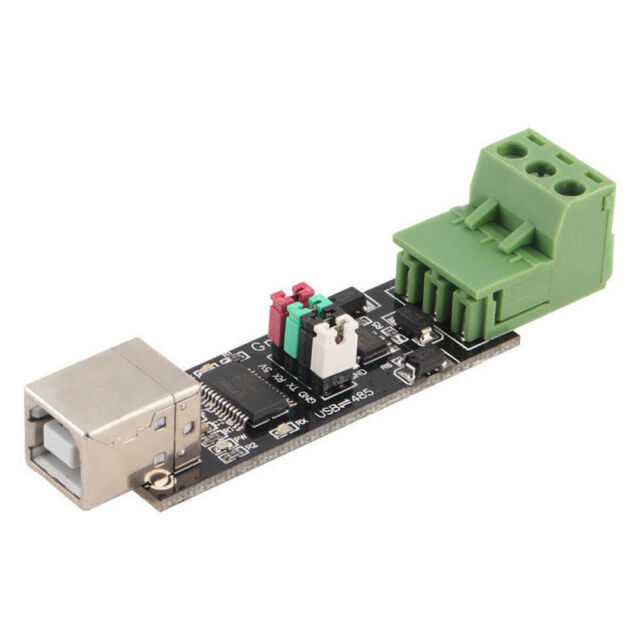
I also made a cheap USB to RS485 (wireless USB transmitter dongle) with one of the wireless modules above and one of these which use the FTDI USB-Serial chip for about USD $5

USB to Rs485 TTL Serial Converter Adapter FTDI Interface Ft232rl 75176 Module for sale online | eBay
s-l640.jpg

You can also wire a regular XLR to the green terminals for regular wired DMX output.
I use this with "FREESTYLER-DMX"
using the Open Enertec driver.
 
As an eBay Associate, TalkBass may earn a commission from qualifying purchases.
And here is the next level thing I have been doing, wireless DMX lighting and triple video projector video backdrop.
I made this all in one midi/DMX controller foot pedal which does:
1) midi control for lighting scenes, strobes, and smoke machine to FreeStyler-DMX software
2) midi control to ScreenMonkey video control software to change looping video graphics and clips
3) midi note control of software synths (foot synth)
4) midi control of other software or hardware patch change (not yet used)

so down one USB cable to a laptop from the DIY foot controller, it sends 4 x USB midi virtual devices upstream, and USB DMX down stream to the wireless DMX transmitter module in the foot controller.
The foot controller is run by an Arduino micro and is all powered by the laptop USB.

 
I've been reading throughout this entire thread during some free time the past couple days. Very informative stuff.

I'm beginning the search for purchasing and providing lighting for a band I'm in, in addition to some potential side work I've received lately recording local live bands, then editing multi-track audio and editing multiple video angles in post production. I've become passable at the live audio, audio capture, creating decent mixes in Reaper, etc. I'm pretty much a potato on the video side, but I'm improving. I know the lights will help my video quality immensely. However, I have a very tight budget. I've already willingly covered most of the cost of the recording and live sound equipment.

From what I've read, purchasing 8 or so RGBW par cans, a couple stands/bars, the appropriate cables, and an Obey 40 will be a great starting point. I also have a couple Android tablets and Windows 10 laptop at every gig for audio and video needs, so I'm open to a software option to control the lights instead of the Obey 40. Regardless, something I can program in advance since I play bass while running live sound in addition to audio and video recording.

Here's some links to a couple cheap options I'm hoping to check out. Both seem well reviewed for the price.

Invalid Link Removed

https://www.amazon.com/Lights-SAHAU...+cans+sahauhy&qid=1568158056&s=gateway&sr=8-5
 
As an Amazon Associate, TalkBass may receive commissions from qualifying purchases made via links on this site.
  • Like
Reactions: /\/\3phist0
I've been reading throughout this entire thread during some free time the past couple days. Very informative stuff.

I'm beginning the search for purchasing and providing lighting for a band I'm in, in addition to some potential side work I've received lately recording local live bands, then editing multi-track audio and editing multiple video angles in post production. I've become passable at the live audio, audio capture, creating decent mixes in Reaper, etc. I'm pretty much a potato on the video side, but I'm improving. I know the lights will help my video quality immensely. However, I have a very tight budget. I've already willingly covered most of the cost of the recording and live sound equipment.

From what I've read, purchasing 8 or so RGBW par cans, a couple stands/bars, the appropriate cables, and an Obey 40 will be a great starting point. I also have a couple Android tablets and Windows 10 laptop at every gig for audio and video needs, so I'm open to a software option to control the lights instead of the Obey 40. Regardless, something I can program in advance since I play bass while running live sound in addition to audio and video recording.

Here's some links to a couple cheap options I'm hoping to check out. Both seem well reviewed for the price.

Invalid Link Removed

https://www.amazon.com/Lights-SAHAU...+cans+sahauhy&qid=1568158056&s=gateway&sr=8-5

Hi!

Those lights you linked to are probably worth a shot, but if you can stretch to stuff by Chauvet or ADJ you'll get better quality and support. The Chauvet 4bars are good and you might find one on eBay.

In any event, it would be better to have 4 of those wash lights each side out front. That would give you two lighting angles and more creative options.

Regarding controllers, if you want to change scenes mid song while playing bass you might struggle. I'm trying to remember if the Obey 40 has midi implemented for a footswitch. I'm pretty sure the 70 does.

I use a Eurolite Bigfoot to control our rig. It's a bit like an Obey 70, but with footswitches. I also have DMXIS on the laptop. That's an excellent entry lighting controller. Very powerful and you can use a Boss double footswitch to control things.

If you haven't done so, check out Learnstagelighting.com . David has a You Tube channel as well and is an absolute mine of information if you're starting up.
 
As an Amazon Associate, TalkBass may receive commissions from qualifying purchases made via links on this site.
I too have been looking into this. For those of you who do not have a DMXIS product by ENTTEC, I've found QLC+ to be a good foray into computer-aided lighting that can be slaved to a MIDI controller. QLC+ is free and it's open-source; while the UI and program layout may not be to everyone's tastes, it seems to be very capable. It's also capable of scaling up to devices that work with protocols other than USB, like Artnet (basically, you can run DMX controllers using a network router, which is amazing, and this lets you expand your lighting rig to more than one or two universes).

So far, I've been able to use QLC+ to control a couple of par lights and (preliminary testing) a MagicBox 2 red/blue laser fixture, and I've been able to control it through MIDI coming from Ableton Live. My next steps are setting up some type of test rig or visualizer rig to accept DMX commands from QLC+, as it'd be nice to be able to run lighting tests without having to actually set up a stage.

@gumtown Your setup looks awesome! Eventually, I'd like to get to that level with lighting. Unfortunately, before I get to that point, I've got to have a stable band as a solid foundation. Keep us posted on what else you accomplish! I'd love to pick your brain on the stuff you're doing. You said the wireless DMX works well - there's no latency or jitter with the inexpensive eBay units? (I ask because I tried a friend's Anyma controller, and because it doesn't seem to have a USB microcontroller built in it's incredibly laggy. I ended up buying a DMXKing ultraDMX2, which supports USB and Artnet, and performs admirably.)
 
The Wireless modules I am using are great !!
No lag, no bugs, rock solid.
They are intelligent enough to be able to talk to each other and navigate the radio spectrum and select clear R.F. channels for the entire network.
I am using just over 130 DMX channels through these, and no issues yet.

The previous pictures I posted a few posts back, the USB-RS485 module still works great too !!
With just that $5 module, you can wire a XLR socket direct to it and have a USB-DMX interface adapter, the wireless modules work both as transmitter and receiver, so you can wire one to the USB-485 module and have a $14.00 USB to wireless DMX adapter.
Wire the other wireless modules into DMX PAR Cans or Fixtures, tap into the internal 5 volt supply and the two other wires directly on to the DMX XLR sockets (inside the fitting) and you have a wireless DMX lighting fixture.
I might also add that once you have one wireless DMX lighting fixture, you can daisy chain other lights from its DMX-XLR sockets.

I get no jitter on the wireless like I used to on XLR cables.

I also brought some of these new 180 watt PAR64 RGBW cans, they are far superior in light output, but darned hard on the eyes from out from.
 
  • Like
Reactions: nixdad
I've been reading throughout this entire thread during some free time the past couple days. Very informative stuff.

I'm beginning the search for purchasing and providing lighting for a band I'm in, in addition to some potential side work I've received lately recording local live bands, then editing multi-track audio and editing multiple video angles in post production. I've become passable at the live audio, audio capture, creating decent mixes in Reaper, etc. I'm pretty much a potato on the video side, but I'm improving. I know the lights will help my video quality immensely. However, I have a very tight budget. I've already willingly covered most of the cost of the recording and live sound equipment.

From what I've read, purchasing 8 or so RGBW par cans, a couple stands/bars, the appropriate cables, and an Obey 40 will be a great starting point. I also have a couple Android tablets and Windows 10 laptop at every gig for audio and video needs, so I'm open to a software option to control the lights instead of the Obey 40. Regardless, something I can program in advance since I play bass while running live sound in addition to audio and video recording.

Here's some links to a couple cheap options I'm hoping to check out. Both seem well reviewed for the price.

Invalid Link Removed

https://www.amazon.com/Lights-SAHAU...+cans+sahauhy&qid=1568158056&s=gateway&sr=8-5

I have the lighting bar and have used it for a few yars now. Very nice unit.

I have gone the wireless DMX route myself using the ones in this thread on Amazon. i hooked them up to my Obey 40. Easy Peasy.
 
As an Amazon Associate, TalkBass may receive commissions from qualifying purchases made via links on this site.
I did have an interesting issue pop up this last week at a wedding I did sound at for one of my regular bands I mix. I had my Obey 40 and I was running 5 of the wireless DMX units from Amazon. The hotel brought in 20 or so wireless lights and their signal and my signal were changing each others lights. Took us an hour to figure that out. They left theirs alone so mine would run. All i can figures is that I need to set my lights at higher numbers. I started at 1 and went up every 16 numbers. I imagine everybody does this. So I will try changing the numbers.

Any thoughts?
 
@musicman7722 Sounds like the DMX addresses of the wireless lights were identical. You could offset your starting address to be a higher number (this is, from what I understand, common practice for universes where you might have to coexist with an existing lighting system) but this should only be necessary if your lights and their lights were on the same universe. I imagine that changing your universe assignment would have fixed the issue, but I don't know if the radios separate universe information in that way.
 
The eBay modules I use only pass through what ever serial data it receives,
so it does not care about DMX channels (something separate and different from radio channels).

But the Radio R.F. side of them operate over 120 radio channels,
divided into about 6 groups, where each group can operate its own independent Universe.

The push button on the module will cycle through the groups, and the led will change color to indicate the selected group.
When a different channel Group is selected on all modules, they will stay on that same Group until changed again, even after power cycle.

Invalid Link Removed

@musicman7722 it was just unfortunate that someone else nearby was operating a similar wireless DMX system on the same channel Group as you.
 
  • Like
Reactions: juggahnaught
Interesting thread. I too just got my hands on four inexpensive RGBA pars rated at 9 x 4w. I had been using four colorstrip minis (2 were the FX model) on built-in patterns, but I've had two problems with them. First, they are unreliable. I have one mostly functional out of my original four. Anyone trying to tell me I will get better quality or support from Chauvet will have a hard time selling that. I can tell you I've received no support, the remotes that came with them never worked, and the durability of the products is crap. Their other stuff must be better for so many people to speak highly of them, but I can't see myself buying any more of their fixtures.

My second problem is that the singer is also always complaining about the brightness of the lights. The new stuff hasn't made it out of the box yet, but I'm afraid I may need to find a way to dim even these lights to keep her happy. We're normally running with the lights at about 8' off the ground and spread 16-20' wide from an angle that would be only a couple feet in front of the band. Was planning on making a small crossbar out of PVC to put on top of my speaker stands (spare set I use only for lights) to mount a pair on each side of the stage about 3' apart from each other. I'd love to run some sort of small DMX controller with a slow fade program (built in or programmed by me) and master dimmer. I have been looking at all sorts of stuff, but I haven't seen anything that looks like the answer.

-Bob
 
For small bar gigs I use to bars of 4 LED pars. I connect them with wireless Dmx to a small Chauvet controller. I've set up about 40 scenes, and I let the controllers slowly chase ( about 2 scene changes per minute). I turn it on at the beginning of a set, and off after. No brainer. Since LED pars allow color mixing, it's mostly blues, purple, pinks and ambers, since there is no single color (RGB) that I like.
 
  • Like
Reactions: kittywithabanjo