• TalkBass has been independent since 1998. Add your voice.
    Create a free account to reply to discussions, view embedded media, and browse with fewer display ads.
    Join freeLog in
    Want zero display ads or expanded classifieds tools? Compare plans.

Wenge Bubinga Wood Filler

Hi Guys,
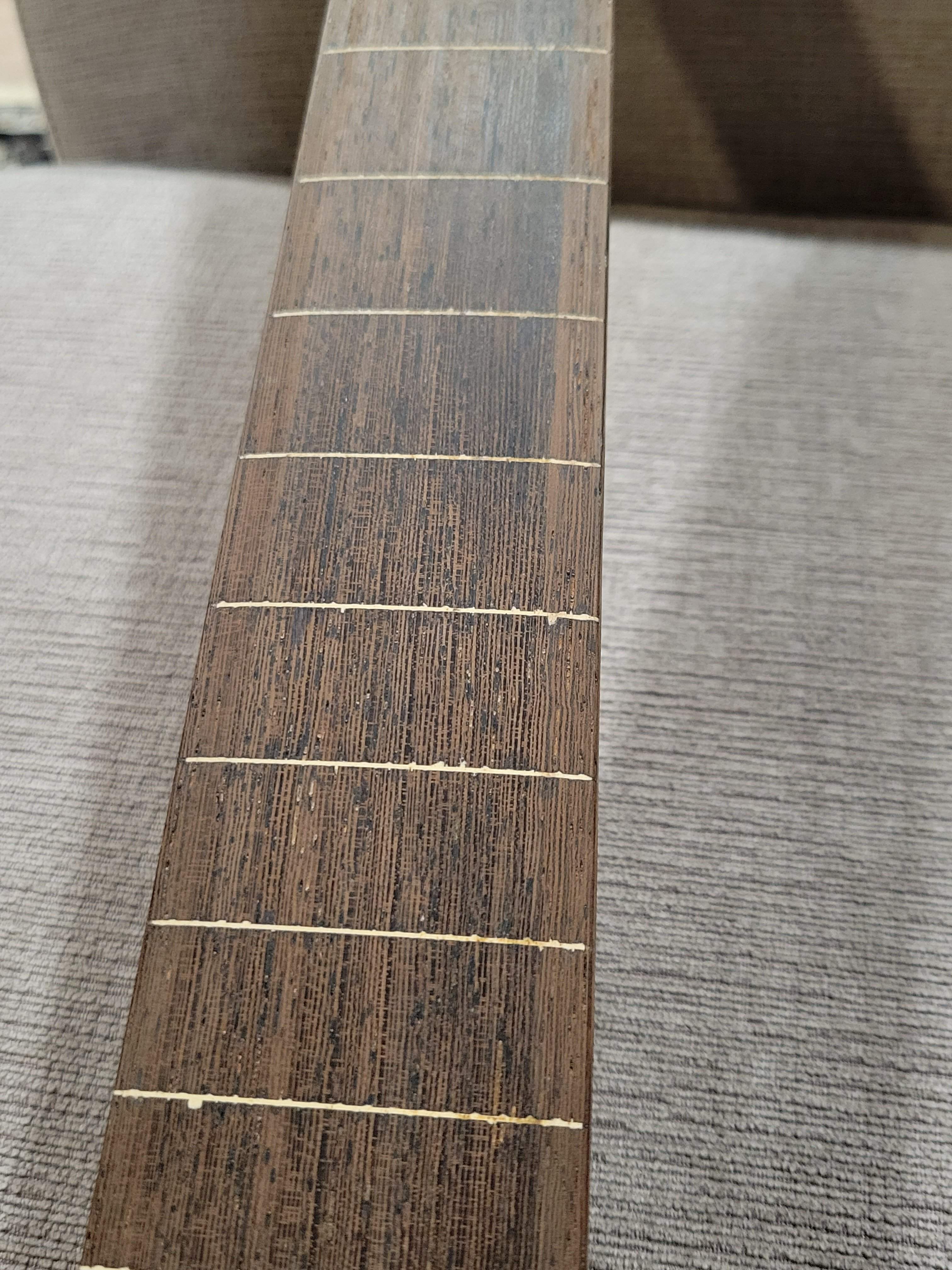
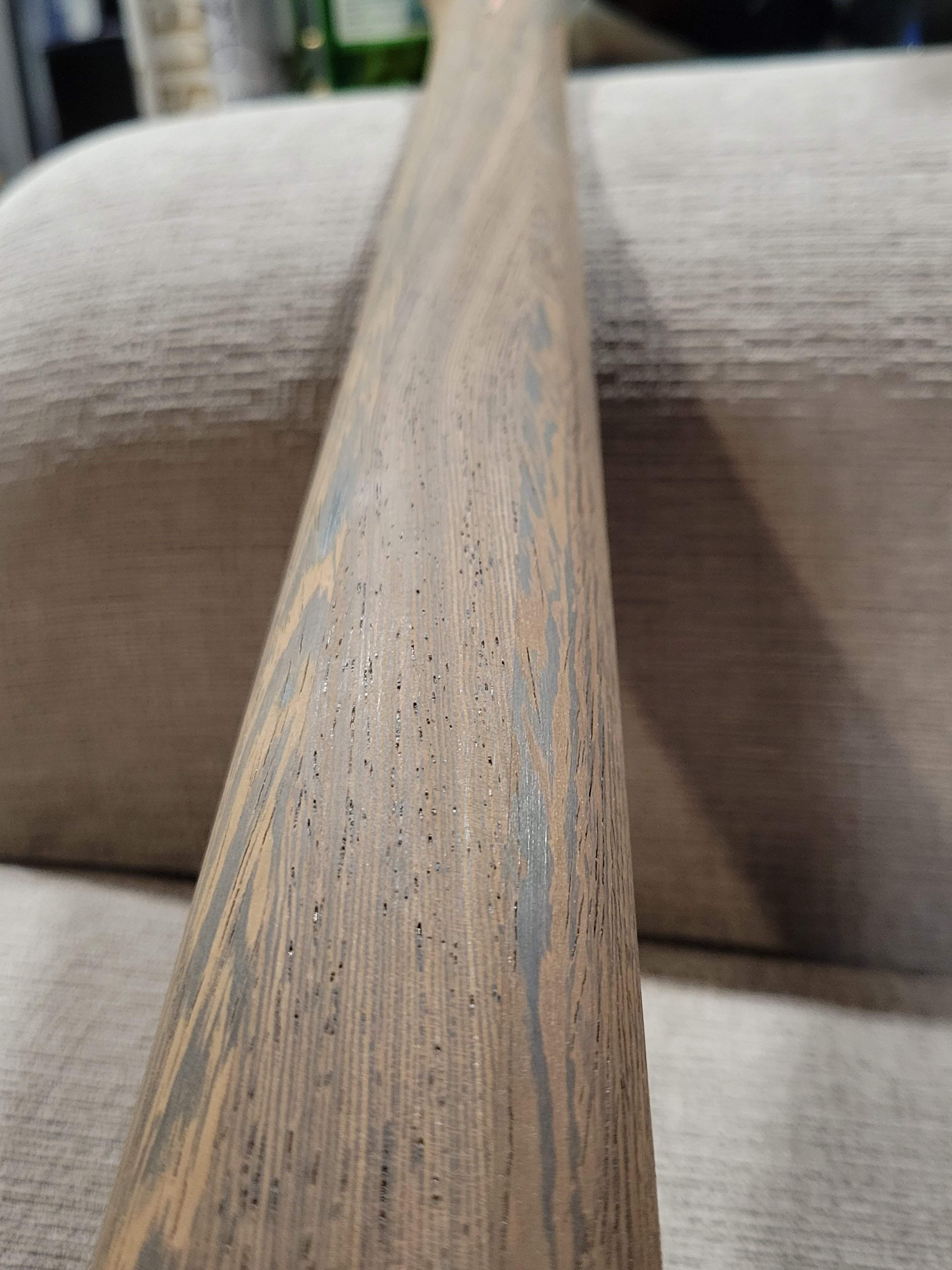
I have an old Warwick neck from the 90's. I'm sanding it down and you can see all the holes in the grain.
Do I bother filling this with like a wood wax? I'll be coating the back of the neck with tung oil (like half my basses), will that fill it mostly?
Just a project bass had the neck laying around.
20220709_215946.jpg
20220709_215919 (1).jpg
20220709_215930.jpg
 
  • Like
Reactions: Zooberwerx
Tru oil will take many, many many coats to fill big pores like that. Like, think of the number of coats you'd guess it would take, then multiply by ten.

Most Wenge necks have open pores. If you want open pores, you can finish it with tru oil or any other protective finish you're comfortable with. I think it makes sense to protect the wood on a bass neck, since doing so will keep it cleaner and will slow the seasonal changes in moisture content, resulting in a more stable neck. Half a dozen coats of tru oil will result in a nice clean satin "polished raw wood" look and feel.

If you want to fill the pores, epoxy is a great choice. it's clear (unless you tint it) and totally stable once cured - you don't have to worry about it shrinking and causing the pores to telegraph through. It's also easily compatible with most finishes, including tru oil.
 
I want to keep the strings on the wood. No epoxy or Jaco like FB.
I did some deep digging on the forum here and some recommendations are as follows:

Mix some of Wenge dust with wipe-on poly to make a slurry, apply and buff with steel wool 0000

Buy some CA and apply an even coat than sand back down to wood and buff to shine.

It would take a million coats of oil to fill them pores.
 
I guess since there isn't a lot of follow up on this I'll post my results.

The neck is a 1997 warwick fortress one. Wenge fretboard with a wenge and bubinga neck. Its defretted, I'm not sure what i used to fill the slots so long ago.

The fretboard needed a radius so i bought a radius block from Stewmac and used 220 sticky sand paper.

I collected all the Wenge sawdust as i was putting a radius on the fretboard. The pores on the fretboard after applying a new radius were huge and after dragging my finger i could feel them and were catchy.

I proceeded to make a slurry of wipe on poly and the wenge sawdust. I wiped it on the neck in circular motions to fill in the pores. Let it dry for an hour and buff with 0000 steel wool. I repeated this 4 times.

On the last coat i made the slurry and used 800 grit wet sand with the slurry. I let dry overnight. Buffed with steel wool than waxed with finishing paste.

You cant feel the pores at all while slidding up and down the neck and it has a wonderful wood feel to it.

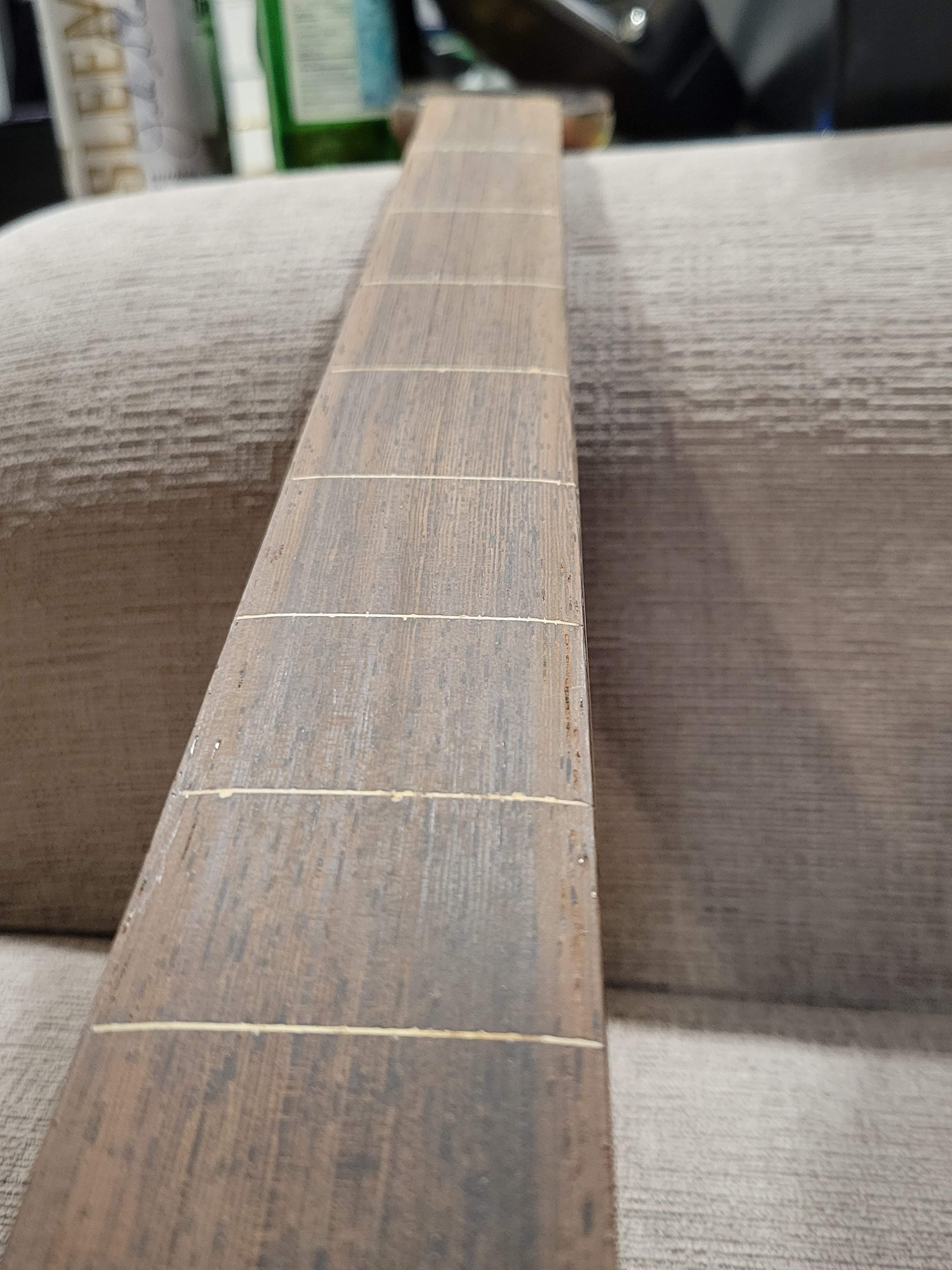
Here's the finished look.
20220716_150506.jpg
20220716_150252.jpg
 
  • Like
Reactions: Matt Liebenau
Wenge is strange stuff. The all-wenge '97 Warwick necks were pretty remarkable (...I had a couple Streamers) so I'm glad you were working with a solid platform. The grain has the tendency to lift so I knock it down with a green ScotchBrite pad and BriWax (per recommendation of Rob Elrick) when warranted. Never used a slurry per se but I've "dusted" with CA on larger cracks & splits. I enjoyed following the progress on this project.

Riis
 
  • Like
Reactions: ThomasTronics
I'd trial an inconspicuous area like the heel with Tru-Oil. It should fill the pores but I'm unsure whether it will leave a cloudy appearance once cured and worked / rubbed-out.

Riis

I used Tung oil on the back of the neck on the Bubinga and Wenge. It took on a terrible dark tinge and the grain never really carried through. Ended up sanding off the Tung and just sanded and wet sanded to 1500 grit and it turned out nicely. Smooth and not sticky at all.
 
I used Tung oil on the back of the neck on the Bubinga and Wenge. It took on a terrible dark tinge and the grain never really carried through. Ended up sanding off the Tung and just sanded and wet sanded to 1500 grit and it turned out nicely. Smooth and not sticky at all.

Was it really Tung or a hybrid like TruOil? Surprised by the outcome.

Riis
 
100% tung.

I'm about to post this in a new bass section. Wired like a jazz bassView attachment 4754532

May have been part of the problem. Pure tung is generally considered as less-than-desirable for a multitude of reasons...I copied this from the 'net and representative of what I've gleaned over the years:

Disadvantages Of Tung oil
  • Slow Penetration. Tung oil penetration to the wood is very slow. ...
  • Unpleasant Odor. Tung oil produces a mildly unpleasant, distinct odor for a few days until it is fully cured after it is applied. ...
  • Long Processing Time. ...
  • Expensive. ...
  • Difficult to Store. ...
  • Doesn't Smoothen Wood Grain
I've had no issues with gunstock oils including TruOil. IIRC, the hybrids contain linseed oil, varnishes, and some tung oil.

Riis
 
  • Like
Reactions: ThomasTronics

Latest posts