• TalkBass has been independent since 1998. Add your voice.
    Create a free account to reply to discussions, view embedded media, and browse with fewer display ads.
    Join freeLog in
    Want zero display ads or expanded classifieds tools? Compare plans.

wenge neck

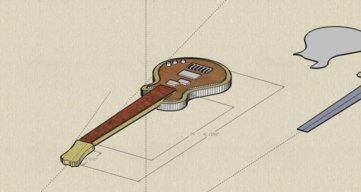
hmm, maybe not the arched body after all, i want the zebrawood top to cover the neck from the front, and i cant fathom how i will make that work with the arched body.

Hey V, I've been doing that same thing, look at my avitar. Thats the bass I used on the arched body. The part of the neck through has a 1/8" piece of rosewood over it, it looks like the fingerboard goes all the way down. What I've been doing is cutting from the end of the fingerboard to the bridge, 0" at the f.b and 1/4" at the bridge. Then gluing up a 1/8" piece over that. After it that I'll run it through the band saw and the jointer so it's flush. By the time I glue the f.b. it looks like it's continual.
 
+100 on the shinto saw rasp. I like the one that has the handle directly behind the rasp instead of above it, but either one is the way to rough shape hard wood.

I used a number of traditional rasps as a kid, and while they did the job, they all tended to sometimes have a mid of their own at times. The saw rasp is very easy to control and eats the purpleheart I have been using like butter.

One word of caution, when getting any where close to you finished shape try not to cut away from an edge. The sawrasp can grab chunks of brittle wood grain and cause tearouts. So be sure that when working an edge, to cut into, or towards the center of the wood.

I also just bought two Dragon Double-radius Hand-cut Rasps from Stew Mac for shaping the insides of the horns and the base of the headstock. (1 fine and 1 course) Each tooth is individually hammered by hand, so there are no straight rows of teeth to catch up on the grain or a knot. They too are so much better then any of the rasps my dad ever had in his shop. (sorry dad)
 
+100 on the shinto saw rasp. I like the one that has the handle directly behind the rasp instead of above it, but either one is the way to rough shape hard wood.

I used a number of traditional rasps as a kid, and while they did the job, they all tended to sometimes have a mid of their own at times. The saw rasp is very easy to control and eats the purpleheart I have been using like butter.

One word of caution, when getting any where close to you finished shape try not to cut away from an edge. The sawrasp can grab chunks of brittle wood grain and cause tearouts. So be sure that when working an edge, to cut into, or towards the center of the wood.

I also just bought two Dragon Double-radius Hand-cut Rasps from Stew Mac for shaping the insides of the horns and the base of the headstock. (1 fine and 1 course) Each tooth is individually hammered by hand, so there are no straight rows of teeth to catch up on the grain or a knot. They too are so much better then any of the rasps my dad ever had in his shop. (sorry dad)

I have one of the dragon rasps not sure which one though I really like it!
 

Latest posts