My fretless Godin A5 (older model) has a 13 pin output for Roland guitar synths and other processors.

Enjoy the benefits of a premium membership!
Upgrade Account
-
TalkBass has been independent since 1998. Add your voice.
Create a free account to reply to discussions, view embedded media, and browse with fewer display ads.
Join free Log in
Want zero display ads or expanded classifieds tools? Compare plans.
You are using an out of date browser. It may not display this or other websites correctly.
You should upgrade or use an alternative browser.
You should upgrade or use an alternative browser.
What are some unique features in a bass? I.e. string mutes, two outputs, trem etc.
- Thread starter sebastianseeker
- Start date
More options
Who Replied?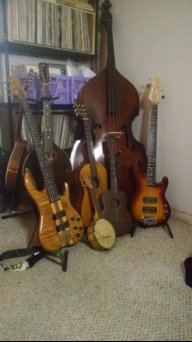
My '65 Magnatone Hurricane has a tilt neck, and an adjustable string mute with the mechanism placed under the bridge. The "unique" feature is a "reverse nut" screwed into the headstock OVER the strings, which just aligns them for the zero fret. Mine is the only one I've seen that still has it. These basses are almost always heavily modded on the secondary market, because of bizarre design choices, a lack of spare parts, and famously flakey finishes that usually wore off before the end of the decade.Ampeg did the micro-tilt on their Scroll Basses in '66. (The Baby Bass had it earlier than that, but that's an electric upright.)

Back in the 80's there was a company called Novatone who developed a system whereby a bass's neck could be modified to enable different fretboards to be swapped out on the fly, such as fretted to fretless. The fretboard was held onto the neck magnetically. Tony Levin had a Stingray that was modified with the Novatone system, and was featured in an ad for them. The company is no longer in business and from what I understand the concept didn't work out very well, for multiple reasons. Others (including Steinberger) have tried to develop systems to switch a bass from fretted to fretless on the fly, but none have taken off.
Steinberger's attempt:
Should throw the magnetic pull cat among the pigeons.

Sustainiac, variable Q controls (filter controls), Buzz Feiten tuning, Super Quad pickups, multi-coil pickups (2 coils/string), LED side and front markers, Trans Trem, on-the-fly swappable pickups, all steel construction, circular neck.
BBB
BBB

- Jun 30, 2010
- 49,631
- 222,222
- Disclosures
- musician/artist/owner - Gildaxe
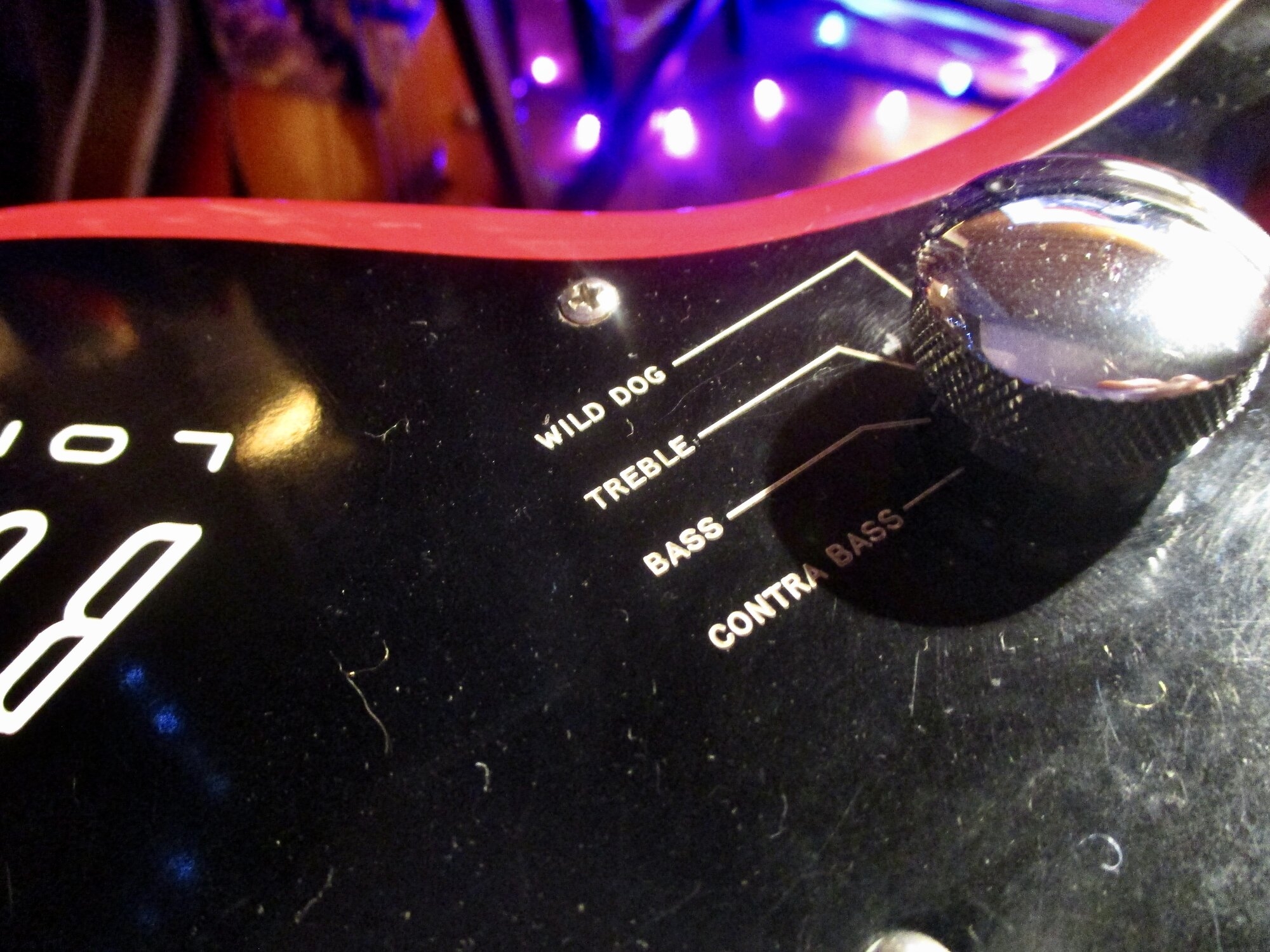
Burns of London from the early '60s had a "Wild Dog" setting on their rotary pu-selector pot. Essentially a phase shift that was anything but "wild"... more like an anemic ferret! This is usually done on a guitar- not very useful on a bass. By reversing two wires - it sounded much better.
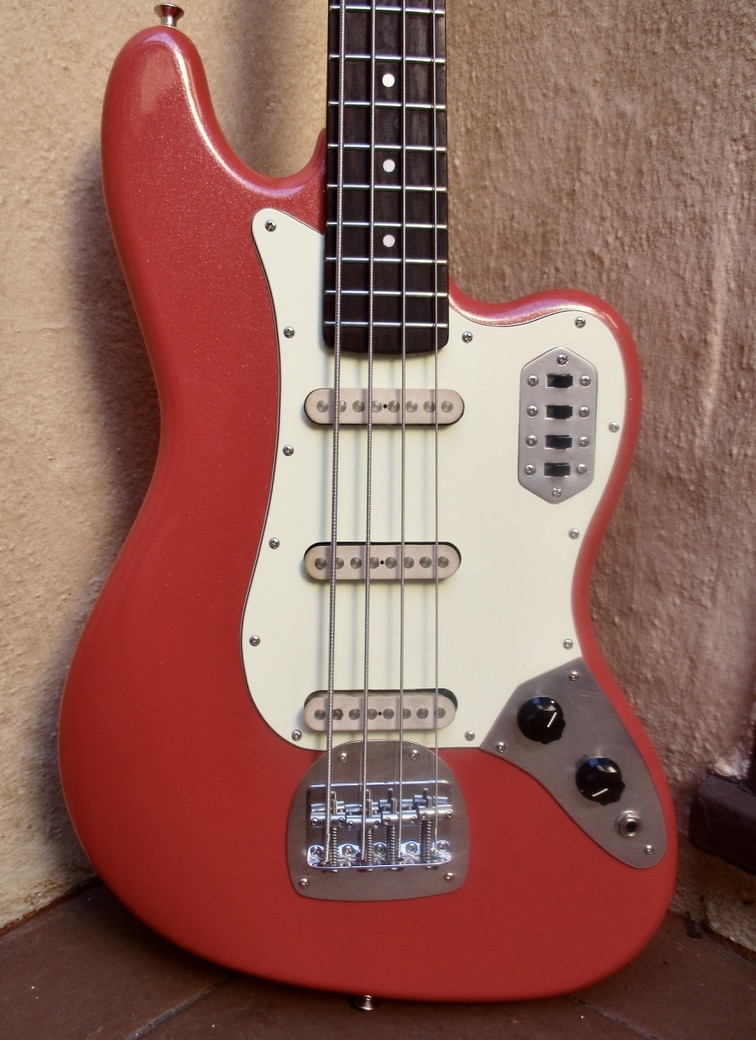
On this Grass Roots/ESP Bass IV, a more useful uncommon feature - the 4th switch on a 3 pu switch-plate. Once pu selection/combination is chosen - the 4th switch sends that selection direct to the jack bypassing the V & T pots giving a clean boost. At the flick of a switch, you could cut through within a song if needed.
On this Grass Roots/ESP Bass IV, a more useful uncommon feature - the 4th switch on a 3 pu switch-plate. Once pu selection/combination is chosen - the 4th switch sends that selection direct to the jack bypassing the V & T pots giving a clean boost. At the flick of a switch, you could cut through within a song if needed.
Last edited:

One of the Fernandes or Vox Mini basses should be the classic model with a built-in speaker. I've also seen a Pignose with such a feature.Built in speaker
8 or 12 course strings
Bass trem
Varitone (switchable capacitors)
Hagstrom and Warwick, among other brands, make 8-string basses. The classic model should be Hagstrom H-8, or John Entwistle's Alembic Exploiter. The classic 12-string would be Tom Petersson's Waterstone.
The classic tremolo bass is the Fender Bass VI. There are also basses with Kahler and Hipshot bridges as an option.
The classic Varitone bass is the Gibson EB-2/3, though it's a one-position switch called the "baritone". Some Revelation basses also include a varitone rotary switch. The Acoustic 360 Variamp is also a similar circuit, used as a midrange control on a classic bass amp.

One of the Fernandes or Vox Mini basses should be the classic model with a built-in speaker. I've also seen a Pignose with such a feature.
Hagstrom and Warwick, among other brands, make 8-string basses. The classic model should be Hagstrom H-8, or John Entwistle's Alembic Exploiter. The classic 12-string would be Tom Petersson's Waterstone.
The classic tremolo bass is the Fender Bass VI. There are also basses with Kahler and Hipshot bridges as an option.
The classic Varitone bass is the Gibson EB-2/3, though it's a one-position switch called the "baritone". Some Revelation basses also include a varitone rotary switch. The Acoustic 360 Variamp is also a similar circuit, used as a midrange control on a classic bass amp.
Cool 3 position varitone sort of thing (just different value capacitors) on this 65's Australian Maton Ibis. Also 35" scale which I think was totally unique in that era - and slanted/offset polepieces.
One of the Fernandes or Vox Mini basses should be the classic model with a built-in speaker. I've also seen a Pignose with such a feature.
I'm sure Pignose were invented by one of the original Star Wars / Industrial Light & Magic special effects guys (pretty sure it was Dick Edlund, who also did the effects for Ghostbusters, and Big Trouble in Little China).

Aluminum neck was originally a Travis Bean thing, the company was later bought by Kramer.
Not quite: Gary Kramer was a partner of Travis Bean's original company, but he left Travis Bean to start his own company. Some of the differences between Kramer's aluminum necks and the Travis Bean necks were designed so as not to infringe on the Travis Bean patent.

Not quite: Gary Kramer was a partner of Travis Bean's original company, but he left Travis Bean to start his own company. Some of the differences between Kramer's aluminum necks and the Travis Bean necks were designed so as not to infringe on the Travis Bean patent.
I stand corrected, then. Thanks for the info.
The mute system is quite interesting on this Sean Hurley signature precision bass :
Invalid Link Removed
Essentially a Jaguar mute flipped upside-down. I installed one on one of my Jazz Basses and like it a lot - it's easy to adjust for lighter muting as well, not just full on/off.
Kubicki - Low D clasp, multi lam neck
Yeah, those 34 separate laminates in the Ex Factor neck were definitely a unique innovation!
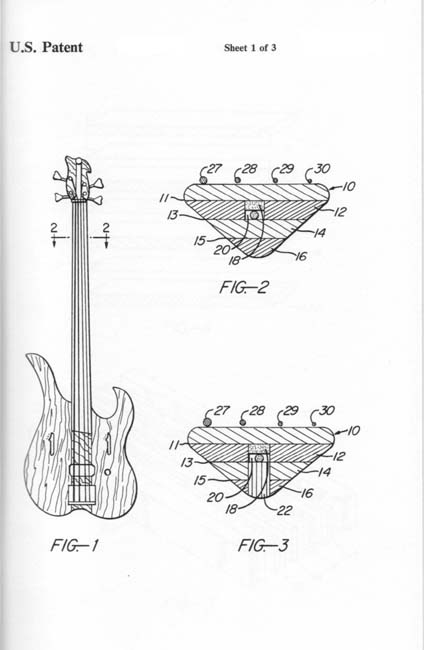
Equally unique is the patented Linc Luthier neck design, where the individual wood laminates run parallel, rather than perpendicular, to the fingerboard:
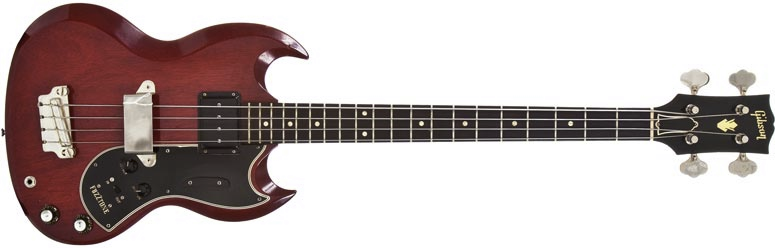
Gibson offered an integrated fuzz circuit on their EB-0 basses starting in 1962. They didn't find too many customers...these were called EB-0F
- Jun 30, 2010
- 49,631
- 222,222
- Disclosures
- musician/artist/owner - Gildaxe
Love everything about that bass, but 20 frets, 35" scale? I don't get it...Cool 3 position varitone sort of thing (just different value capacitors) on this 65's Australian Maton Ibis. Also 35" scale which I think was totally unique in that era - and slanted/offset polepieces.
View attachment 7207804
Love everything about that bass, but 20 frets, 35" scale? I don't get it...
Other than 20 frets it has almost nothing in common with a Fender - I'm guessing Bill May (the guy behind Maton) didn't have a Fender to copy so the scale may have just been his guess. It does sound really good and with strong fundamental. Pickup position is pretty atypical for then as well when most were either in the P bass spot or right up against the neck/bridge. This is more in Musicman territory way before Musicman.
- Jun 30, 2010
- 49,631
- 222,222
- Disclosures
- musician/artist/owner - Gildaxe
But you're taking about nut to bridge 35" correct? So are the frets wider spaced? (I would assume so...)
Yes, exactly. An inch longer than Fender long scale (or half an inch nut to 12th fret). Now seen on some more modern 5 strings, etc. (or 34.5 inch on F-Bass). In the 60s, most off-brand basses tended to be short or medium scale (as I know you know).


