Enjoy the benefits of a premium membership!
Upgrade Account
-
TalkBass has been independent since 1998. Add your voice.
Create a free account to reply to discussions, view embedded media, and browse with fewer display ads.
Join free Log in
Want zero display ads or expanded classifieds tools? Compare plans.
You are using an out of date browser. It may not display this or other websites correctly.
You should upgrade or use an alternative browser.
You should upgrade or use an alternative browser.
What are you reading Chapter 4
- Thread starter slobake
- Start date
More options
Who Replied?
I formerly never read books multiple titles simultaneously (outside of school), but in the introduction to his 1000+ page tome, Jurgen Osterhammel comments that it can be read in sections "if you need an escape hatch".
So I've been alternating as needed with whatever shorter or lighter book seems like a good break.
Two similar books in a somewhat similar way fit the bill: in the category of smart Jewish guys who you like to read but wouldn't necessarily have wanted your sister to date (you can include Philip Roth and Saul Bellow in that list of luminaries, too.):
Paul Auster's final book before leaving the world and Mailer's short and very funny account of something archetypically 1968.


So I've been alternating as needed with whatever shorter or lighter book seems like a good break.
Two similar books in a somewhat similar way fit the bill: in the category of smart Jewish guys who you like to read but wouldn't necessarily have wanted your sister to date (you can include Philip Roth and Saul Bellow in that list of luminaries, too.):
Paul Auster's final book before leaving the world and Mailer's short and very funny account of something archetypically 1968.
Last edited:


The Secret Room by Jane Casey.
Murder mystery. Found it as a cheap ebook.
Oddest story I've ever read. First hundred or so pages are one story line. Next couple hundred are the same characters but a completely different story line. Then it picks the original story back up.
Murder mystery. Found it as a cheap ebook.
Oddest story I've ever read. First hundred or so pages are one story line. Next couple hundred are the same characters but a completely different story line. Then it picks the original story back up.
Holy cow, Norman Spinrad, that's a name I haven't thought of in about 50 years.Norman Spinrad is an underrated author, IMO.
Read something by him in 1969 or so titled Bug Jack Barron.
The nature of media and the power of media figures that he portrayed has echoed in my mind over the years since, playing out much like I remember he depicted it.

Thanks. He had great insight.Holy cow, Norman Spinrad, that's a name I haven't thought of in about 50 years.
Read something by him in 1969 or so titled Bug Jack Barron.
The nature of media and the power of media figures that he portrayed has echoed in my mind over the years since, playing out much like I remember he depicted it.
It’s funny. Bug Jack Barron was on my bucket list as a future read. Thank you for reminding me.

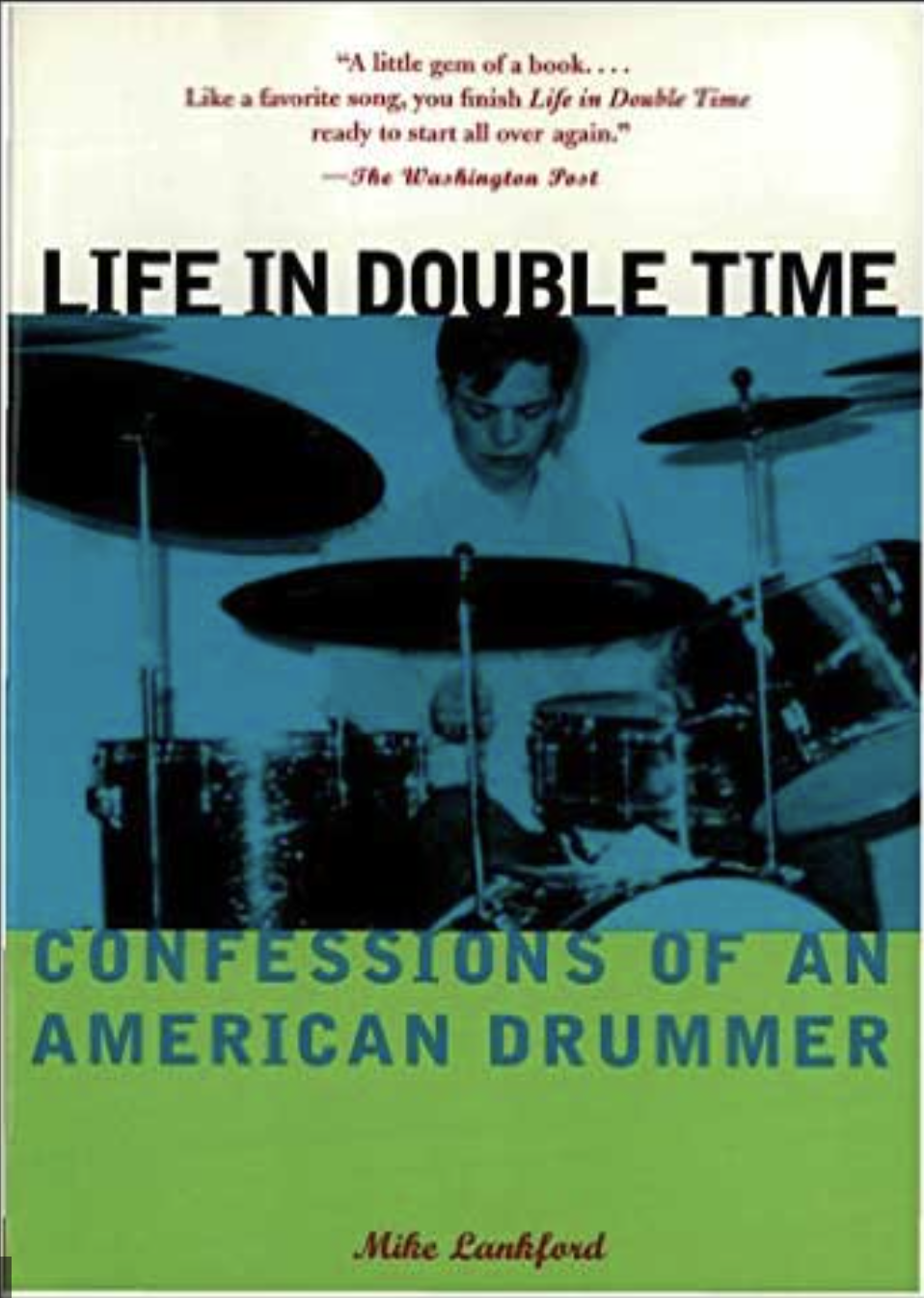
Memoir of teen drummer who then spent several years spent playing with Midwestern bar bands in the late '60s and '70s. After his last hometown band imploded, Lankford joined a traveling band called Salt & Pepper, whose drummer had just run off to Houston with a woman. Over the next two years the trio traveled more than 100,000 miles, playing bars in Dakota farming towns, black Oklahoma nightclubs, even Dallas's Oilman's Club. Eventually the miles took their toll and Lankford burned out. Great chronicle.
I salute you. I keep threatening to go back and fill in some key areas of Classical education in my present retirement that I missed in my school days. Not something that was included in my first educational run-through.Aesychlus's Oresteia - the classic trilogy of tragic Greek plays. If you like family members holding grudges and killing each other, you can't go wrong with this one!
When it appears within reach of the flow of where the reading stream leads, Speer's Inside the Third Reich is one that keeps hailing me.The Good Nazi - A biography of Albert Speer, Hitler's architect (and "friend"). He always presented himself as a "good Nazi" when asked about his involvement in the Third Reich over the years. This books certainly proves otherwise. I was personally invested in this book, as my college German Professor interviewed him during her graduate years working on her thesis in the mid-1970s involving ex-Nazis. I always find it so strange that there are literally only 2 people between myself and Hitler - history is closer than you think!
A very interesting figure. Great installation artist and designer, independent of context.
I read last year a different work on the Party, by Michael Wallis. It highlights the history of the event within the context of Manifest Destiny.A History Of The Donner Party - A Tragedy Of The Sierra - an excellent take on the infamous incident, written by an author who had incredible contact with many of the survivors. He was a contemporary of the children in the story and apparently had about a thousand letters of correspondence between him and various survivors to build this text. It was rather enlightening, and while absolutely horrifying, also incredibly humanizing. Most people only know the cannibalism part of the story, but while a memorable part of the story, is really only a small part of the narrative, and one which most people took no part in. Certainly an interesting book!
The post Civil War era was pivotal in the what effectively was the development of the American (economic and otherwise) Empire, a shifting of national vision from isolationism to global significance. (See also Stephen Kinzer's The True Flag). Running parallel was the settlement of the West, which overlaps with the history of the history of the existing residents, the actual lives are more often incredible than the fictive versions. See, for example Joe Jackson's biography of Black Elk and the history of Buffalo Bill from the University of Chicago Press.
A personal example of history being close: My brother's deceased wife was one of the primary families in the Donner Party, the Breens, from Ireland.
The family held until selling just two years ago the ranch land that they had settled after finally reaching the Sacramento Valley just a few hours from the pass. At a family reunion picnic held at the Donner Memorial State Park, my brother had fifteen seconds of fame. When interviewed by a television news reporter, he commented: "As someone who has married into the family, I am personally very happy that they brought plenty of food to the picnic".
A parallel tangent, one of the early "captains" who led wagon parties on some of those same routes, branches of the Oregon Trail, was Stephen Meek. There's a fine film by Kelly Reichardt about one of those incidents (which occurred near where I live).
Apparently the titles don't show, but the links work.
The Best Land Under Heaven.
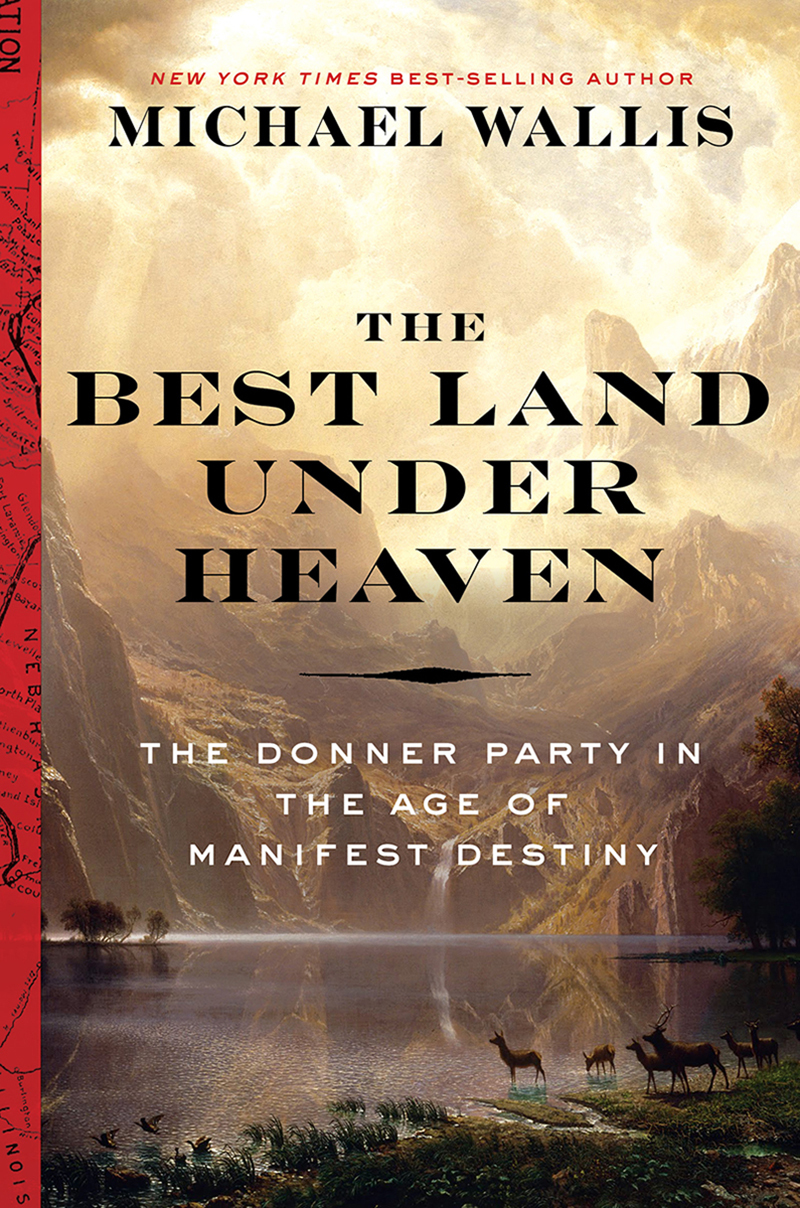
The Best Land Under Heaven: The Donner Party in the Age…
"WESTWARD HO! FOR OREGON AND CALIFORNIA!" In the eeri…

The True Flag: Theodore Roosevelt, Mark Twain, and the …
The bestselling author of Overthrow and The Brothers br…
Link Removed
Last edited:

I salute you. I keep threatening to go back and fill in some key areas of Classical education in my present retirement that I missed in my school days. Not something that was included in my first educational run-through.
When it appears within reach of the flow of where the reading stream leads, Speer's Inside the Third Reich is one that keeps hailing me.
A very interesting figure. Great installation artist and designer, independent of context.
I read last year a different work on the Party, by Michael Wallis. It highlights the history of the event within the context of Manifest Destiny.
The post Civil War era was pivotal in the what effectively was the development of the American (economic and otherwise) Empire, a shifting of national vision from isolationism to global significance. (See also Stephen Kinzer's The True Flag). Running parallel was the settlement of the West, which overlaps with the history of the history of the existing residents, the actual lives are more often incredible than the fictive versions. See, for example Joe Jackson's biography of Black Elk and the history of Buffalo Bill from the University of Chicago Press.
A personal example of history being close: My brother's deceased wife was one of the primary families in the Donner Party, the Breens, from Ireland.
The family held until selling just two years ago the ranch land that they had settled after finally reaching the Sacramento Valley just a few hours from the pass. At a family reunion picnic held at the Donner Memorial State Park, my brother had fifteen seconds of fame. When interviewed by a television news reporter, he commented: "As someone who has married into the family, I am personally very happy that they brought plenty of food to the picnic".
A parallel tangent, one of the early "captains" who led wagon parties on some of those same routes, branches of the Oregon Trail, was Stephen Meek. There's a fine film by Kelly Reichardt about one of those incidents (which occurred near where I live).
Apparently the titles don't show, but the links work.
The Best Land Under Heaven.
The True Flag.The Best Land Under Heaven: The Donner Party in the Age…
"WESTWARD HO! FOR OREGON AND CALIFORNIA!" In the eeri…www.goodreads.com
The True Flag: Theodore Roosevelt, Mark Twain, and the …
The bestselling author of Overthrow and The Brothers br…
Link Removed
Yeah, my reading interests are all over the place. I've collected plenty of books I need to read, and for the past two years or so, I have mostly read history or historic texts. No real reason, besides the fact that almost every time I try to read something else, my interest isn't held.
In reference to Speer and his book(s), I believe the general consensus is that they may be rather readable, but questionably factual. If my memory serves, the one I read is the only one thus far that has been written independently of Speer's influence (he had died by this point), and many of the books contradict each other (even when Speer himself is one of the major contributors across books). So in other words - he's not a reliable source about his own history, and clearly has reasons to cover up or alter facts to fit his preferred narrative. I've never read any other book by or on the man, but this book consistently references the other books, points out their questionable areas, and then shows through other historical sources why many of the claims presented elsewhere are absolute bunk. I was intrigued due to my "close" connection, but can't say I'm intrigued enough to read another any time soon. This one seems pretty definitive for me.
I definitely remember Patrick Breen! He was a noble man, giving everything he could to help others, even in the most dire of circumstances. And I believe he died venturing out to find help. Such a sad story overall, and him and his family specifically. My book was in itself a historic book, as it was written in the 1880s and the author had thousands of letters of correspondence and/or direct interviews with those survivors who were still alive. He was a contemporary of the children in the story, and knew many of those involved through writing his book. Incidentally, I also found out that Captain Sutter, one of the men who sent numerous parties to try and rescue the Donners, briefly lived in my neighboring city. Been trying to find more info about that. He was also the man who owned Sutter's Mill, which was where the gold rush started a few years later! He ended up getting entirely screwed over, as did Keseberg (who is often portrayed as one of the worst members of the party, though the book I read exonerates him). Both had all sorts of ups and downs over their lives, sometimes being rich, others quite poor. It's sad to say, but the "best" outcome of the Donner party was often just surviving and having nothing else happen. Pretty much everybody after the main event who became wealthy/successful ending up falling again and having terrible luck.
Very similar story here, with respect to books.I've collected plenty of books I need to read, and for the past two years or so, I have mostly read history or historic texts. No real reason, besides the fact that almost every time I try to read something else, my interest isn't held.
I spent the last 25 years of my working life in health care, and read almost nothing during those years.
Simply tapped out from work, and the demands of keeping up.
Since retiring five years ago, I have spent the greater part of my time reading, across the range of subjects, but by far most heavily in history.
For the past couple of years with particular concentrations in the history of the 19th century and of the Holocaust.
Trying to get a sense, looking back, of what made the world what it is.
Speer is the only specific individual of the Nazis that appeared interesting enough to follow up on: he was in fact an impressive designer, (the spectacle). Like Leni Riefenstahl, he was actually very technically good, even outstanding. Which raises all kinds of questions. And I thought that his book might shed some insight into the minds of that group.
With some subjects, different books can offer different perspectives, the Donner party seems one of those. Some of the others look compelling in that way. I hadn't known the later outcome of Sutter, others of the party, or the aspect of Keseberg. In conditions of almost unimaginable extremis like that, the tensions between groups must have been extraordinary.
I can say with authority that Nancy Breen (my brother's wife) was a very strong, very Catholic Irish, very funny woman.
Pretty much, yeah. Similar situation here - mostly been wrecked after work, historically speaking. The past two years, I've focused on reading instead of watching TV. I had so many books, and yet, never read them! My focus has mostly been medieval/Viking history, though I obviously depart from that somewhat often too. But it's interesting that we are both looking for "what made the world what it is". So many times I find a part of a text that just seems to explain something about the human condition - and it's hundreds or even a thousand years old! One of the biggest things I've learned - moderns humans are only very slightly removed from ancient humans - we just have more advanced technology.For the past couple of years with particular concentrations in the history of the 19th century and of the Holocaust.
Trying to get a sense, looking back, of what made the world what it is.
Next year, I think I may do a blend. I've caught up on a LOT of my reading list the past two years, but have been collecting movies/TV shows. This year, my goal was 100 books, and I'm currently reading #97, so I'm going to make that no problem. Next year, I may try to do 50 movies/TV shows and 50 books. This should help save some money, as I've got plenty of each to enjoy!

Clarkesworld Magazine Issue 229
Apex Magazine Issue 151
Three-Lobed Burning Eye Magazine Issue 45
I've written a story and paid an editor to look at it. After some more revision, I intend to submit it to a magazine or other publication. So I'm buying issues that I can to gauge the kinds of stories they publish and find which publication could be a good fit for it.
Apex Magazine Issue 151
Three-Lobed Burning Eye Magazine Issue 45
I've written a story and paid an editor to look at it. After some more revision, I intend to submit it to a magazine or other publication. So I'm buying issues that I can to gauge the kinds of stories they publish and find which publication could be a good fit for it.
I agree, we have probably changed very, very little in many thousands of years. In terms of fundamental capabilities, probably something on the order of hundreds of thousands of years. I think that we tend to flatter ourselves, exaggerating and elevating our current condition. But technology seems to have an cascading effect, compounding exponentially.My focus has mostly been medieval/Viking history, though I obviously depart from that somewhat often too. But it's interesting that we are both looking for "what made the world what it is". So many times I find a part of a text that just seems to explain something about the human condition - and it's hundreds or even a thousand years old! One of the biggest things I've learned - moderns humans are only very slightly removed from ancient humans - we just have more advanced technology.
And we haven't done much in the way of improving our own basic design flaws.
What was interesting to me, just learned from some of the post-Roman, Andalusian and Byzantium era histories, is the development of the Vikings into the Normans, how they shifted from invading and pillaging (Berserkers!), assimilated and adapted to the cultures of the areas they conquered and then became quickly established in ruling positions with stable institutions.
In an overly simplistic way it seems something like "Hey, this system works pretty well, let's just run it ourselves. We'll just change our religions and clothes."

That's about how it went down in Vikings, the series that was shown on the History Channel.
-Mike
-Mike
So much of the Viking ethos can be distilled down to "Hey, being this far north is hard living. We've really got to work together and be as flexible as possible. And we're running out of space/materials/valuables. So let's get out of here and see what else is available." Basically all of Europe, and even into parts of Asia, have significant Viking heritage. And that's not counting their influence in the Americas.I agree, we have probably changed very, very little in many thousands of years. In terms of fundamental capabilities, probably something on the order of hundreds of thousands of years. I think that we tend to flatter ourselves, exaggerating and elevating our current condition. But technology seems to have an cascading effect, compounding exponentially.
And we haven't done much in the way of improving our own basic design flaws.
What was interesting to me, just learned from some of the post-Roman, Andalusian and Byzantium era histories, is the development of the Vikings into the Normans, how they shifted from invading and pillaging (Berserkers!), assimilated and adapted to the cultures of the areas they conquered and then became quickly established in ruling positions with stable institutions.
In an overly simplistic way it seems something like "Hey, this system works pretty well, let's just run it ourselves. We'll just change our religions and clothes."
Need to watch that show!That's about how it went down in Vikings, the series that was shown on the History Channel.
-Mike


I love his fiction, some of his nonfiction is over my head. I started Kant and the Platypus a few months ago and didn't get very far lol.