
• TalkBass has been independent since 1998. Add your voice.
    Create a free account to reply to discussions, view embedded media, and browse with fewer display ads.
    Join freeLog in
    Want zero display ads or expanded classifieds tools? Compare plans.

What can a rack give me?

One good thing about them is that if you have one of the really small and light micro heads and are worried about it getting knocked around you can velcro it to a rack shelf

4349501051_13a0886210_z.jpg
 
You realize that about 70% of that weight was the Mesa 400+ right? They're near SVT weight, or at least in the ballpark....in that case the rack isn't the problem, it's the all tube amp in the rack....

I have both a 400+ and an SVT-II non-pro. Trust me when I say there is absolutely no contest over which one weighs more. :D After picking up and carrying the SVT, the Mesa feels like a SansAmp. *lol*

 
Ya, that's why the 400+ has so many tubes. Ampeg's solution for a high wattage bass amp were massive iron transformers, while Mesa doubled the amount of power tubes and made the trannies smaller. Me, I like the iron approach, though I will be the first to admit that it's not the lightest way to go.
 
...or the whole band can share 1 huge rack. Everyone's preamps, wireless, tuners, effects, IEM's can all fit into 1 large rack unit. It's super heavy, but it can go right next to the soundman for easy tweaks and changes. There won't be any amps on stage, but that's a different story.
 
Mentioned several times earlier was the thought that a rack set up was more costly than a micro head and lightweight cab, yet lately with many people selling off their rack gear and buying the still new micros and light cabs, the rack stuff is cheap and easy to get used, while the lightweight stuff costs quite a bit more, since you'll likely be buying new.

Where I'm at, it's far more cost effective to put up with the weight and schlep 1990s gear than to buy the new latest thing at top dollar.

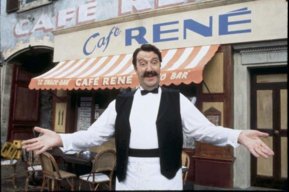
You may need to compromise on weight, but you can get great tone for less.
 
René_Julien;15125444 said:
I like the look of road-ready racks (on wheels) full of gear... and all the cables running in and out... all the lights in different colors shining... 500-type modules... dozens of EQ sliders.

Very mad scientist-y.

Yeah. It looks cool! Sucks to haul, though.

My live rig this summer (below). Downsizing to a single 4x10 and a Class D amp because I hate hauling/hooking it up. It's fun the first time, sucks after. Lots to cover up if the weather starts to get bad.

s4TTi85.jpg
 
I don't get the agita over the weight thing. These days, you can get a mega watt power amp around 10-12 lbs, a preamp around 7 lbs. lightweight rack bag around 10 lbs. The whole rig could be close to under 30 lbs, if you shop right. That's about 10 times the power of an SVT with less than half the weight ! Where does the hernia come in ? :hmm:

Agreed - my gigging rack weighs under 50lbs, holds a Mesa M-pulse 600, DTR-2000 tuner, XDR-95 wireless, Belkin surge strip, and spare inst and speaker cables - and takes less than 30 seconds to be up and running... What's not to like about that???

MesaM-pulse600-4.jpg


M-pulse600rackback-1.jpg


- georgestrings
 
I didn't think I'd be going back to a rack anytime soon, hadn't used one since the eighties. But now that relatively big power weighs so little my rack setup is no problem to move around and sets up as fast or faster than some of my other much smaller setups

2 lb. Mike Pope MPP-1 preamp. Lets me sound like me.
8 lb. Crown Drivecore XLS1500. Bridges to 1500w+ @4 ohms, can do 2 ohm per side, plenty of stereo or bridged 8 ohm power. I'm ready for anything as far as the backline I encounter and it works great with any configuration of my own cabs.
10 lb Odyssey 3 space rackbag. The cover slips off the rack, slides back on at the end of the gig. Plug into cab, plug into power, plug into internal DI, plug instrument it. Might take as long to do it as it took to type it.
:D

So... 20 lb. monster setup that sounds great and is extremely versatile. Add my 35 lb. cab and I've never travelled lighter with a main do it all rig.
:cool:
 
Yeah. It looks cool! Sucks to haul, though.

My live rig this summer (below). Downsizing to a single 4x10 and a Class D amp because I hate hauling/hooking it up. It's fun the first time, sucks after. Lots to cover up if the weather starts to get bad.

Yup. Sucks to haul.

My amp right now is a PF350 into a PF115LF. And I'm even thinking of downsizing that.
Been GASsing for a Barefaced Super Compact 1x12.
It's not the weight that's a problem for me but I'm even getting bothered by the size of a 1x15 cab (stairwells, narrow hallways.)


But my only gig right now is on guitar. For which I travel with my guitar (of course), a Marshall Haze 40w 1x12 combo (too loud) and a Line6 POD X3 Pro in a 3-space SKB rack (effects and DI to PA) and a Line6 FBV board.


I have been thinking about building a rack which's only purpose is being DI for both guitar and bass. POD for guitar, TL Audio 5051 for bass... maybe my rackmount tuner in it, power supply... and a rack drawer for cables and such.
For ampless solutions.
 
Hello everybody, pretty soon I will be in the market for a new amp. So far, all my experience with amps is limited to a simple head and cabinet, and its been working great so far.:bassist:

However I see a lot of people with racks lately and I'm wondering what the pros and cons are. I also have no idea what usually goes in a rack. So any rack users out there that want to tell me what I've been missing out on?

I have a 4U rack with a 2U amp and a 1U tuner in it. I have slot open for a wireless unit in case I ever decide to get one.

The pros are all of the equipment stays in the rack wired up so set up is quick and easy : plug the AC line in, connect the speakers, plug in the bass and you are ready to go. The other BIG pro is it has covers on the front and back so all of the equipment is protected. This means you can stuff it in your hauling vehicle without worrying about it.

The cons are additional cost and a bit more weight. To me, those are minor issues considering the pros.

I have had my stuff in a rack for about 15 years and it all still looks brand new after hundreds of gigs.
 
Actually, rack rigs were MUCH more popular back in the day. Today, IMO, there is little reason for multiple components (for the vast majority of players). For a decent player that knows how to EQ and has good technique, there would be very little reason (for most playing contexts) to need a PA type power amp, a separate preamp that may or may not have optimum output and impedance to driver that power amp, and the large footprint, and extra 10 or 20 pounds that even a lightweight rack would provide. The small amps that you can put in a bag with all cables in the accessory pocket are a modern miracle of tone, volume, size, weight and reliability IMO and about 20 years of IME with this particulate amplifier category. The fact that you can now also use a cab much smaller and lighter than back in the day to get the same or better tone is another count against multispace racks.

However, IF you are in a high end touring situation, where you rig goes into a truck for night after night of touring, some players prefer to mount an amp head in a rack, and that makes quite a bit of sense. Also, there are some players using either 2ohm cabinet combinations (never could figure out why on that one), or large, moderate sensitivity 8ohm cabs that need more power than most amp heads can put out at 8ohms. So, definitely a niche exists for sure for the 'PA amp/Studio pre' configuration.

I guess for those who feel the need for external compressors, etc., and for some reason don't want to just deal with a small 'Pedaltrain' Nano or whatever, it would be an OK solution. There are pedal compressors and pedal tuners that are significantly better than the old rack mounted 'bass backline compressors and tuners'. Of course, if you want a $10,000 rack rig with a studio mic tube preamp and 2000 watts, then a rack it is! For most players, totally waste of size and space and money, IMO.

Pure IMO here, and just another point of view, coming from one who carried around a 4 space rack for years back in the late 70's (the classic 'Alembic/Furmin ParaEQ/BGW' rack rig). My stuff sounds better now IMO, and is smaller and lighter than just the Alembic pre!

My rack is an amp and preamp (Monique + 7lb IPR300) . My old rack was an amp and preamp (Kern IP-777 + IPR 3000). Once I realized that what I really liked was TRUE tube preamp tone (with quality transformers) plus open ended headroom for clean reproduction, I gave up on hybrid amps or anything I could fit in a shoulder bag. No effects, no compressors no additional EQs, none of that. I tried everything along the way...SVTs, Mesa 400+, GK, Hartke, Markbass, etc. etc etc.

I'm willing to carry my rack (4 space now, or 3 space with Kern) because its a one hand haul. It costs me no more effort and I get the benefit of the tone I want at the volume I want. I also have a plan B or C for gigs where I might find ugly PA surprises and I can lend a channel to monitors if needed, or at worst, use my LMII backup from the car and use my power amp for PA altogether. It takes me no more effort than a standard head to setup. Everything is wired I just plug it in along with the speaker cables. To most of us, racks are not anything more than what a integrated amp is to others.
 
Everyone's preamps, wireless, tuners, effects, IEM's can all fit into 1 large rack unit.
Mixing wireless receivers and IEM transmitters in the same rack is a bad idea, unless you're using decent runs of cable to get at least one set of antennas away from the rack. Even though the IEMs are on different frequencies, they still do a pretty good number on killing off the RF reception for the wireless receivers. Ideally you want at least ten feet between the antennas for the wireless receivers and the IEM transmitters.

Assuming your entire band (sans drummer) is using IEMs, you're better off having a dedicated IEM rack. That way you can place it up by FOH or wherever the venue's monitor mixing station is (if they split that off) and the soundguy can easily feed the IEMs for the whole band that way. And this also gets the IEM transmitter away from your wireless receivers.