Gear doesn't make the player, the player makes the gear. Look in this month's Bassplayer Magazine, the bass player for Calexico plays a Squier Jazz Bass. Put your money and time into what the folks above have said, lessons and practice. Learn everyday. I still do.

Enjoy the benefits of a premium membership!
Upgrade Account
-
TalkBass has been independent since 1998. Add your voice.
Create a free account to reply to discussions, view embedded media, and browse with fewer display ads.
Join free Log in
Want zero display ads or expanded classifieds tools? Compare plans.
You are using an out of date browser. It may not display this or other websites correctly.
You should upgrade or use an alternative browser.
You should upgrade or use an alternative browser.
What can I do to improve my bass?
- Thread starter jnevi9nr
- Start date
More options
Who Replied?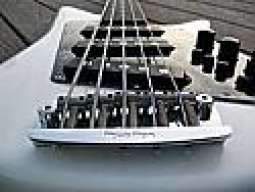
Practice more... a lot more...
And put money toward a much better amp, but, if you're merely practicing in a bedroom and not close to gigging with a band or bands you really don't need an amp. Get a headphone friendly Korg Pandora, or some other type unit for practicing and good headphones. That will make much more of an impact on your sound than a different bass will.
Your bass you currently have can only sound as good as you allow it to by your currently playing ability. There is nothing with that bass that is holding you back tone-wise that upgrading it is going to fix or change.
For comparison... I've been playing for 30 years and still usually practice for 3-4 hours when I sit down to practice.
And put money toward a much better amp, but, if you're merely practicing in a bedroom and not close to gigging with a band or bands you really don't need an amp. Get a headphone friendly Korg Pandora, or some other type unit for practicing and good headphones. That will make much more of an impact on your sound than a different bass will.
Your bass you currently have can only sound as good as you allow it to by your currently playing ability. There is nothing with that bass that is holding you back tone-wise that upgrading it is going to fix or change.
For comparison... I've been playing for 30 years and still usually practice for 3-4 hours when I sit down to practice.
Im over 30 and I take one hour lessons once a week.
im learning all the scales, a lot of music theory, have several bass books that I am reading, but only have time to practice one hour a day during the week.
im learning all the scales, a lot of music theory, have several bass books that I am reading, but only have time to practice one hour a day during the week.

So you have taken the bass for a setup?
Anyhow, upgrading won't make you sound more like your favourite bass player. Even getting the same bass as he/she plays won't do that. Most of the tone is in the fingers. For example, it took me five years and thousands of hours to get what I call a decent sound out of a bass guitar, but then again, I'm very picky when it comes to that. And after fifteen years, I still do about 30% of my playing with a squier, but I admit it has been modded a bit.
What you have is a decent instrument all by itself. If you haven't already taken it for a setup, you could ask the tech for tips. New nut and new bridge won't have a huge impact on the sound, but the new nut can make your bass play better. Some people could say they make no difference to the tone. Fret leveling is also sometimes a good idea and some people like the pots replaced along with the pups. But remember, the tech is trying to make money too, so he might suggest you get every single part changed and you end up spending a lot money for improvements you might not even notice while playing with a band.
But I'd say buying a more powerful amp would not be a bad decision at all. Good amplifier will make a bass sound a whole lot better but most of all, it'll allow you to do the only thing you really should be doing: playing with another musicians.
I don't think there is much point in buying an expensive bass in the first few years because it's actually really hard to even know what kind of instrument you'll end up liking in five years. After four years of playing I bought a warwick which I thought to be the coolest thing ever. Few years later I discovered that I hated it.
Nothing else than practice can make you sound good. But then again, if you have money to spare and wan't to buy an expensive bass then there is no reason why you shouldn't. But don't expect it to be a free ticket to sounding good because at the end of the day, it's just another hunk of wood with some metal wires on top.
Anyhow, upgrading won't make you sound more like your favourite bass player. Even getting the same bass as he/she plays won't do that. Most of the tone is in the fingers. For example, it took me five years and thousands of hours to get what I call a decent sound out of a bass guitar, but then again, I'm very picky when it comes to that. And after fifteen years, I still do about 30% of my playing with a squier, but I admit it has been modded a bit.
What you have is a decent instrument all by itself. If you haven't already taken it for a setup, you could ask the tech for tips. New nut and new bridge won't have a huge impact on the sound, but the new nut can make your bass play better. Some people could say they make no difference to the tone. Fret leveling is also sometimes a good idea and some people like the pots replaced along with the pups. But remember, the tech is trying to make money too, so he might suggest you get every single part changed and you end up spending a lot money for improvements you might not even notice while playing with a band.
But I'd say buying a more powerful amp would not be a bad decision at all. Good amplifier will make a bass sound a whole lot better but most of all, it'll allow you to do the only thing you really should be doing: playing with another musicians.
I don't think there is much point in buying an expensive bass in the first few years because it's actually really hard to even know what kind of instrument you'll end up liking in five years. After four years of playing I bought a warwick which I thought to be the coolest thing ever. Few years later I discovered that I hated it.
Nothing else than practice can make you sound good. But then again, if you have money to spare and wan't to buy an expensive bass then there is no reason why you shouldn't. But don't expect it to be a free ticket to sounding good because at the end of the day, it's just another hunk of wood with some metal wires on top.
i actually saw that in BP. Thanks for mentioning it though.
Yeah, I am not close to practicing with a band, so I wont be getting a new amp anytime soon. I have headphones.
I think I usually practice 3-4 hours a day on the weekend. reviewing bass book, music theory and practicing. i love practicing, but I want to keep my theory up with my playing. but I thought if I could do a nice upgrade to my bass, I thought it might be a good idea.
Yeah, I am not close to practicing with a band, so I wont be getting a new amp anytime soon. I have headphones.
I think I usually practice 3-4 hours a day on the weekend. reviewing bass book, music theory and practicing. i love practicing, but I want to keep my theory up with my playing. but I thought if I could do a nice upgrade to my bass, I thought it might be a good idea.
kipaste, thanks for the advice.
i had my bass teacher set it up for me.
my wife is learning the guitar, so well learn songs together and play. I also play along with my metrodome, but I dont really play in a band setting.
i had my bass teacher set it up for me.
my wife is learning the guitar, so well learn songs together and play. I also play along with my metrodome, but I dont really play in a band setting.
However, I would NOT take my bass to Guitar Center for a new Nut and full setup. Find a qualified person that specializes in bass setups. Get it done 1 time and ask them to allow you to watch them do it and have them explain what's being done as they're doing it.
Knowledge makes all the difference. There really isn't all that much to setting up a guitar. You just need to learn what is 'right'.
Knowledge makes all the difference. There really isn't all that much to setting up a guitar. You just need to learn what is 'right'.

quick question: what are pots?
Pots are devices you cook food in. Most pots are put on an oven top. The oven top gives off heat, then cooking the food in the pot, and makes it really yummy...For best results preheat the oven top, then place the pot on top of the oven top. In order to not get burnt, sometimes it's best to wear gloves.
quick question: what are pots?
pots = potentiometers. http://en.wikipedia.org/wiki/Potentiometer
In your first post you mentioned you have the Squier active 4-string. That's a nice bass. One thing that could help the sound tremendously is a new set of strings. If you're still playing the same set that came on the bass, and you don't wipe them down each time you finish playing, then you're due for a new set. A new set of nice strings will make your bass come alive.
I personally like Rotosound Swing Bass 66 with my Jazz.
i dont think I have an active bass. sorry if I mentioned that before.
I am still playing with the original strings. I was thinking about:
Thomastik-Infeld Power Bass Strings
or
DR Strings - Low Riders
The thing that made me post this was that I tried out and played a Modulus Flea and Warwick bass this weekend and the sound was so much better. The Flea with Bart pick ups was awesome. The Warwick wood sound was funky. I just want to capture a better sound like I did this past weekend on those guitars. You know what I am saying?
Thanks again for all the input guys, except Mr. Keiser!
I am still playing with the original strings. I was thinking about:
Thomastik-Infeld Power Bass Strings
or
DR Strings - Low Riders
The thing that made me post this was that I tried out and played a Modulus Flea and Warwick bass this weekend and the sound was so much better. The Flea with Bart pick ups was awesome. The Warwick wood sound was funky. I just want to capture a better sound like I did this past weekend on those guitars. You know what I am saying?
Thanks again for all the input guys, except Mr. Keiser!

...
I got a Fender Squier 4 string jazz bass guitar with active pick ups.
i dont think I have an active bass. sorry if I mentioned that before.
You might want to go back and edit your original post then. New strings are still a good idea and can make a major difference in sound. And when you put new strings on your bass, make sure you wipe them down after every practice session. Oils in your hands can kill strings quickly.
I'm with everyone else in that you don't need to upgrade your bass. There will always be basses that sound better than the one you currently own. It's called G.A.S. (Gear Acquisition Syndrome) and it's an epidemic around here.

There are so many other factors that go into making those other basses sound like they do. Buying the same kind of pickups will change the sound of your bass, but it won't make it sound like those. As has been said so many times here: Don't get sucked in. Play what you got and learn to play it well. I'd rather be known as a good player with a cheap bass than a cheap player with a good bass.
A LOT of good advice herein.
I'd say work on the driver instead of the car. Lessons are definitely your best bang-for-buck at this point.
I'd say work on the driver instead of the car. Lessons are definitely your best bang-for-buck at this point.
i play a squier jazz with a kustom16w amp, and i have to say im really satisfied with the sound i have. very cheap, both used, yet they sound terrific.
im self taught, but i spent an entire summer (i mean this in the most literal way possible) learning. spent a lot of time on youtube, so here are some really great youtube artists, i think they can help you:
FuryMuso
DavidSinRocks
Pudsy440
MarloweDK (im sure someones already posted this guy before, hes ridiculously good)
pudsy has a few tutorials, learned blues scale from him, and furymuso and davidsinrocks mostly cover songs, but they have really terrific form, helped me alot.
im self taught, but i spent an entire summer (i mean this in the most literal way possible) learning. spent a lot of time on youtube, so here are some really great youtube artists, i think they can help you:
FuryMuso
DavidSinRocks
Pudsy440
MarloweDK (im sure someones already posted this guy before, hes ridiculously good)
pudsy has a few tutorials, learned blues scale from him, and furymuso and davidsinrocks mostly cover songs, but they have really terrific form, helped me alot.
i dont think I have an active bass. sorry if I mentioned that before.
I am still playing with the original strings. I was thinking about:
Thomastik-Infeld Power Bass Strings
or
DR Strings - Low Riders
The thing that made me post this was that I tried out and played a Modulus Flea and Warwick bass this weekend and the sound was so much better. The Flea with Bart pick ups was awesome. The Warwick wood sound was funky. I just want to capture a better sound like I did this past weekend on those guitars. You know what I am saying?
Thanks again for all the input guys, except Mr. Keiser!
Dammit...And I thought mine was the most important.
If you just take some action and CHANGE YOUR STRINGS you will get proportionally the largest change in sound for the smallest bucks.
Simply a pickup change or a slew of upgrades in MANY cases will not give you the results you're looking for. You can however pump substantial bucks into a bass you'll never be satisfied with.
Your ball.
Simply a pickup change or a slew of upgrades in MANY cases will not give you the results you're looking for. You can however pump substantial bucks into a bass you'll never be satisfied with.
Your ball.
I view this endeavor as a 3 fold process:
1) The physical interaction with the tool (instrument). In this part the most important things are: solid foundations having GOOD form i.e. straight wrists.
2) Learning the "rules" and details about the new language (music is a language) i.e. theory etc.
3) This is the most difficult part. Now with all of the skills compiled in the first 2 phases simply Speak. Learning to talk (phrasing) especially considering the role of the bass in most ensemble situations.
1) The physical interaction with the tool (instrument). In this part the most important things are: solid foundations having GOOD form i.e. straight wrists.
2) Learning the "rules" and details about the new language (music is a language) i.e. theory etc.
3) This is the most difficult part. Now with all of the skills compiled in the first 2 phases simply Speak. Learning to talk (phrasing) especially considering the role of the bass in most ensemble situations.
Take a look at the links in my sig. below for some great TB info to help you along your music learning journey.
Best advice: be patient with learning. There's one basic rule to learn to start with: the more time you put in, the sooner you get better.
Sometimes you plateau with your learning. Just keep going because you love it, not because of money, fame or any other extrinsic motivation.
Best advice: be patient with learning. There's one basic rule to learn to start with: the more time you put in, the sooner you get better.
Sometimes you plateau with your learning. Just keep going because you love it, not because of money, fame or any other extrinsic motivation.


