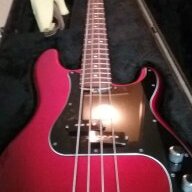
Elaborate pleaseI prefer passive and believe the usefulness of the passive tone control is underrated.

Enjoy the benefits of a premium membership!
Upgrade Account
-
TalkBass has been independent since 1998. Add your voice.
Create a free account to reply to discussions, view embedded media, and browse with fewer display ads.
Join free Log in
Want zero display ads or expanded classifieds tools? Compare plans.
You are using an out of date browser. It may not display this or other websites correctly.
You should upgrade or use an alternative browser.
You should upgrade or use an alternative browser.
What do you prefer? Active or Passive Bass?
- Thread starter raygo
- Start date
-
- Tags
- active active passive passive
More options
Who Replied?
Elaborate please
IMHO Stellartone tone styler is the way to go.



Both.
Each style of bass has situations where they excel.
We play sets in E and sets in Drop-D.
Almost everything in E is classic rock, and I usually use a passive bass (my Ric, P or Jazz).
Most of the Drop-D set is hard rock & metal, and I usually use an active bass (my Spector NS-2 or my Spector NS-4).
If I'm jamming at home by myself, I usually use a passive bass. I like them for their quick attack & sensitive dynamics.
Live, and especially tuned down, an active bass can provide that extra bit of grunt & bottom end that helps keep things smooth & anchored.
Recording? Depends on the song, the style of music and the tone you are looking to achieve.
Each style of bass has situations where they excel.
We play sets in E and sets in Drop-D.
Almost everything in E is classic rock, and I usually use a passive bass (my Ric, P or Jazz).
Most of the Drop-D set is hard rock & metal, and I usually use an active bass (my Spector NS-2 or my Spector NS-4).
If I'm jamming at home by myself, I usually use a passive bass. I like them for their quick attack & sensitive dynamics.
Live, and especially tuned down, an active bass can provide that extra bit of grunt & bottom end that helps keep things smooth & anchored.
Recording? Depends on the song, the style of music and the tone you are looking to achieve.


I generally prefer passive, old-school basses, and haven't liked most active basses I've owned or tried. But I love my G&L M-2500, so it really does depend on the bass. (I do wish my M had a passive mode though.)
I bought the M-2500 for a musical theater project, which called for quick, on-the-fly tone changes, and for situations like that, a good on-board preamp is incredibly useful. (Passive J-basses are good for this too, but don't have nearly the same range of tones.) I don't need the pre much in the rock band, but even then it has its place.
I bought the M-2500 for a musical theater project, which called for quick, on-the-fly tone changes, and for situations like that, a good on-board preamp is incredibly useful. (Passive J-basses are good for this too, but don't have nearly the same range of tones.) I don't need the pre much in the rock band, but even then it has its place.
Last edited:
I prefer passive, because i am lazy and like to not have to worry about batteries.


It may not cross everyone's mind, but, an active bass must be unplugged after playing it to prevent running down the 9volt battery. I like to leave my bass plugged in all the time. Also, an active bass has got a lot more electronics in it which complicate things if you're trying to eliminate hum, interference, etc. And I think certain basses lend themselves to active or passive: Fenders passive; MusicMan active. Remember, passive basses can always be run into pedals and there are more options with that. But, if I fell in love with an Active bass I would not shy away from buying it just because it was active.

Turnaround
Commercial User
I prefer an active bass - i.e one with passive pickups and an active preamp. But the bass must have the capability to bypass the preamp and must have a passive tone control in addition to the active controls. So really it's both an active and a passive bass.

Really depends on the bass and style of music. A really great middle ground for the Jazz Bass is to get a traditional passive Fender and a Sadowsky Outboard Preamp.
The passive instruments just have an open tonal quality that is tough to improve on. The Alembic Series Preamp is the only active onboard circuit I am aware of that manages to retain the uncompressed quality of the passive pickups. Of course, you can only get it in an Alembic Series bass.
The rest of the onboard circuits add at least a degree of compression, which can still be extremely musical and useful, depending on voicing. I'm a huge fan of the Sadowsky onboard, because it's voicing fits perfectly into a lot of band mixes, and is extremely versatile.
The Nordstrand, Pope, East and Audere preamps also have their fans. I have an East in my fretless. It's ok. I have a Pope install underway in my 6 string. High hopes, we'll see.
Ultimately, any of them can work. For me, it just depends on how much knob twiddling I end up doing. Mainly, the Jazz Bass does benefit from some kind of boost going into the front end of almost any amp. The P seems to be more take it or leave it, sounding perfectly adequate as is.
Your discussion about compression reminds me of why I never cared for guitars loaded with active EMGs. It just seems like every guitar I've ever heard with EMGs has no dynamic range. I've played with so many guitarists who have swapped out their EMGs for a set of Duncans, and I'm like, "Yeah, that sounds 10x better!" I generally prefer an active preamp with passive pickups to a fully passive bass, but while I don't really care for EMGs in guitars, I've always been very ambivalent about EMGs in basses (never tried any other active pickups). However, I do love how my Spector with EMGs sounds, but I suspect that the Haz pre has a lot to do with that.
Elaborate please
I think that too many players consider the only useful passive tone to be that which is achieved with the tone up full. I know when I was younger I subscribed to that view. But my own recent experience mirrors what I hear from many TB members. There is a range of useful tones (depending on the musical situation) available with subtle adjustment of the tone knob. I now rarely have the tone up all the way. Rolling it off just a bit can smooth out some rough edges.
Depends on what I'm doing. I have a Jazz with alnico EMGs in it- I love that thing, especially run at 18v. So much power, headroom and punch. It works great for metal, hardcore, weirdo stuff I do. I also have a Thunderbird with passive humbuckers. I love that too, but it just won't cut through in the metal band I play in. However, the warm tone sounds great for blues, rock, stoner metal etc. It loves overdrive and fuzz (my main complaint about actives is that they tend to sound really hissy with fuzz). Different tools for different jobs really, it depends what you want it for.
I loathe using batteries. My pedals have wall warts, my wireless is a Relay G10 where the internal transmitter battery recharges when in the receiver cradle. And it's no different with on-board preamps.
I'm also a fan of the inherent idiosyncrasy of specific gear. If I want my P to sound like an Dingwall, I'd have bought the the Dinger!
I'm also a fan of the inherent idiosyncrasy of specific gear. If I want my P to sound like an Dingwall, I'd have bought the the Dinger!


Ric5
Inactive
- Jan 29, 2008
- 29,772
- 30,452
- Disclosures
- I like 5, 8, 10, and 12 string basses
What do you prefer? Active or Passive Bass?
Actually I really like both ... but I only like 3 or 4 band preamps ... I hate 2 band preamps
Actually I really like both ... but I only like 3 or 4 band preamps ... I hate 2 band preamps

Hello Talkbass community,
What do you prefer, active or passive bass? I want to go back to playing bass and I need a new bass guitar; I saw this Squier Deluxe Jazz Bass (4 string, active) and I would like to hear from the community on what their comments are for active vs passive bass.
Thanks!
=1&c[node]=8"]Search Results for Query: passive active | TalkBass.com


