• TalkBass has been independent since 1998. Add your voice.
    Create a free account to reply to discussions, view embedded media, and browse with fewer display ads.
    Join freeLog in
    Want zero display ads or expanded classifieds tools? Compare plans.

What makes a bass great?

As the years go by and the basses pile up in my closet, I have to humbly admit that I no longer have a clue regarding this.

I think I finally get it when I see someone playing an OLD, no name POS and being completely content with it. While sounding great at the same time.

When I first started playing bass, all basses sounded the same to me, and I'm starting to feel the same way again. Admittedly, that might have a lot to do with the fact that for the past 2 years I've been using IEMs... and well, all basses are pretty much sounding the same :). Or that I'm going deaf :)? But I can still hear them... in my house... and in the gigs where I'm not using IEMs.

I own far too many basses and I'm reluctant to sell because I feel like I'm going through some sort of temporary insanity here. I therefore thought I'd open the topic up to conversation. And to add a little to what inspired this post...

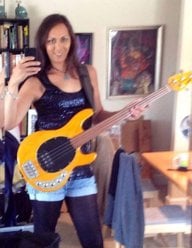
The last bass I fell head over heels in love with was my Rickenbacker. I can't put a D-tuner on it, so I don't use it with my current band. Since then I've purchased TMB 30, A Caprice, a Jazz, a Mustang, and most recently dropped a big fat chunk of dough on a Huntington 3.

I play all these basses at my gigs, and whenever I'm not playing my Mustang, I wish I was playing my Mustang. And this is going on for a while now.

I paid $400 for that Mustang, new.

I can't lie to myself anymore and felt I needed to make that admission openly.

What's going on here?

Help me please to understand :).


This seems silly... Could it be that you prefer the short scale? As a beginner, it is all about how it feels. Does it feel good when you play it? Next, does it sound good amplified? Stop buying basses and figure out what you have that feels the best. If its none of them, sell them. Nothing like having a closet of uninspiring basses.
 
  • Like
Reactions: 75kva
What makes a bass great? You do, by playing it.

A bass is great if it sounds great, but a bass that doesn't get played makes no sound.
A bass is great if it feels great, but a bass that doesn't get played doesn't get felt.
A bass is great if it looks great, but a bass that stays in a case doesn't get seen.
 
Good question... I knew I just had to play the bass.. it was without a doubt my calling. My brother is a guitar player and a luthier and I had mentioned to him how much I wanted to play bass.. he got me my first bass way back in 82, a Hohner P bass and that changed my life. I now build, mod, collect and play basses. I am a single guy in my 50's and the bass is my life and I shaging love it. But what makes it great? ... It makes me happy. I am spoiled with fine basses MM,G&L, Fenders, Peavey's and Ibanez, my own builds but I definitely have a love affair with Yamaha BB's and another vintage Yamaha's.
 
Last edited:
  • Like
Reactions: HD007
What makes a bass great? You do, by playing it.

A bass is great if it sounds great, but a bass that doesn't get played makes no sound.
A bass is great if it feels great, but a bass that doesn't get played doesn't get felt.
A bass is great if it looks great, but a bass that stays in a case doesn't get seen.
If a bass falls off its stand but no one is there, does it make a sound?
 
I ran across a fretless Lightwave Classica a few years back. People said, "Don't get it, they are a prototype and you'll hate the choice." I got it. I set it up once, put on the jazz flats I like and have never put it down since. It just feels right, it sounds right in my hands, it fits the band's music. The less I think about the bass and the more I just play it, the better I become. I hope everyone finds that one that just 'fits'.
 
Outside of a few dog basses - I find I like that different basses have a different tone (inherent sound quality - and tone control not to be confused with - tone - personal playing style and technique.)

I played an after hours years back and the club didn't want anything but instruments coming in as to not draw attention to the location. I was playing a gut string stand up and with my regular amp it had a nice warm low end that I could milk for days. At the speak easy they had a cheap Behringer bass amp - no bottom, no sustain - all wood mid-rangey and lots of neck clatter. First song I am gob smacked how unusual the sound is - by the 3rd - I am loving the bonky wood mid range no sustain no bottom sound. Of course everything I played had to change to accommodate the hand I had been dealt.

Basses are the same - they have different sounds and better is rarely a term I use - different. A different bass often calls for a different approach. I love the one I'm with.
 
true intonation
great harmonics
long sustain
stays in tune
sounds great
looks great
The MAIN thing is a good case with plush inside so my cat can sleep in the case while I am playing.
solid electronics
managable weight
AND, do I like the instrument?
 
It's interesting to think about this. Some of my favorite bass players use to play Warwicks and I never liked the sound. I use to play Fenders. I traded my Fenders a couple years ago for Warwicks and I don't know why I ever thought I didn't like their sound. They sound AWESOME and I continue to be impressed with them. They are the Rockbass series so they're not boutiques. I've definitely found my sound with them and Ampeg.
 
Every bass has its own personality,. It may be a particular sound, or the way it feels in your hands, or jus how you feel when you play it. All of these interact with your distinct playing style to determine your tone, even though your style (and how you adapt your style to the particular bass) will always be most important.

To me, the ideal starting point for a bass guitar is how close it sounds to a traditional acoustic upright "doghouse" when I try to emulate that sound. If it's really close, then I know I can always get the bite, growl or higher end I need for a particular song through my playing style and choice of pedals -- but it will sound like A Real Bass when I need it to, and that's what really matters. I don't want to sound like some other instrument playing in the bass register; if I did, I'd be playing a piano, tuba, or whatever instead of a bass.
 
it's all so subjective, and i think a lot of that subjectivity depends on on your ability to remove distractions that prevent you from getting dialed in. for example, when i tinkered around with in-ears for a while, i felt completely removed from my instrument (huge distraction), and had to ditch the in-ears for stage monitors.

in general, i think that different guitars fit different genres/styles. So, the bass i use for a folky-bluegrass gig will be different than a bass i would use for a rock gig.

some guitars might be perfect for any/all styles, and set up right in your comfort zone.

for me, part of my love for playing bass is that constant pursuit of tone and play-ability for all styles that i am interested in. it might end up being a pretty expensive venture, but for me, it's an aspect of being a bass player that is really fun and keeps me on my toes. gotta keep chasing that sound!
 
As the years go by and the basses pile up in my closet, I have to humbly admit that I no longer have a clue regarding this.

I think I finally get it when I see someone playing an OLD, no name POS and being completely content with it. While sounding great at the same time.

When I first started playing bass, all basses sounded the same to me, and I'm starting to feel the same way again. Admittedly, that might have a lot to do with the fact that for the past 2 years I've been using IEMs... and well, all basses are pretty much sounding the same :). Or that I'm going deaf :)? But I can still hear them... in my house... and in the gigs where I'm not using IEMs.

I own far too many basses and I'm reluctant to sell because I feel like I'm going through some sort of temporary insanity here. I therefore thought I'd open the topic up to conversation. And to add a little to what inspired this post...

The last bass I fell head over heels in love with was my Rickenbacker. I can't put a D-tuner on it, so I don't use it with my current band. Since then I've purchased TMB 30, A Caprice, a Jazz, a Mustang, and most recently dropped a big fat chunk of dough on a Huntington 3.

I play all these basses at my gigs, and whenever I'm not playing my Mustang, I wish I was playing my Mustang. And this is going on for a while now.

I paid $400 for that Mustang, new.

I can't lie to myself anymore and felt I needed to make that admission openly.

What's going on here?

Help me please to understand :).

I like that you are on Talkbass :)
 
The more you play, the more you understand technique, the more time in general you spend on an instrument on a daily basis, the more you know about your instrument. It requires no special devotion to discovering new philosophy about the meaning of bass in life, answer "42", arrangment of atoms in universe and all other jazz.

You will know. You will feel it, end of story, basta, punto bella.

Kind of a correlation on that. The more i practice and improve my technique the better all my basses sound.
 
  • Like
Reactions: Sparkl
I think the 3 electric basses I currently own would be considered great by a majority of bass players. The one that I consider the greatest is my P. It's a '62 vintage reissue and that thing almost plays itself. I have GHS Precision Flats on it, and that bass has The Sound. :cool: It doesn't hurt that it's also light as a feather!
 
  • Like
Reactions: Old P Bass Guy
I only have 1 bass right now. I am so content with it too. It’s different for each person. I think since I made it mysef I have a better connection with it. The same thing with my electric guitar. After I built my own. Everything else seems less desirable.
 
Great basses make you play better than you thought you are.

These days amps and effects can make almost any POS sound decent if it has new strings on it. What really matters is action, balance, string spacing and neck profile, with some element of place to put your thumb.

Of course all those things depend on your playing style, skill level, experience and type of music you want to make; so ultimately the 'great bass' is the one that fits you and your needs and your great bass might be a nightmare for someone else!