
Enjoy the benefits of a premium membership!
Upgrade Account
-
TalkBass has been independent since 1998. Add your voice.
Create a free account to reply to discussions, view embedded media, and browse with fewer display ads.
Join free Log in
Want zero display ads or expanded classifieds tools? Compare plans.
You are using an out of date browser. It may not display this or other websites correctly.
You should upgrade or use an alternative browser.
You should upgrade or use an alternative browser.
What makes a good bassist?
- Thread starter RedHatter
- Start date
More options
Who Replied?

What makes someone a "good bassist"? IMHO, it consists of two things:
1) Being able to learn, adapt, and incorporate what he learns, thus constantly being able to "upgrade", so to speak. I liken it to computer systems, both hardware and software. The best ones are the ones that can be upgraded and increased in memory without becoming obsolete the moment something else better comes along, thus a system that can adapt and keep up.
But this is not the most important part. The most important part is:
2) Being an individual that everyone likes having around. No sense in being "good" or "great" if nobody can stand having you around. Thus, the magic word = PERSONALITY
1) Being able to learn, adapt, and incorporate what he learns, thus constantly being able to "upgrade", so to speak. I liken it to computer systems, both hardware and software. The best ones are the ones that can be upgraded and increased in memory without becoming obsolete the moment something else better comes along, thus a system that can adapt and keep up.
But this is not the most important part. The most important part is:
2) Being an individual that everyone likes having around. No sense in being "good" or "great" if nobody can stand having you around. Thus, the magic word = PERSONALITY

I always add a 4th "T": Timing. Tone, touch, taste, and timing. I read it on Talkbass a while ago so it must be true.
I will add some funk, groove, swing, bounce, or otherwise appropriate feel and attitude will always be welcomed. There's a Miles Davis quotation about his:
Anybody can play. The note is only 20 percent. The attitude of the motherf**ker who plays it is 80 percent.
I would agree with timing being added.

However, to play devil's advocate, there are probably exceptions to that rule (to all of the rules I suppose, as well). I'm sure there are players whose timing might not be the greatest, but some other combination of the other "T's" made them a good player in their own right. It kind of depends on the genre of music and desired outcome.
Maybe?

I think many folks have touched on the main things, such as:
-timing
-discipline( knowing when to lay back and support the song/groove versus when to get busy and pop to the forefront). It's like a conversation.
-listening skills so you dont step on others and can develop a bass part that fits in with the genre and what everyone else is playing
-understanding of various genres
-extra attention to what the drummer is doing
-understanding of tone
-Attention and execution of dynamics
-Uniqueness: I think this is important. Even standards like blues give you the opportunity to bring your own unique approach to it. Almost every great musician regardless of instrument, you know that its them playing.
-Attitude: Especially important for hobbyists, amateurs, and start-ups. Once you are a pro you can deal with a poopy attitude without it necessarily destroying the project. But when you are starting out or an amateur it's not worth it and can kill the quality of work
-timing
-discipline( knowing when to lay back and support the song/groove versus when to get busy and pop to the forefront). It's like a conversation.
-listening skills so you dont step on others and can develop a bass part that fits in with the genre and what everyone else is playing
-understanding of various genres
-extra attention to what the drummer is doing
-understanding of tone
-Attention and execution of dynamics
-Uniqueness: I think this is important. Even standards like blues give you the opportunity to bring your own unique approach to it. Almost every great musician regardless of instrument, you know that its them playing.
-Attitude: Especially important for hobbyists, amateurs, and start-ups. Once you are a pro you can deal with a poopy attitude without it necessarily destroying the project. But when you are starting out or an amateur it's not worth it and can kill the quality of work
Yeah I think you can be good with ok timing, as long as your ears are big and your feel is great. But all musicians need at least fairly good time-keeping, and bassists and drummers are often looked to for that specific function.I would agree with timing being added.
However, to play devil's advocate, there are probably exceptions to that rule (to all of the rules I suppose, as well). I'm sure there are players whose timing might not be the greatest, but some other combination of the other "T's" made them a good player in their own right. It kind of depends on the genre of music and desired outcome.
Maybe?

Timing
Know what it means and knows how to play in the pocket
Having taste (don't slap and pop in a country song etc...)
Good Tone
Ha! Funny you say this - I was literally asked by a producer earlier this year to slap during the choruses of a country pop tune. As you can imagine I was skeptical. The finished product sounded much better than I had envisioned.



Ha! Funny you say this - I was literally asked by a producer earlier this year to slap during the choruses of a country pop tune. As you can imagine I was skeptical. The finished product sounded much better than I had envisioned.
I'm not into country at all, but I really like it - Well done




Obviously it's tons of slapping, tapping and boatloads of outrageously expensive gear.
PS. And a huge, overblown ego adds a nice touch as well!
PS. And a huge, overblown ego adds a nice touch as well!
Last edited:
1- Good time
2- Good tone
3- Outline the song, chords in a supportive way
4- Ability to improvise and hear ones way through music
5- A functional understanding of harmony (key signatures, chords scales, basic music theory, basic reading skills)
6- The ability to learn new music quickly
7- Ability to get a good live sound in subpar live sound situations, basic working knowledge of sound engineering
8- The ability to rehearse/record to a metronome without it being awkward
9- Good intonation (for fretless and upright players)
10- Basic arco chops (for upright players)
You don't need to be a virtuoso to do any of these things, by the way!
2- Good tone
3- Outline the song, chords in a supportive way
4- Ability to improvise and hear ones way through music
5- A functional understanding of harmony (key signatures, chords scales, basic music theory, basic reading skills)
6- The ability to learn new music quickly
7- Ability to get a good live sound in subpar live sound situations, basic working knowledge of sound engineering
8- The ability to rehearse/record to a metronome without it being awkward
9- Good intonation (for fretless and upright players)
10- Basic arco chops (for upright players)
You don't need to be a virtuoso to do any of these things, by the way!


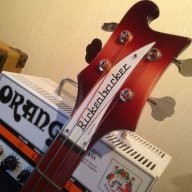
I just played with some dudes who have warmed up guys like Robin Trower and Lynyrd Skynyrd. I don't feel like a bassist yet, just a bass player.
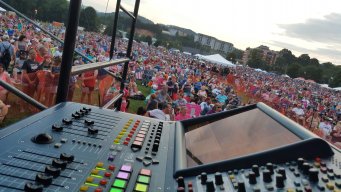
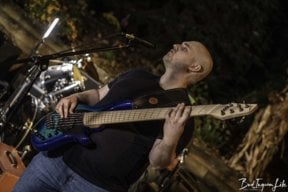
Gear, and lots of it!Title says it all. Was talking to some friends that I play with last night and this question came up from a guitar player. When he first asked I started to giggle a little bit, but then I actually thought about it and couldn't really come up with an answer - it's just something that I've never thought about. So.. what makes a "good" bass player?
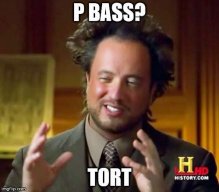
Timing? Ability to lock with the drummer? Having a tort pick guard on their bass?
....right everybody??
Latest posts
-

-
-
Would you play gigs with a band that doesn't have a great PA?
- Latest: buldog5151bass
-

-