

Enjoy the benefits of a premium membership!
Upgrade Account
-
TalkBass has been independent since 1998. Add your voice.
Create a free account to reply to discussions, view embedded media, and browse with fewer display ads.
Join free Log in
Want zero display ads or expanded classifieds tools? Compare plans.
You are using an out of date browser. It may not display this or other websites correctly.
You should upgrade or use an alternative browser.
You should upgrade or use an alternative browser.
What makes a great Blues bass player.?
- Thread starter IamGroot
- Start date
More options
Who Replied?
Add Gerry MacAvoy from Rory Gallagher's band to that list and you're golden.
Ha! The guitar player I eventually formed a band with is a huge Rory fan. It was my first exposure to him,many as a result, MacAvoy. And yes, I agree.
Say him with Bamd of Friends or whatever that celebration of Rory thing he had going on was called, about a year or so ago. Show was fantastic, and I was locked into MacAvoy and the drummer the whole time. The drummer passed away recently.....name is escaping me right now.
This thread has found the perfect balance between insight and snide humor!
Here’s my take: Blues is one of those deep genres that’s too easy to caricature. And the old catalog has quite a few rough edges and quirks that have been smoothed out over the years, so there’s new stuff to discover and try in the s material. But drawing inspiration from the old stuff is different than recreating it or freezing it in amber (I knew a guy who refused to use a pickup on his acoustic guitar because Robert Johnson didn’t use a pickup!); there’s room to say something new, to reflect one’s own experience. It’s disingenuous (and potentially culturally appropriative) for me to pretend I’m someone different than I am...which puts me back at risk of performing a caricature.
Here’s my take: Blues is one of those deep genres that’s too easy to caricature. And the old catalog has quite a few rough edges and quirks that have been smoothed out over the years, so there’s new stuff to discover and try in the s material. But drawing inspiration from the old stuff is different than recreating it or freezing it in amber (I knew a guy who refused to use a pickup on his acoustic guitar because Robert Johnson didn’t use a pickup!); there’s room to say something new, to reflect one’s own experience. It’s disingenuous (and potentially culturally appropriative) for me to pretend I’m someone different than I am...which puts me back at risk of performing a caricature.

SRV - Tommy Shannon
just listen ... there's your answer
just listen ... there's your answer

devnulljp
Supporting Member
I always associate him with Rod de'Ath but saw him a bunch of times with Ted McKenna and Brendan O'Neill on drums too.Ha! The guitar player I eventually formed a band with is a huge Rory fan. It was my first exposure to him,many as a result, MacAvoy. And yes, I agree.
Say him with Bamd of Friends or whatever that celebration of Rory thing he had going on was called, about a year or so ago. Show was fantastic, and I was locked into MacAvoy and the drummer the whole time. The drummer passed away recently.....name is escaping me right now.
Especially in a trio format, knowing how to fill in all that space between him and the drummer, but not getting in the way. Ya got to be the mortar in the home build between the foundation and the bricks.
SRV - Tommy Shannon
just listen ... there's your answer
I was tempted to say this earlier. The two guys who I think of (personal opinion) in relation to blues bass are Duck Dunn (especially the Stax recordings) and Tommy Shannon's work with SRV. Those two played a lot in are rock-oriented settings, and there are many other fantastic blues bassists who played in different blues styles, but those two resonate with me.
SRV - Tommy Shannon
just listen ... there's your answer
Good advice...
Being able to keep it in the pocket is a good START but "blues" is a somewhat generic term.
There's Tommy Shannon...then there's Roscoe Beck...and so on and so on...
There's Tommy Shannon...then there's Roscoe Beck...and so on and so on...
Almost every answer is correct, especially Willie Dixon, Tommy Shannon and Duck Dunn. The truth is that it doesn't matter much what genre you're playing. Know your role! You are there for the heartbeat. Listen all the time. Stay in the groove. Lock in with the drummer. Support the singer. Support the soloists. Don't get in anyone's way, make everyone else better than they would have been without you.

What qualities does a great Blues bass player have
What does it take to be a great blues bass player?
Probably above all, not being driven to be seen as a great blues bass player.
It'll also help to be able to play a lot of other genres—funk, pop, jazz, country, Latin—and then not play any of that on your blues gig.
What does it take to be a great blues bass player?
Probably above all, not being driven by wanting to be seen as a great blues bass player.
There it is, the bass player's dilemma!
This is a master class.
It is in my truck for steady rotation on every road trip.
It is in my truck for steady rotation on every road trip.
Don't drive a Volvo. What do Volvo owners know of lives of quiet desperation?
You've clearly never owned an old Volvo...
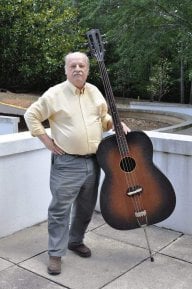
You've clearly never owned an old Volvo...
My current ride is a 1993 Volvo wagon. My daughter's college car was a 142 Volvo, and between those two I've owned two other Volvos. I know old Volvos quite well.


Patience to hold back all those fancy licks the guitarist is trying to get you to do along with him and a phenomenal drummer that understands dynamics. And use a Gibson SG bass. That's great bass no matter what genre.....enjoy. My one professional bass playing buddy seems to feel being jobless and depending on his playing abilities to get food on the table is great for playing blues with true authority. He plays a Stingray of all things. Says same bass since new in 1977...that alone would give me the blues.

Be conversant in the vocabulary of the blues; all the little licks, runs, turnarounds, walking tricks, and so forth. Know your history, and know that’s it’s far more than straight 3 chord 12 bar and Chicago or Texas shuffle. Know that a II chord or VI could pop up in the progression, understand bridge formats, check out the wide variations like Ray Charles’ gospel style ballads, blues that splits the difference with jazz like jump music, prison work songs, Leadbelly and Josh White’s folk, Jugband, New Orleans, Memphis, etc. Investigate the evolution of the genre from the 20’s, 30’s, and 40’s, city and country style. Just because you play in a modern band context, don’t overlook a recording from 1931 of just a guy and his guitar, because you may find “oh, that’s where that riff came from”. Listen to what the tuba players were doing a hundred years ago. Know Willie Dixon. It’s all DNA.
Frankly, Clapton’s performance and recording work since 1965, and before ‘85, is more pertinent.
Yup, best answer. It's not just three chords. So much more than that.
My only comment here, re: Clapton, is, he did "From the Cradle" in what, 91, 92? So even though he was "covering," that disc represents, for me anyway, a virtual clinic in monster blues guitar playing. Perfect balance of tribute to the original and his own stamp.


