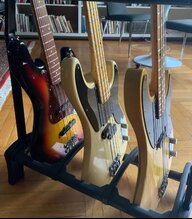
I disagree with this. Squier is owned by Fender and uses body dimentions and specs much closer to Fender, because they legally can, than SX. On top of that, Squiers have a tiny Fender logo underneath the Squier one. In a very real way, a Squier IS a Fender, just a budget line. The semantic distinction comes into play when we associate Fender with quality and Squier with lesser quality and think that quality is what makes a Fender a Fender. It doesn't. There are some pretty meh MIM's out there and some pretty great Squier's. So again, in a way, a Squier IS a Fender. But at the same time, it isn't. The Squier name is Fender's way of disassociating that line of instruments from their main line which they want you to think is better so they can charge more. The same goes for Epiphone. I've played some Epiphone guitars that are nicer than their Gibson equivalents, and a lot of Epis that are much worse. I've noticed they keep the designs closer to Gibson's than other companies can, but still keep them slightly different in minor areas so that the instrument is still not "the real thing."
An SX is not a Fender at all. They use different specs to avoid getting sued, while copying Fender designs closely enough so the buyer gets something that looks, feels, and sounds similar. No matter how good an SX, or even a Lakland can get, it simply isn't a Fender for both design and corporate ownership reasons. You could slap a Fender logo on it, but... well, that wouldn't change what it is or isn't.
On a literal level, a Fender is a Fender because the Fender company made it. If you're talking about a certain inconcrete Fenderness (which is where I think this debate is stemming from), then what makes a Fender a Fender is the feel and sound that Fender pioneered, something that other companies can get pretty close to. And if that's the case, good luck finding a place to draw the line between Fender and not-Fender.