

Enjoy the benefits of a premium membership!
Upgrade Account
-
TalkBass has been independent since 1998. Add your voice.
Create a free account to reply to discussions, view embedded media, and browse with fewer display ads.
Join free Log in
Want zero display ads or expanded classifieds tools? Compare plans.
You are using an out of date browser. It may not display this or other websites correctly.
You should upgrade or use an alternative browser.
You should upgrade or use an alternative browser.
What would happen, a question about tubes and cabs
- Thread starter jazzmonkey
- Start date
More options
Who Replied?

^^
This, but two of them would probably start to fart out at 12:00 if you didn't bridge the channels.
This, but two of them would probably start to fart out at 12:00 if you didn't bridge the channels.
^^
This, but two of them would probably start to fart out at 12:00 if you didn't bridge the channels.

[Invalid or Expired Link Removed]
Bright 1 into Normal 2 while plugged into Normal 1 will bridge the channels and make it sound huger than it already does.
i used to do that briefly when i first got my svt working again, but i stopped because i was able to duplicate the sound i like with both channels bridged with a single channel and some eqing.[Invalid or Expired Link Removed]
Bright 1 into Normal 2 while plugged into Normal 1 will bridge the channels and make it sound huger than it already does.
i used to do that briefly when i first got my svt working again, but i stopped because i was able to duplicate the sound i like with both channels bridged with a single channel and some eqing.
With a Y cable or A/B/Y box or something similar? I'm pretty much doing that now w/ my Blowtorch... Effected signal into one and uneffected into the other. Just was trying to make a point that bridging gives you a bigger tone, which will fart speakers more quickly.
i've done it both ways and didn't think there was much of a difference. i also don't really hear the extra bigness doing it. however, i'm certainly behind those who want to do it, especially if they use effects. back in the day i did clean into 1, effects into 2. i'd do it again if i had effects that required it.

So if watts are watts, how would an Aggie DB112 handle an Ampeg SVT Classic?
So how would an Aggie DB112 or GK Neo112 handle say a 200w Traynor YBA200?
better.
Is there a "but...."?
I guess where I get lost is that I asked a question a while back of how will my (then) new 200w tube amp compare to my 830w SS power/pre amp and I was told that "a watt is a watt", but then in another thread I had asked about bulding a 1x10 or 1x12 isolation box for recording said tube head at moderate volume in my garage and was told that I would need a speaker in the 600-800w range if I didn't want to blow it....
not all info on the site is correct, (especially mine). you only need a speaker that will handle what you are putting into it.(depending on what you mean by moderate volume). you can run an svt at 8 ohms, it just wont produce full power. probably 150 watts. its ok to go above rated impedance, but not below it. johnny a.Is there a "but...."?
I guess where I get lost is that I asked a question a while back of how will my (then) new 200w tube amp compare to my 830w SS power/pre amp and I was told that "a watt is a watt", but then in another thread I had asked about bulding a 1x10 or 1x12 isolation box for recording said tube head at moderate volume in my garage and was told that I would need a speaker in the 600-800w range if I didn't want to blow it....
I don't actually have a tube head, it's just that whenever I think of an all tube bass amp the first thing that comes to mind is SVT CL. I guess I should have asked about an Aggie DB359.
Interstatejoe has pretty much nailed what I'm getting at. Although watts are watts, it does seem to be the general concensus that tubes sound louder from more harmonics. Doesn't this ultimately push your drivers harder? Would the DB112 paired with the DB359 fart out with the quickness, or would it take it like a champ and be perceivably louder than with my GBMAX 12?
Interstatejoe has pretty much nailed what I'm getting at. Although watts are watts, it does seem to be the general concensus that tubes sound louder from more harmonics. Doesn't this ultimately push your drivers harder? Would the DB112 paired with the DB359 fart out with the quickness, or would it take it like a champ and be perceivably louder than with my GBMAX 12?
To be blunt, but it really depends on far too many factors to really give a simple yes/no answer. Gain stages, EQ settings, bass, player, cabs, FX, etc. are all contributing here.
billfitzmaurice
Commercial User
- Sep 15, 2004
- 16,860
- 278
- 76
- Disclosures
- Owner, Bill Fitzmaurice Loudspeaker Design
Tubes are comfortable running with the load impedance lower than the tap rating, not higher. With SS it's the other way around.you can run an svt at 8 ohms, it just wont produce full power. probably 150 watts. its ok to go above rated impedance, but not below it. johnny a.
No. Tubes can sound louder because of compression, which increases the power density of the signal, but not the voltage swing. As far as blowing drivers is concerned, both electrically and mechanically, that's the result of excess voltage swing. A watt is a watt, so a 200w tube amp and 200w SS amp will have the same voltage swing, so you'll no more blow a cab with SS or tube with amps that have the same voltage swing into the same load, and therefore the same power.Although watts are watts, it does seem to be the general concensus that tubes sound louder from more harmonics. Doesn't this ultimately push your drivers harder
not all info on the site is correct, (especially mine). you only need a speaker that will handle what you are putting into it.(depending on what you mean by moderate volume). you can run an svt at 8 ohms, it just wont produce full power. probably 150 watts. its ok to go above rated impedance, but not below it. johnny a.
I agree that not all info on the site is correct, which is why I asked the question again. Well technically jazzmonkey asked it and I'm just in the same boat...but we seem to keep getting conflicting answers. Even you said I "only need a speaker that will handle what I'm are putting into it" yet followed up with "(depending on what you mean by moderate volume)". If "a watt is a watt" then a 200 watt tube head should be able to pair up to a 350 watt speaker just fine whether the volume knob is at 1 or 10, right?
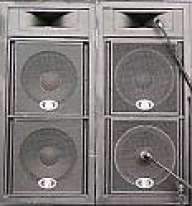
When I said moderate volume it wasn't in reference to the volume of the head, but of the volume outside my garage since I live in an apartment. In my scenario I wanted to crank my 200w tube head through a single 350w 10" or 12" speaker built into an isolation box similar to this:
But I was told over and over that I'd more than likely blow the speaker doing that and I should either scrap the idea, use multiple speakers, or go with a 600-800w speaker and even then I should be careful. Now I'm no mathmagician, but the numbers aren't quite adding up to me.

- May 9, 2008
- 4,081
- 1,236
- Disclosures
- Proprietor Springvale Studios
Part of what makes an SVT a very good use of 300 tube wattsI don't actually have a tube head, it's just that whenever I think of an all tube bass amp the first thing that comes to mind is SVT CL. I guess I should have asked about an Aggie DB359.
Interstatejoe has pretty much nailed what I'm getting at. Although watts are watts, it does seem to be the general concensus that tubes sound louder from more harmonics. Doesn't this ultimately push your drivers harder? Would the DB112 paired with the DB359 fart out with the quickness, or would it take it like a champ and be perceivably louder than with my GBMAX 12?
is the fact that the designers thought that eight 10 inch speakers would compliment this design perfectly.
There are huge differences between these technologies, either you go for some kind of modeling think sans amp + huge lightweight transistor amplifier power driving phenomenal X max on a heavy coned 12 or 15 inch loudspeaker probably ported with a 6 inch for mids.
Think Fearful or BFM to get good displacement and dispersion from a very small footprint.
Or you have far less amplifier power but blisteringly efficient loudspeakers, this is achieved by coupling together a great many similar far lower wattage drivers of considerably less X max and cone/voicecoil mass in a sealed box.
Which technology are you currently following mate! because
you can do one or the other...... but if you try to mix the two you will soon find that big heavy SVT tube amps like big heavy 8 X 10's.
PS. NB two 8 X 10 cabs being far better with an SVT than just the one, its not about watts its all about coupling.

- May 9, 2008
- 4,081
- 1,236
- Disclosures
- Proprietor Springvale Studios
I think you would do far better to record a big valve amp set at 16 ohms output with the two outer output tubes pulled to loose 100 odd watts.I agree that not all info on the site is correct, which is why I asked the question again. Well technically jazzmonkey asked it and I'm just in the same boat...but we seem to keep getting conflicting answers. Even you said I "only need a speaker that will handle what I'm are putting into it" yet followed up with "(depending on what you mean by moderate volume)". If "a watt is a watt" then a 200 watt tube head should be able to pair up to a 350 watt speaker just fine whether the volume knob is at 1 or 10, right?
When I said moderate volume it wasn't in reference to the volume of the head, but of the volume outside my garage since I live in an apartment. In my scenario I wanted to crank my 200w tube head through a single 350w 10" or 12" speaker built into an isolation box similar to this:


But I was told over and over that I'd more than likely blow the speaker doing that and I should either scrap the idea, use multiple speakers, or go with a 600-800w speaker and even then I should be careful. Now I'm no mathmagician, but the numbers aren't quite adding up to me.
Then using a motherload set on 8 ohms:
Invalid Link Removed
Just take the line out instead of rigging a speaker or mic.
Unless you have a great loud room, mic pre and mic you wont get as straightforward great sound as a motherload direct out.
And those isolation boxes are all really incredibly shite anyway.


