
The generally accepted definition in guitars and basses is pre-1980.
Generally accepted by exactly whom ? And based on what criteria ?

TalkBass has been independent since 1998. Add your voice.
Create a free account to reply to discussions, view embedded media, and browse with fewer display ads.
Join free Log in
Want zero display ads or expanded classifieds tools? Compare plans.
The generally accepted definition in guitars and basses is pre-1980.


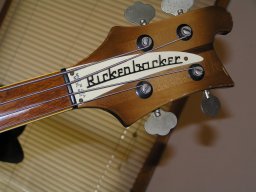
Really? I thought there was.I agree. But you're mistaken in one respect; There was never a single lawsuit filed(until recent years, IE gibson v Dean etc)
You'd think so right?Really? I thought there was.
But alas!Is that a walnutglo in your avatar btw?Really? I thought there was.
Yes. A 1978 fretless 4001. This was bought sight unseen online a few years ago because it was my dream bass. I didn't even know if this combination was offered. Aside from the truss rod Ooops adjustment crack, the bass is great. Sounds more DBish than a lot of other fretlesses do.Is that a walnutglo in your avatar btw?
Sick! I've got 3 Ricks atm, all 4003 variations. Had a 82 4001 for a while tho. Amazing bass.Yes. A 1978 fretless 4001. This was bought sight unseen online a few years ago because it was my dream bass. I didn't even know if this combination was offered. Aside from the truss rod Ooops adjustment crack, the bass is great. Sounds more DBish than a lot of other fretlesses do.
I think so. I know the fretboard is. The side dots (all three hundred of them!) are on the binding and the fingerboard dots are right. The tone cap has been removed. I cut a new pickguard out of cream-colored ABS and moved the neck pickup as close to the neck as possible without removing any wood. It's now sort of halfway between the '60's 4001 placement and a modern 4003. There was quite a bit of rust on the hardware when I bought it and I replaced some of the screws that wouldn't clean up. The bridge isn't too bad and isn't lifting. Thanks for your interest. I have a 2004 FireGlo 4003, also. The two are like night and day.Sick! I've got 3 Ricks atm, all 4003 variations. Had a 82 4001 for a while tho. Amazing bass.
And yeah about the sound. I dont remember what thread but this somehow came up the other day, about how very few or noone plays "soft" rickenbacker. And someone linked a video to a guy playing a defretted rick with flats, sounded incredible.
Is yours all original?
...Find me a classic rock station that won't play Pearl Jam. Go ahead. I'll wait.

Vintage is the grey area between new and antique. Invented for commercial needs. It can be defined to whatever is needed basically.
There is a fantastic movie on this subject, by Orson Welles. It's called "F for Fake". A "documentary" about Elmeer, a famous art forger. The whole movie is itself a fake in a weird way.In the wacky world of guitars it is quite tightly defined and even more aggressively gate-kept, whenever money is involved.
Vintage electric guitars are like Star Wars toys or Baseball cards. The big money is tied up in box-fresh originality, regardless of how unrealistic or irrational that happens to be.
The Antique business seems to be more forgiving of repairs, refinished and replacement parts to some degree, depending on the type of object.
I'm beyond suspicious of any custom colour, solid-colour Gibson basses from the '60s that turn up in dazzlingly condition. How better to disguise a headstock repair and litany of holes left by half the Dimarzio catalogue? Likewise Fenders are just too plug 'n' play for me. Im triple suspicious of any instrument supposedly made out-of-hours by a worker that has the wrong inlays or weird oversized pickguard, but is supposedly original.
The real grey area is dealers and 'authenticators' buying into this weirdness or overlooking obvious issues. Everybody from Gruhn down has missed refinish work, replacement plastics etc. Meanwhile Denmark Street in London was an entire cottage industry of fakery and fraudulent activity.

So a 67 Hoffner or Rickenbacker can't be vintage?
It cant be 1965 cutoff just because of Fenders.

In the wacky world of guitars it is quite tightly defined and even more aggressively gate-kept, whenever money is involved.
Vintage electric guitars are like Star Wars toys or Baseball cards. The big money is tied up in box-fresh originality, regardless of how unrealistic or irrational that happens to be.
The Antique business seems to be more forgiving of repairs, refinished and replacement parts to some degree, depending on the type of object.
I'm beyond suspicious of any custom colour, solid-colour Gibson basses from the '60s that turn up in dazzlingly condition. How better to disguise a headstock repair and litany of holes left by half the Dimarzio catalogue? Likewise Fenders are just too plug 'n' play for me. Im triple suspicious of any instrument supposedly made out-of-hours by a worker that has the wrong inlays or weird oversized pickguard, but is supposedly original.
The real grey area is dealers and 'authenticators' buying into this weirdness or overlooking obvious issues. Everybody from Gruhn down has missed refinish work, replacement plastics etc. Meanwhile Denmark Street in London was an entire cottage industry of fakery and fraudulent activity.

“Certified pre-owned”Your definition (yes) of vintage, and your understanding of antiques should help.
Over 30 years is a safe guess. Those that arbitrarily use the word vintage to help sell their gear on popular sites may not care about accurate descriptions, or actual characteristics.