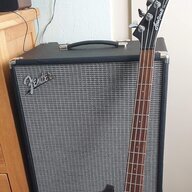
I needed to replace some rotting boards in my porch so I gathered some tools for the job. Naturally I reached for my P-bass. Here's how I would rate its performance:
Sawing: 3 out of 10. It's very difficult to put a good edge on a P-bass. The sharp fret ends did eventually cut through the rotting floor boards but not without a lot of work.
Hammering: 8 out of 10. As most people know, a P-bass makes a good hammer. Accuracy isn't always spot-on but force transfer is excellent.
Demolition: 10 out of 10. This category is self-explanatory.
Painting: 5 out of 10. If you are going for a Jackson Pollock finish, a P-bass works fine. Consistency, however, is not its forte.
So based on this experience, I would have to say a P-bass is not always the best tool for the job, and in some cases it is the wrong tool. Ironically, the bass warned me ahead of time that it would probably not excel at sawing and painting. So while a P-bass is sometimes the wrong tool for the job, the P-bass is not, itself, wrong.
Sawing: 3 out of 10. It's very difficult to put a good edge on a P-bass. The sharp fret ends did eventually cut through the rotting floor boards but not without a lot of work.
Hammering: 8 out of 10. As most people know, a P-bass makes a good hammer. Accuracy isn't always spot-on but force transfer is excellent.
Demolition: 10 out of 10. This category is self-explanatory.
Painting: 5 out of 10. If you are going for a Jackson Pollock finish, a P-bass works fine. Consistency, however, is not its forte.
So based on this experience, I would have to say a P-bass is not always the best tool for the job, and in some cases it is the wrong tool. Ironically, the bass warned me ahead of time that it would probably not excel at sawing and painting. So while a P-bass is sometimes the wrong tool for the job, the P-bass is not, itself, wrong.