The EB3 wasn't keeping him from playing fusion, though. It just wasn't the tone he had in mind.
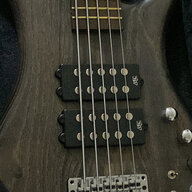
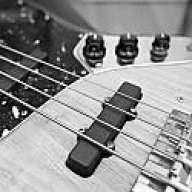
If there was a signature bass for 70s fusion, it was the Fender Jazz, followed by the Precision (Alphonso Johnson's axe of choice). I don't think fusion jazz and exotic coffee table basses became an expected pairing until some time in the 90s. For decades though the top-tier bassists were pretty much playing everything possible, some of them gravitated to extended-range basses (most famously, Anthony Jackson), some of them never did. It's not like how you're expected to have a Precision at a blues gig.
OP cites Casiopea -- founding member Tetsuo Sakurai played Yamaha BB basses when he was with them, and afterwards he's since played pretty much every brand ever made, exotic or otherwise. Quite a collector. His touring arsenal still includes a Fender Jazz alongside a bunch of boutique gear.
I wouldn't say that, broadly speaking, having an onboard preamp is a requirement at all. If OP's tone goal involves that particular kind of borderline-smooth-jazz detailed hi-fi sound, an onboard EQ doesn't guarantee it as much as
a well-constructed bass with the right pickups will. The preamp will provide a boost/cut EQ and buffer the pickups from devices downstream, but doesn't add any secret sauce unless you get into filter stacks, a'la Alembic or Wal. The EQ can be on-board or in a pedal or on the amp, which matters as far as your ergonomics and control but not as much for what comes out of the speakers.