
i don't see much point in running a speaker di with a ss or hybrid anyway. in those cases, the pre is what's doin', not the power amp.

TalkBass has been independent since 1998. Add your voice.
Create a free account to reply to discussions, view embedded media, and browse with fewer display ads.
Join free Log in
Want zero display ads or expanded classifieds tools? Compare plans.
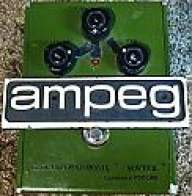
 I just went back to using the SVT again and my Tone Hammer is all but obsolete. So i'm thinking of picking a a new DI but then i seen about the parallel running of a DI and thought it would be cool to have the post signal from the SVT. One thing that pisses me off is that the tone hammer does not do something i thought it would do, run wet to the board via XLR and dry to the via the 1/4 in out. But thats not the case. Because even though you have the post button switched on the XLR if you turn off the unit the stops running post thru the XLR. I have been running it pre EQ lately but now their is no reason to have the TH which i have to power, so i want a passive DI. Just thought the possibility of a wet signal would be neat.
my understanding of these non-speaker-loading boxes (suhr has a [Invalid or Expired Link Removed] with a level control), is that they don't so much "pad" the speaker signal as tap off a tiny portion of it, by presenting a really high resistance in parallel with the speakers, so that just about all of the power goes to the speakers like it should, and a tiny portion gets into the box.
 Now i just need to figure out which DI to get


AmpegFuzz: If you like the ToneHammer except for its routing options, check out the VT DI mod thread in the FX forum.
Mike Putnam has been modding VT pedals to add a DI, but also to include some useful pre/post options. The DI can be switched pre/post, and "post" can be wired as normal (so the unit's stomp switch turns processing on/off for both the DI and 1/4" out) or else as "latching" (so the DI is always wet, while the stomp switch effects output only the 1/4" output).
I'm not trying to steer you toward the VT pedal, but if you like the ToneHammer except for DI & through options, I'd bet Mike Putnam could mod your ToneHammer to give you the routing you want on it.
But then i'm still running a power supply and an EQ i might not use like my TH. Then trying to set it for FOH seems like a Pain in the rear since i wont run it through the SVT.How about a good 'ol Electro Voice RE-20 right smack dab in front of the speaker cab. $400 will get you one brand new. And you can use it for just about any other high SPL applications as well. Can't go wrong. They sound friggin fantastic and have for years.
There is a TON of bad scoop (BS) in this thread. A JDI or U5 will not work in this application. The JDX takes the signal from the amp and sends it both to the cabinet and the board. As others have said, you MUST have a speaker cabinet connected if the head is all-tube. The other two mentioned will take a speaker-level signal and process it properly to be sent to the board, but do not send a signal on to a speaker cabinet. Also, as others have said, they will not provide a proper load for a head with a tube power amp. They're good for hybrid or solid state amps only when taking their input from the amp's speaker output. So the JDX is indeed what you require.


Correct, but the JDI and U5 will not pass the rest of the signal to the speaker cab



If I'm not mistaken, the Radial JDX will send a padded signal to the desk from in between the amp and cab, correct?

I'm kind of confused by this thread, because it sounds like everyone's telling everyone else that they're wrong. If I'm not mistaken, the Radial JDX will send a padded signal to the desk from in between the amp and cab, correct? If I wanted to send a post speaker out signal to the desk knowing I won't overdrive it, what would you suggest?
Thanks.
Both boxes are not designed to be the speaker load - you still have to plug the tube head straight into a cabinet. Otherwise, poof!
 I wasn't looking for a dummy load, though.
Gearhead17 said:Invalid Link Removed
Invalid Link Removed
Start reading! The JDI is made to be connected off the parallel jack of the speaker cab. It DOES not go between the amp and the cab.
The JDX is designed to be put in between the amp and the cab. 300 watts max though, tube heads will benefit greatly from this.
Both boxes are not designed to be the speaker load - you still have to plug the tube head straight into a cabinet. Otherwise, poof!


