• TalkBass has been independent since 1998. Add your voice.
    Create a free account to reply to discussions, view embedded media, and browse with fewer display ads.
    Join freeLog in
    Want zero display ads or expanded classifieds tools? Compare plans.

Which solder spool for guitar repair

Solution
Ah ... the cat's pajamas!

Don't be afraid to buy BIG. Price varies WIDELY. It will last you the rest of your life (even if you don't succumb to lead poisoning)
I've got a 63/37 Kester based on advice on TB. it dries faster than the conventional 60/40.
This is the smallest of points, but, it can make a difference. 63/37 does melt at a slightly lower temperature, and therefore solidifies marginally quicker, than 60/40. And yes: ventilate! You don't need to be breathing rosin fumes, which can have any number of chemicals and solvents. The rosin burns off gunk and consumes oxygen so the joints are perfect metal-to-metal. I learned this at Radio Shack when they had the DIY teenager plastic box kits of various novelty circuits when I was a teenager in the mid-1970's. God, I'm getting old! Blast from the Past (I had the AM Radio kit since my town had a low-power AM radio station). Link: Retrotechtacular: Remembering Radio Shack P-Box Kits
 
Last edited:
Upvote 0
You don't say what type of solder you already have (lead or non-lead). Good joints don't mix the two. I use rosin core lead (60/40 is good, 63/37 eutectic is better), kester 44 is the cat's pajamas. Use a CLEAN shiny tip properly sized to whatever you are soldering. Also lowest temperature you can get way with. Tip too hot and your flux just burns off giving you crappy joints. Rosin's pinetree sap so unless working on an industrial scale, I'd say the toxicity of "pinetree" fumes are highly overrated. THe shift ot lead free solder isn't so much for safety of the solderer but for the landfills where all your work eventually ends up
 
Upvote 0
Rosin's pinetree sap so unless working on an industrial scale, I'd say the toxicity of "pinetree" fumes are highly overrated.
"Rosin-based flux is made from extracts of pine tree sap (Colophony) and can cause health problems if fumes from soldering are inhaled. Colophony is composed of roughly 90% resin acid and 10% neutral material. Repeated or prolonged contact with Rosin may cause skin sensitization. Repeated or prolonged inhalation exposure may cause asthma. When the flux is heated, colophony has been known to generate fumes including aliphatic aldehydes (like formaldehyde) and hydrochloric acid and other gases containing benzene, toluene, styrene, phenol, chlorophenol, and isopropyl alcohol. Short term problems can include nose, sinus, eye and throat irritation and skin rashes, and long-term problems that may include asthma and dermatitis." -- MIT EHS Soldering Safety and Health Guidelines

tl;dr: Pine tree sap can still mess you up when you burn it.
 
  • Like
Reactions: andare
Upvote 0
This is the smallest of points, but, it can make a difference. 63/37 does melt at a slightly lower temperature, and therefore solidifies marginally quicker, than 60/40. And yes: ventilate! You don't need to be breathing rosin fumes, which can have any number of chemicals and solvents. The rosin burns off gunk and consumes oxygen so the joints are perfect metal-to-metal. I learned this at Radio Shack when they had the DIY teenager plastic box kits of various novelty circuits when I was a teenager in the mid-1970's. God, I'm getting old! Blast from the Past (I had the AM Radio kit since my town had a low-power AM radio station). Link: Retrotechtacular: Remembering Radio Shack P-Box Kits
That brings me back to my big project in my aforementioned, high school Digital Electronics class. I built a small amplifier from a bag o' Radio Shack parts to put some old speakers to use when watching stuff on my TV and VCR. (Female left/right composite inputs on the front, two control knobs…one per input…on the top and spring-loaded female speaker wire ports on the back.) It was as nice and effective as it ugly! (I was one of those A/V nerds🤓 who could program a VCR without instructions after learning my way around our first Panasonic VHS deck in 1985.)

I forget how many years it lasted…something like a good five or so years, which ain't too bad.
 
Upvote 0
"Rosin-based flux is made from extracts of pine tree sap (Colophony) and can cause health problems if fumes from soldering are inhaled. Colophony is composed of roughly 90% resin acid and 10% neutral material. Repeated or prolonged contact with Rosin may cause skin sensitization. Repeated or prolonged inhalation exposure may cause asthma. When the flux is heated, colophony has been known to generate fumes including aliphatic aldehydes (like formaldehyde) and hydrochloric acid and other gases containing benzene, toluene, styrene, phenol, chlorophenol, and isopropyl alcohol. Short term problems can include nose, sinus, eye and throat irritation and skin rashes, and long-term problems that may include asthma and dermatitis." -- MIT EHS Soldering Safety and Health Guidelines

tl;dr: Pine tree sap can still mess you up when you burn it.

Yes, good to "know"
 
  • Like
Reactions: Malak the Mad
Upvote 0
Rosin's pinetree sap so unless working on an industrial scale, I'd say the toxicity of "pinetree" fumes are highly overrated.
"Rosin-based flux is made from extracts of pine tree sap (Colophony) and can cause health problems if fumes from soldering are inhaled. Colophony is composed of roughly 90% resin acid and 10% neutral material. Repeated or prolonged contact with Rosin may cause skin sensitization. Repeated or prolonged inhalation exposure may cause asthma. When the flux is heated, colophony has been known to generate fumes including aliphatic aldehydes (like formaldehyde) and hydrochloric acid and other gases containing benzene, toluene, styrene, phenol, chlorophenol, and isopropyl alcohol. Short term problems can include nose, sinus, eye and throat irritation and skin rashes, and long-term problems that may include asthma and dermatitis." -- MIT EHS Soldering Safety and Health Guidelines

tl;dr: Pine tree sap can still mess you up when you burn it.
I gotta agree with ardgedee on this one. Just because something is "organic", one of the currently more overused buzzwords plastered all over products, does not mean it still can't harm you. Hemlock, nightshade, and any insect/spider/snake venom are organic…and will mess your day up! 🤮 :dead:

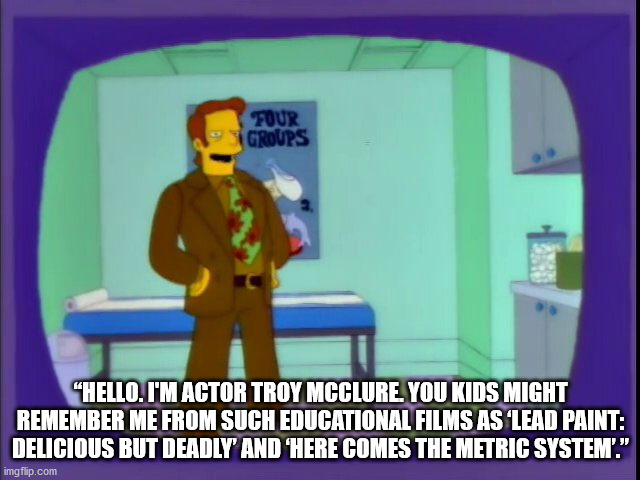
Big picture, and a bit of sensible advice from me to anyone reading this; if all it takes is a little bit of care and caution to not inundate ones' body with noxious, possibly harmful toxins, why not exercise a reasonable amount of caution? Or, as Troy McClure says…

4mx1is.jpg


…'cuz ya gotta watch out for those stray millimeters! :blackeye:
 
Upvote 0
63/37 does melt at a slightly lower temperature, and therefore solidifies marginally quicker, than 60/40.
It's not the melt temperature, it's being eutectic that matters. Eutectic means that it transitions almost-immediately between liquid and solid as it cools, without a paste phase in between. Non-eutectic solder is not inherently bad but requires that the items you are soldering are absolutely immobile until cool because otherwise the solder joint can be cracked or broken during the paste phase.

Since we're a buncha grunts using our free hand to hold two wires together while the other hand holds the iron, we're gonna find it really challenging to keep a fresh solder joint literally-perfectly still for a couple seconds, so eutectic solder is better for us.
 
Upvote 0
It's not the melt temperature, it's being eutectic that matters. Eutectic means that it transitions almost-immediately between liquid and solid as it cools, without a paste phase in between. Non-eutectic solder is not inherently bad but requires that the items you are soldering are absolutely immobile until cool because otherwise the solder joint can be cracked or broken during the paste phase.

Since we're a buncha grunts using our free hand to hold two wires together while the other hand holds the iron, we're gonna find it really challenging to keep a fresh solder joint literally-perfectly still for a couple seconds, so eutectic solder is better for us.
I know. Do you really think that many on the forum will know what the word "eutectic" means? That is why I said instead "solidifies marginally quicker," which is what most people understand. Yes, 60/40 can actually cause the dreaded "cold-solder" joints that don't immediately set properly if there is even the slightest movement of the wires or lugs soldered, where 63/37 is much better due to its eutectic nature to resist the "cold solder" results from not keeping the joint perfectly immobile.
 
Upvote 0
So is beer and most things in Australia.
It's a bit strange that I have lived as long as I have, according to all the moral preachers on this planet.
Nothing to do with morals. And you know that the fact you're still alive doesn't mean certain things are not harmful. I drink beer and use leaded solder so no judgement from me.
Just don't huff soldering fumes if you can avoid it, especially if you solder often - once you discover you can build pedals, it's easy to get carried away.
I always have a fan blowing away the fumes when I build pedals because the boards are small. I almost never have a fan when I wire up guitars because I have no room for a decent fan on my bench. It's only a couple of solder joints anyway.
 
Upvote 0
37/63, rosin cored for the reasons stated above. I have several rolls of Multicore brand which is what I was taught with back when I hand soldered prototypes for critical systems. I also have a few rolls of 2% Ag (36/62/2).

PS: use a brass shaving pot to wipe the tip, not a wet sponge.
 
Upvote 0
37/63, rosin cored for the reasons stated above. I have several rolls of Multicore brand which is what I was taught with back when I hand soldered prototypes for critical systems. I also have a few rolls of 2% Ag (36/62/2).

PS: use a brass shaving pot to wipe the tip, not a wet sponge.
The wet sponge is very effective at cleaning a tip but it can be hard on them so you're right, the brass afro is all you need if you tin and clean your tips.
 
Upvote 0
I'm no expert, so I won't be surprised to be corrected, but this one looks promising.


One thing I did learn from my high school Digital Electronics class is to use the aforementioned "rosin core" solder, not "acid core".
No mater what flux is used, wash the solder joints after soldering. I did production work many years ago.
We used water soluble flux and ran the work through a residential dishwasher (no detergent), before switches and connectors were soldered in. Work was “mil spec” at that time.
 
  • Like
Reactions: Malak the Mad
Upvote 0
No mater what flux is used, wash the solder joints after soldering. I did production work many years ago.
We used water soluble flux and ran the work through a residential dishwasher (no detergent), before switches and connectors were soldered in. Work was “mil spec” at that time.
It's impractical to wash solder joints in a guitar. I use isopropyl alcohol on through hole PCBs with a thin rag and a toothbrush.
 
  • Like
Reactions: WRM
Upvote 0
Personal exposure to lead is only one of the problems with leaded solder. The other is that soldering unavoidably produces a certain amount of lead waste that's rarely disposed of properly.

I've found that Kester K100 is the closest to leaded solder of the lead-free alloys that I've tried. Safe to say that I've done thousands of joints with it, including fine pitch surface mount. The Kester solders are available with a "no clean" flux that eliminates the need for cleaning in mainstream use.

Something worth mentioning is that solder has gotten expensive. It's worth looking for spools smaller than the standard one pound.
 
Upvote 0