• TalkBass has been independent since 1998. Add your voice.
    Create a free account to reply to discussions, view embedded media, and browse with fewer display ads.
    Join freeLog in
    Want zero display ads or expanded classifieds tools? Compare plans.

Which strings for "classic" rock?

I am learning a bunch of rock tunes for a new band, including tunes by the Eagles, Doobie Brothers, Foreigner, Journey, and Steely Dan. I know many of the bassists in these bands played a Fender Precision. I own a '77 P bass, and I can't get it to sound like any of the above bassists. I am using Ernie Ball Slinky strings, which are round wound. Should I be using flat wound strings to achieve a more authentic P bass sound from that era?

You are not going to copy thoughs sounds by swamping strings.
 
Strings are only part of the equation. Tone comes from a combination of many sources. Knowing your gear and how to EQ it is more important than the strings themselves. The '77 Fender original pickup may be the culprit for a harsh sound. The pickups from '76 and later were different than previous vintages and had a tone that was popular for disco, but not as effective for rock. Swapping it out for a mellower one may help.
 
  • Like
Reactions: red_rhino
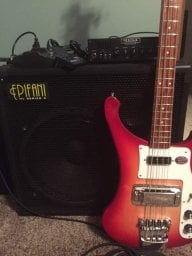
I appreciate your honesty. For me, it's always been about nailing the parts, but I use original recordings as my templates, and some of those early bass sounds (like Chuck Rainey, Tim Schmidt, etc.) are so warm yet so defined. It seems when I crank some of the "snap" out of the pickup it loses definition. By the way, I changed the original pickup in my '77 to a Seymour Duncan a couple of years ago. It works well for me. Nice bass, by the way. I'm also left-handed, but was taught how to play guitar by my right-handed father when I was 12. I can't imagine trying to play lefty!
You need to keep in mind the amount of high-end studio quality gear and processing was involved in recording those tracks. Plenty of compression, low & high pass filtering, etc. Yes, the strings were part of it, but IMHO, it was somewhat secondary. I recorded plenty of stuff using a Ric with Rotosounds thru an Ampeg B15 which sounded terrible live, but by the time the engineer got done with it, I sounded like God's left hand playing Heaven's Steinway.

The newer gear that's available these days can get your live sound pretty close to studio quality, but it's not just about strings.
 
I’d buy the strings we had back then. There weren’t that many choices. Mostly Fender, LaBella & Black Diamond. It’s likely that other pieces of your gear will make a bigger difference in the sound than the strings will. Get a vintage amp, an old style guitar & use no effects on it. Usually the biggest effect on the recordings those days was where the mic was in relation to the amp. Usually the sound was pretty tame, compared to the recordings.
 
  • Like
Reactions: jamro217
Not to sound cliched, but the "tone is in the fingers" argument can be made here. Lots of classic rock preceded the disco era (which was known for bright bass tone) and featured a mellower, richer tone. Not much snapping, popping or slapping, just a fundamental round tone. Don't sacrifice what is comfortable for you to play in order to achieve a tonal goal. Changing to flats from rounds will make the bass feel different. You may like it, maybe not. The loss of productivity suffered by doing so compromises your performance. Better to let the gear do what it is supposed to do in the tone shaping department than to play an uncomfortable instrument. Plucking closer to the neck than the bridge will result in a tone more relevant to classic rock.
 
I am learning a bunch of rock tunes for a new band, including tunes by the Eagles, Doobie Brothers, Foreigner, Journey, and Steely Dan.

None of the bassists for these bands used a sound with a lot of high end, and many of the hit records by the Eagles, Doobie Brothers and Steely Dan clearly feature the sound of a Precision Bass with flatwounds, so that would be where I'd start. I play in a Steely Dan tribute band and my '72 P-Bass with La Bella 760FL flatwounds and some compression works well, even in a dense mix.

I think the one exception among this list of artists would be the Journey radio hits from the 80's. The bass tone on the "Escape" LP is pretty distinctive. Ross Valory used an Ovation Magnum bass I believe, but this sound can be approximated by using a bass with two pickups and favoring the bridge pickup. That being said, these songs would still sound fine played on P-Bass and it may not be worth the trouble if you only cover a few of them.

That's my two cents.

- Steve
 
Pretty much any.

Back in the classic rock era (which I date back to) the two most popular bass strings were Fender flats and Rotosound Swing Bass rounds.

That gives you a lot of running room between those two extremes. :)
 
Which strings for "classic" rock?
It is not meantpompous or condescending when I say: I seriously would not spend a second on thsi question.
Any string will do if the player does.
 
  • Like
Reactions: JRA
A good set of bass strings for classic rock: Hopefully the same set that has been on the bass since 1974......
Old, grimy, dull, lifeless, overplayed and rubbed into the fingerboard.

At least with most classic rock, it's usually the first five frets that get the most wear...;)
 
I am learning a bunch of rock tunes for a new band, including tunes by the Eagles, Doobie Brothers, Foreigner, Journey, and Steely Dan. I know many of the bassists in these bands played a Fender Precision. I own a '77 P bass, and I can't get it to sound like any of the above bassists. I am using Ernie Ball Slinky strings, which are round wound. Should I be using flat wound strings to achieve a more authentic P bass sound from that era?

use round wound string, and don’t be afraid to spend some time with your EQ to get it dialed in. I will say this, as for the early Eagle songs like Witchy Women, only one way to get that sound... flats..
 
"tone is in the fingers" argument can be made
Any string will do if the player does.
00001.jpg
 

Latest posts