
Enjoy the benefits of a premium membership!
Upgrade Account
-
TalkBass has been independent since 1998. Add your voice.
Create a free account to reply to discussions, view embedded media, and browse with fewer display ads.
Join free Log in
Want zero display ads or expanded classifieds tools? Compare plans.
You are using an out of date browser. It may not display this or other websites correctly.
You should upgrade or use an alternative browser.
You should upgrade or use an alternative browser.
Who agrees?
- Thread starter Ryan Mohr
- Start date
More options
Who Replied?

I agree with those that have said "we like it because we've been conditioned to do so. It is the sound we are most familiar with. We have been conditioned to like it." I think this is about seventy-five percent of the story.
The other twenty-five percent? These three basses make a sound that is, naturally, a generally pleasing sound. No frequency range really "sticks out." The recorded sounds that we're talking about aren't harsh, brittle, or any of those kinds of adjectives.
Look at it this way. Between the P, J and MM, which one would the engineer most prefer to put on tape (because, in the engineers opinion, it sounds the best)? We can debate this, but in the end, the P and the J will be first and second (or second and first) and the MM will be third. Which of the three is the easiest to make sound a bit harsh? MM wins that one easily.
Part of why we like them is because they really do sound good.
The other twenty-five percent? These three basses make a sound that is, naturally, a generally pleasing sound. No frequency range really "sticks out." The recorded sounds that we're talking about aren't harsh, brittle, or any of those kinds of adjectives.
Look at it this way. Between the P, J and MM, which one would the engineer most prefer to put on tape (because, in the engineers opinion, it sounds the best)? We can debate this, but in the end, the P and the J will be first and second (or second and first) and the MM will be third. Which of the three is the easiest to make sound a bit harsh? MM wins that one easily.
Part of why we like them is because they really do sound good.

I give thanks to the likes of Leo Fender & Orville Gibson everyday. Without them, modern music as we know it would be so much less.
It's ok for you to be thankful for them, but really it's Gibson and Fender who should be thankful for the opportunity to establish themselves first. It is fair to say that without them music would be different, but whatever pop music would be without them, would still be pop music and we would still be thanking someone for it. Even if Orville and Leo never did their thing, you would still be just as thanksful for music as you are now.
Honestly, I'd have to disagree and say that music probably wouldn't be much LESS but it could have been be much DIFFERENT.

There is enough popular, mainstream music that was made with basses other than Fenders that I can't completely agree. The most obvious example might be McCartney playing his Hofner and Ric with the Beatles.

Since G&L instruments aren't even in the discussion, should we think Leo was deluded in considering them his best engineering achievement? Or that he was just saying that to get the company going?
IME, G&Ls seem to be halfway in between MMs and Fenders. I find them to be useful in more styles, but less useful than a bass that fits a stylistic niche. Jack of all trades, master of none.

I think Fender's real accomplishment was similar to Henry Ford's: Streamlined assembly-line production of an affordable design for mass consumption. I find the instruments themselves to be low-fidelity, needlessly truncated in range, and both tonally and ergonomically primitive, but they caught on due to low expectations and a lack of real competition during their heyday, and the unimaginative Fender Corporation is more than happy to crank out the same tired, play-it-safe icons ad nausium.
These instruments are so crude and undemanding in design that they're easily duplicated by companies like SX for a fraction of the cost of a Fender with no appreciable loss in quality or tone, yet consumers continue to spend $1K+ for what is today essentially a $299 bass to get that iconic Fender decal on the headstock.
IMO, the EBG truly came into its own when innovative luthiers came on the scene who allowed the instrument to evolve into something with range, fidelity, craftsmanship, ergonomics, and unique, versatile, fully-realized tone. But since our culture is currently descending into a trendy, decadent adoration of all things "vintage," even a few of the top luthiers are dumbing-down their instruments to reflect the primative, heavily-compromised-for-cheap-mass-production designs of half a century ago, but that's where the money is these days. It's become so decadent that a few consumers are actually willing to pay 130% extra for counterfeit spray-paint damage, and Fender is, of course, happy to oblige.
What's next? A resurgence of the Model T Ford?
These instruments are so crude and undemanding in design that they're easily duplicated by companies like SX for a fraction of the cost of a Fender with no appreciable loss in quality or tone, yet consumers continue to spend $1K+ for what is today essentially a $299 bass to get that iconic Fender decal on the headstock.
IMO, the EBG truly came into its own when innovative luthiers came on the scene who allowed the instrument to evolve into something with range, fidelity, craftsmanship, ergonomics, and unique, versatile, fully-realized tone. But since our culture is currently descending into a trendy, decadent adoration of all things "vintage," even a few of the top luthiers are dumbing-down their instruments to reflect the primative, heavily-compromised-for-cheap-mass-production designs of half a century ago, but that's where the money is these days. It's become so decadent that a few consumers are actually willing to pay 130% extra for counterfeit spray-paint damage, and Fender is, of course, happy to oblige.
What's next? A resurgence of the Model T Ford?

I think Fender's real accomplishment was similar to Henry Ford's: Streamlined assembly-line production of an affordable design for mass consumption. I find the instruments themselves to be low-fidelity, needlessly truncated in range, and both tonally and ergonomically primitive, but they caught on due to low expectations and a lack of real competition during their heyday, and the unimaginative Fender Corporation is more than happy to crank out the same tired, play-it-safe icons ad nausium.
These instruments are so crude and undemanding in design that they're easily duplicated by companies like SX for a fraction of the cost of a Fender with no appreciable loss in quality or tone, yet consumers continue to spend $1K+ for what is today essentially a $299 bass to get that iconic Fender decal on the headstock.
IMO, the EBG truly came into its own when innovative luthiers came on the scene who allowed the instrument to evolve into something with range, fidelity, craftsmanship, ergonomics, and unique, versatile, fully-realized tone. But since our culture is currently descending into a trendy, decadent adoration of all things "vintage," even a few of the top luthiers are dumbing-down their instruments to reflect the primative, heavily-compromised-for-cheap-mass-production designs of half a century ago, but that's where the money is these days. It's become so decadent that a few consumers are actually willing to pay 130% extra for counterfeit spray-paint damage, and Fender is, of course, happy to oblige.
What's next? A resurgence of the Model T Ford?
Intersting perspective, I must say. I think you have a point. They are overpriced these days. That being said, I own 3 Fender Basses that I love. God, I'm an idiot.



I agree with Mr Turner on a great percentage, but I have to agree with the other side as well (up to a certain point at least). Mr Leo Fender got many things pretty much right from the start, but there was (and still has been) margin for improvement. Leo Fender, himself, "improved" the concept of the first Precision bass with the split coil P bass design, then with the introduction of the Jazz bass, then with the Stingray and then with the G&L basses. As much as an innovator, he was a businessman too (as well as looking at cost-effective ways of production). Tone-wise he produced some great tones (that were points of reference, and still are), but...
If one thinks that there is no margin left for improving the EBG as an instrument, then I'm left to believe that we have a dead instrument in our hands. A Ferrari has very few common features with the Ford T Ford, yet both get the job done. And if one tends to believe that there is no margin left, then they should go back to the gut strings (with wire coiled over the pickup area) that Leo Fender used on his first design, no individual saddles etc etc
There were the first successful, mass produced basses and that led the way to condition many sound engineers to have an ear (and training probably) only for "Fender basses". Other basses came along but none got as glorious as Fender. Yet many innovators have pushed the envelope of EBG further forward and things improve still.
Tone is very subjective, like taste. If we are looking only at getting the "job done" then we can forget about using real EBGs and use samples (just like eating tasteless-oderless but fully balanced nutrition pills). Not all tastes are for everyone. And I'd add the lactose-intolerance example as a natural substance that is very nutritious (milk), yet cannot be tolerated by certain individuals.
My 0.02
If one thinks that there is no margin left for improving the EBG as an instrument, then I'm left to believe that we have a dead instrument in our hands. A Ferrari has very few common features with the Ford T Ford, yet both get the job done. And if one tends to believe that there is no margin left, then they should go back to the gut strings (with wire coiled over the pickup area) that Leo Fender used on his first design, no individual saddles etc etc
There were the first successful, mass produced basses and that led the way to condition many sound engineers to have an ear (and training probably) only for "Fender basses". Other basses came along but none got as glorious as Fender. Yet many innovators have pushed the envelope of EBG further forward and things improve still.
Tone is very subjective, like taste. If we are looking only at getting the "job done" then we can forget about using real EBGs and use samples (just like eating tasteless-oderless but fully balanced nutrition pills). Not all tastes are for everyone. And I'd add the lactose-intolerance example as a natural substance that is very nutritious (milk), yet cannot be tolerated by certain individuals.
My 0.02

Since G&L instruments aren't even in the discussion, should we think Leo was deluded in considering them his best engineering achievement? Or that he was just saying that to get the company going?
I think they might well be his best designs. The thing is that Leo got most things correct in the first couple of iterations. This would be the P and J basses. Then comes the MM, which is different in terms of electronics, but very similar in most other respects (woods, scale). The G&L was, and still is, an extension of the MM. I think the G&L is at least as versatile as the MM, and probably more so.
That being said, I think Leo did a great job on most things. I do think his basic blueprint has been improved upon. I do not own one, but i have come to really like 35" scale versus 34". I tend to like neck through better than bolt.
Leo was not delusional in anyway in stating that G&L was his best design, but it was totally built upon what had come before. He was an inventor/tinkerer, and he was working to improve his own basic design.

Funny how the Precision, Jazz, and Stingray are so different in tone, yet each is the "holy grail" when it comes to that tone. They're all old, and have Leo Fender and a bunch of work in common, thanks to the limited choices years ago.
The whole Fender bass "thing" is a mentallity, obviously deeply ingrained over time. I think there are far better basses for each tone niche that have been made over the years. I think those paying 15k for a vintage bass are paying for collectability and trendiness, not an otherewise unobtainable or ultimate tone.
The whole Fender bass "thing" is a mentallity, obviously deeply ingrained over time. I think there are far better basses for each tone niche that have been made over the years. I think those paying 15k for a vintage bass are paying for collectability and trendiness, not an otherewise unobtainable or ultimate tone.

I think Fender's real accomplishment was similar to Henry Ford's: Streamlined assembly-line production of an affordable design for mass consumption. I find the instruments themselves to be low-fidelity, needlessly truncated in range, and both tonally and ergonomically primitive, but they caught on due to low expectations and a lack of real competition during their heyday, and the unimaginative Fender Corporation is more than happy to crank out the same tired, play-it-safe icons ad nausium.
These instruments are so crude and undemanding in design that they're easily duplicated by companies like SX for a fraction of the cost of a Fender with no appreciable loss in quality or tone, yet consumers continue to spend $1K+ for what is today essentially a $299 bass to get that iconic Fender decal on the headstock.
IMO, the EBG truly came into its own when innovative luthiers came on the scene who allowed the instrument to evolve into something with range, fidelity, craftsmanship, ergonomics, and unique, versatile, fully-realized tone. But since our culture is currently descending into a trendy, decadent adoration of all things "vintage," even a few of the top luthiers are dumbing-down their instruments to reflect the primative, heavily-compromised-for-cheap-mass-production designs of half a century ago, but that's where the money is these days. It's become so decadent that a few consumers are actually willing to pay 130% extra for counterfeit spray-paint damage, and Fender is, of course, happy to oblige.
What's next? A resurgence of the Model T Ford?
I'm genuinely curious as to what your opinion of Sadowsky instruments is.
I think Fender's real accomplishment was similar to Henry Ford's: Streamlined assembly-line production of an affordable design for mass consumption. I find the instruments themselves to be low-fidelity, needlessly truncated in range, and both tonally and ergonomically primitive, but they caught on due to low expectations and a lack of real competition during their heyday, and the unimaginative Fender Corporation is more than happy to crank out the same tired, play-it-safe icons ad nausium.
These instruments are so crude and undemanding in design that they're easily duplicated by companies like SX for a fraction of the cost of a Fender with no appreciable loss in quality or tone, yet consumers continue to spend $1K+ for what is today essentially a $299 bass to get that iconic Fender decal on the headstock.
IMO, the EBG truly came into its own when innovative luthiers came on the scene who allowed the instrument to evolve into something with range, fidelity, craftsmanship, ergonomics, and unique, versatile, fully-realized tone. But since our culture is currently descending into a trendy, decadent adoration of all things "vintage," even a few of the top luthiers are dumbing-down their instruments to reflect the primative, heavily-compromised-for-cheap-mass-production designs of half a century ago, but that's where the money is these days. It's become so decadent that a few consumers are actually willing to pay 130% extra for counterfeit spray-paint damage, and Fender is, of course, happy to oblige.
What's next? A resurgence of the Model T Ford?
but true. those are hard points to argue with objectively. Great post.
That being said, I prefer the sound of passive basses, active basses dont sound bad, just not as good as a good passive to my ears. So I guess some of the progress that has been made is lost on me, lol.

I'm genuinely curious as to what your opinion of Sadowsky instruments is.
I'm not gonna speak for Debased, but I'd think they're a highly tweaked version of a Fender. Have you seen some of the weight on some of 'em? Hard to argue with a sub 8lb 5 string. If I didn't like 6 strings so much, I think I'd jump on Sadowsky.
but true. those are hard points to argue with objectively. Great post.
That being said, I prefer the sound of passive basses, active basses dont sound bad, just not as good as a good passive to my ears. So I guess some of the progress that has been made is lost on me, lol.
Not to start an active vs. passive debate, but a lot of the newer upper end pre-amps are a lot better about being able to cop a nice vintage tone. They're getting to be really good about being able to nail a pretty wide spectrum of tones.
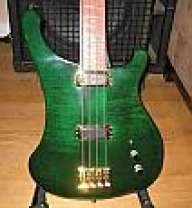
Well, the problem is the whole chicken vs. egg thing. What came first? The Fender Precision when it started being used in recordings changed the way the music was perceived. Quincy Jones talks of the first time he heard electric bass that he knew he couldn't USE it the same way as he used a double bass. As the sound of a Fender became the sound people associated with electric bass, the conception of how to build the tracks became entwined with how a Fender sounds.
That's why engineers in New York told Tony Levin they couldn't get a good sound out of his first StingRay. He asked Roger Sadowsky to put the pre-amp from his StingRay into his P bass so the engineers would stop whining. Anyway, the reason a Precision sits perfectly into the mix so often quite possibly is that the mix is preconceived to be made so the Precision sits there.
jte
Well, I certainly agree with this post.

Can I be honest here, folks? Outside of bass players, how many music listeners give so much as a damn about what kind of bass is being played on their favorite recording? How many music listeners could even identify the sonic difference between a Jazz or a Precision or some $15,000 chunk of overpriced ancient wood with frets and strings on a CD?
+1 you nailed it. Besides some bass players, nobody else can tell the difference between a P, J, MM, or any other kind of bass for that matter on a recording. With all the EQ, compression and tone shaping they use in a studio, the average listener will only be able to say I hear the bass if it's a good mix. Most of my non-musician friends aren't paying attention to the bass. Heck, my band can't tell the difference between my P and J basses.
It's not a coincidence that the majority of boutique basses are J-style basses.

or some $15,000 chunk of overpriced ancient wood with frets and strings on a CD?
You mean a vintage Fender?


