
• TalkBass has been independent since 1998. Add your voice.
    Create a free account to reply to discussions, view embedded media, and browse with fewer display ads.
    Join freeLog in
    Want zero display ads or expanded classifieds tools? Compare plans.

Why are HUGE and HEAVY tuning machines made?

Cullen G

Acoustilover
Commercial User
Feb 14, 2019
1,697
2,817
Mountains and streams
Disclosures
NONE
I am just trying to figure out what they are intended for. I imagine there are reasons tey are made, and I am sincerely curios.
I bought a set of Grover Titan 145C, because they looked great in the photo here. They seem normal and solid.
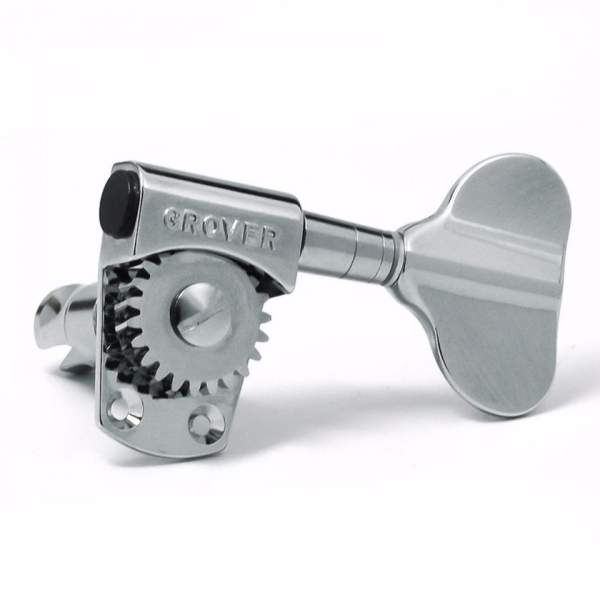
00.jpg

THEY ARE HUGE !!!!!!!! I know, I know … Titan. But I did not put that together in time. And these weigh MORE than the acoustic bass they were intended for !! Literally. So once again, WHAT kind of instrument are these intended for, and if for 4 string basses, then why ? Thanks

 
I am just trying to figure out what they are intended for. I imagine there are reasons tey are made, and I am sincerely curios.
I bought a set of Grover Titan 145C, because they looked great in the photo here. They seem normal and solid.
View attachment 3366956
THEY ARE HUGE !!!!!!!! I know, I know … Titan. But I did not put that together in time. And these weigh MORE than the acoustic bass they were intended for !! Literally. So once again, WHAT kind of instrument are these intended for, and if for 4 string basses, then why ? Thanks
Looks like a fairly ordinary 4-string bass tuner to me, and with the exception of the tuning key itself, not particularily heavy either. Fender tuners by comparison have flat keys, and so might possibly weigh a little less.

Most bass tuners are larger simply because the strings are heavier, and require tuners with a little more heft, and I would imagine that the keys themselves are larger because it gives better torque, and therefore makes them more comfortable and precise than smaller keys.

On an aesthetic note, I also find that larger tuners work better visually with a bass. Guitar-style tuners, like those found on Höfner basses, for instance, have always seemed flimsy and inadequate to me.
 
OK, I get the looks thing. Preference is awesome for all of us!
But no. You guys are not quite getting it. These DO look like standard sized and weight tuners in the photo, and that is the reason I purchased them. There is just barely enough room for them to fit on my headstock. They are NOT normal size. I know, because I have owned many basses, and onw several now. But look at the size of these.
0a.jpg


They weigh 1.07 lbs. There you go.
 
OK, I get the looks thing. Preference is awesome for all of us!
But no. You guys are not quite getting it. These DO look like standard sized and weight tuners in the photo, and that is the reason I purchased them. There is just barely enough room for them to fit on my headstock. They are NOT normal size. I know, because I have owned many basses, and onw several now. But look at the size of these
I can’t speak to the weight, but I’ve just measured the tuners on my American Standard P, and compared them with the measurements on the drawing you posted. They’re actually very similar in size, a little smaller in some places, a little larger in some. Those Grovers don’t strike me as anything out of the ordinary at all.

EDIT: I’ve just been to the Schaller website to find something to compare them to, and while they do seem a bit on the heavy side, comparable Schallers run to about 90-100 grams apiece, which would put four of them somewhere between 0.8 and 0.9 lbs. So yours are heavier, probably due to the amount of metal in the butterfly button (the Schallers have a flat plate), but not by a huge margin.
 
Last edited:
Okay, but other than a looks preference, WHY would anyone prefer something so huge, compared to the factory standard tuner I have laid beside it in the photo ?
Because their factory standard tuner might be like that one, it's about standard Fender size. There's also the cheaper import association some people have with the sealed tuners compared to the open gear style that Fender, Gibson and Rickenbacker all used.
 
Okay, but other than a looks preference, WHY would anyone prefer something so huge, compared to the factory standard tuner I have laid beside it in the photo ?
You call the tuners you compare them to «factory standard». Grover calls them «Mini». It depends on what you are used to, I suppose, but there is no particular reason to call the small ones «standard». If anything, the larger-style tuners are closer to being «standard» as they’re comparable to the size of the tuners Fender used on the original Precision and Jazz basses, and still use today.

As for your question, besides the whole looks thing, small adjustments to the tuning of a thick and heavy string are easier and more accurate with a larger paddle.
 

Latest posts