• TalkBass has been independent since 1998. Add your voice.
    Create a free account to reply to discussions, view embedded media, and browse with fewer display ads.
    Join freeLog in
    Want zero display ads or expanded classifieds tools? Compare plans.

Why are HUGE and HEAVY tuning machines made?

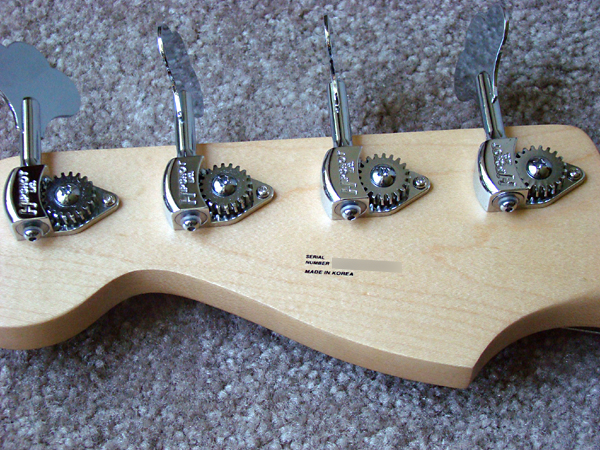
I like big tuner machines like these with large posts 'cos they look cool and "vintage"
81gwKvnmYJL._SY355_.jpg
 
Okay. Thanks then. So mass and tone go together, and people like filling their headstock with large tuners.
I have never owned a bass with Fender style tuners. Every bass I have ever owned had the ones I was calling "standard" … No wonder I feel the Titans are so large.
Oh well, buying the Hipshot copies. I can't stand SEVERE neck dive on my acoustic bass. Thanks
 
  • Like
Reactions: Watchootognbout
I am just trying to figure out what they are intended for. I imagine there are reasons tey are made, and I am sincerely curios.
I bought a set of Grover Titan 145C, because they looked great in the photo here. They seem normal and solid.
View attachment 3366956
THEY ARE HUGE !!!!!!!! I know, I know … Titan. But I did not put that together in time. And these weigh MORE than the acoustic bass they were intended for !! Literally. So once again, WHAT kind of instrument are these intended for, and if for 4 string basses, then why ? Thanks
Why ? Best tuners for Metal of course :bassist:
 
  • Like
Reactions: GIBrat51
Okay. Thanks then. So mass and tone go together, and people like filling their headstock with large tuners.
I have never owned a bass with Fender style tuners. Every bass I have ever owned had the ones I was calling "standard" … No wonder I feel the Titans are so large.
Oh well, buying the Hipshot copies. I can't stand SEVERE neck dive on my acoustic bass. Thanks
Those copies are much heavier than "real" Hipshot Ultra-lights. If you want even lighter than that, go for Gotoh's.
 
This is a topic that’s fascinated me for quite a while. Here’s what I know:

I have personally weighed the following tuners on my postal scale - the weights given are for a single tuning machine:
  • Gotoh GB350 - 40g
  • Gotoh GB7 - 63g
  • Jin Ho GB7 copy - 61g
  • Schaller M4 - 68g
  • Schaller Fender lightweight - 61g
  • Sperzel - 46g
  • Grover Titan - 107g
  • Hipshot Ultralite licensed Y key 3/8 post - 60g
  • Hipshot Ultralite clover key 1/2 post - 57g
  • Wilkinson open gear - 69g
Big difference there.

When our founding fathers first invented the electric bass guitar, they had to use parts that were available to them. The only bass tuning machines came from the upright bass world. That’s why they were used, and that’s why they became “traditional”. From a pure engineering standpoint, you don’t need big heavy tuners with large base plates and large gears and large clover-shaped keys. They are way overkill. But there wasn’t anything else available, so “tradition” became rooted and persists to this day.

Dead spots? Fix it by building the neck properly, not by adding mass where it is least needed and most detrimental.

Fine tuning large strings? The smaller tuners work just fine for that, thank you.

“Looks wrong”? Only if you value aesthetic conformity over functionality.

@Cullen G is right, those Titans are massive. I bought a set too, not realizing how overkill they were going to turn out to be. Nobody in their right mind would mount them to the end of a long lever and then strap it to their torso. Mine are mounted on my EUB. All of my BGs get the smaller, lightweight tuners, and even those are more than what is actually needed.
 
Argh … If only Hipshot Licensed Y Key had removable buttons ! I am installing custom Rosewood ones for more weight savings. Looks like the Wilkinson copies are still it.
And thank you ctmullins. I knew if just one other person had handle the Titans, they would understand, lol.
 
  • Like
Reactions: ctmullins
I’m pretty sure all of the Y keys are removable.

And I’ll be surprised if the rosewood is any lighter.

Looking at them, it seems it is one of the differences between the non licensed versions. Non removable keys.

I replaced the Grover butter beans on my acoustic guitar with same sized rosewood butterbeans, and saved 53 total grams. They are waaaay lighter than metal buttons.
 
Looking at them, it seems it is one of the differences between the non licensed versions. Non removable keys.

I replaced the Grover butter beans on my acoustic guitar with same sized rosewood butterbeans, and saved 53 total grams. They are waaaay lighter than metal buttons.

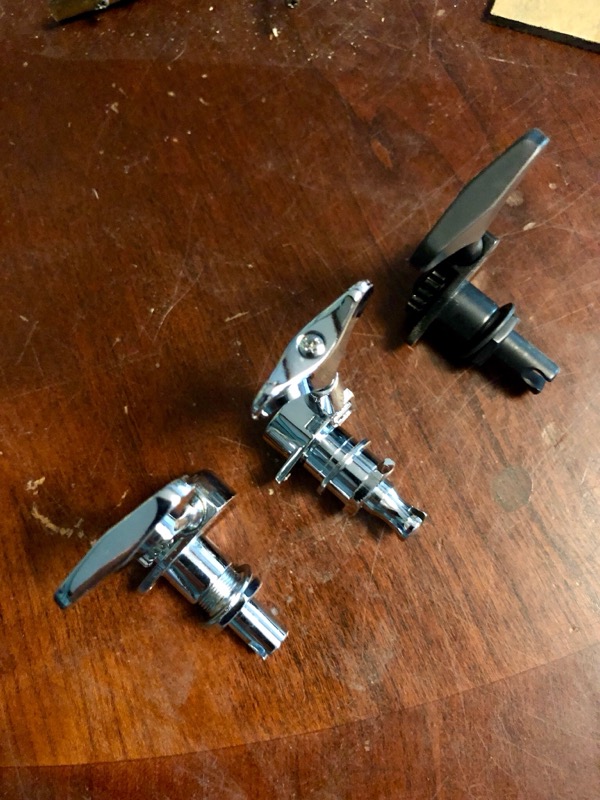
Ah, I see. I was typing from memory earlier, but when I got home from work I checked the tuners I have on hand. I had remembered that all of the Y key tuners had a screw in the top center of the key. But that’s not the case. Here’s a GB7 flanked by a pair of Hipshot Licensed Y key machines:

Tuner_0310.JPG


Flip them over, and they’re different at the end of the shaft too - the Hipshot Licensed have a small Allen screw here:

Tuner_0309.JPG


And here’s a Licensed with that screw removed and the machine disassembled:

Tuner_0311.JPG


So you’re right, the key is integral to the shaft, and there’s no way to replace just the key.
 
Why? Only because tradition and retro looks, no benefit, just like many other aspects of basses.
They visually go together with the hideous oversized Fender headstocks.
ctmullins is correct in post 27.
As for your question, besides the whole looks thing, small adjustments to the tuning of a thick and heavy string are easier and more accurate with a larger paddle.
I disagree knob size increases tuning precision, as the ratio is unchanged and the knob still turns at the rate your hand turns, it only increases your hand's leverage on the knob, which is unnecessary as high torque is not needed.
These retro tuners often have a large diameter post too, which reduces tuning precision and increases the stress the string tension applies to the tuner.
 
  • Like
Reactions: ctmullins
Why? Only because tradition and retro looks, no benefit, just like many other aspects of basses.
They visually go together with the hideous oversized Fender headstocks.
ctmullins is correct in post 27.

I disagree knob size increases tuning precision, as the ratio is unchanged and the knob still turns at the rate your hand turns, it only increases your hand's leverage on the knob, which is unnecessary as high torque is not needed.
These retro tuners often have a large diameter post too, which reduces tuning precision and increases the stress the string tension applies to the tuner.
Agreed, the ratio is unchanged, but with larger paddles the diameter of rotation is larger, which means that the distance your fingers need to move when rotating them increases. This allows higher accuracy, as there is less tendency to overshoot the point where the string is in tune.
 
Agreed, the ratio is unchanged, but with larger paddles the diameter of rotation is larger, which means that the distance your fingers need to move when rotating them increases. This allows higher accuracy, as there is less tendency to overshoot the point where the string is in tune.

And the larger post completely negates this slight advantage.
 
The "Y" part is exactly the same size and shape as the ones they are replacing on my Yamaha BB300 (MIJ 1984); the main shaft is a bit shorter. Maybe that's what they were made for. This bass is already heavy as hell anyway...