Don't know if this has been mentioned before, but does any one know why precision basses came to be called precisions?

TalkBass has been independent since 1998. Add your voice.
Create a free account to reply to discussions, view embedded media, and browse with fewer display ads.
Join free Log in
Want zero display ads or expanded classifieds tools? Compare plans.

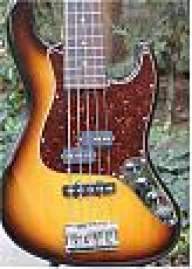
IIRC, that's correct.Dr. Cheese said:I heard Leo Fender named it the Precision because it had frets, allowing intonation to be "precise."



Yes.JansenW said:IIRC, that's correct.
Does that make a "fretless precision" an oxymoron?

Actually, the fretted Precision is more of an oxymoron. You can be more precise on a fretless than you can on a fretted bass.JansenW said:IIRC, that's correct.
Does that make a "fretless precision" an oxymoron?

Dr. Cheese said:I heard Leo Fender named it the Precision because it had frets, allowing intonation to be "precise."
Turock said:Actually, the fretted Precision is more of an oxymoron. You can be more precise on a fretless than you can on a fretted bass.
Let me get this straight; you are agreeing that you can be more precise, but not accurate. Well, allow me to clue you in on something: the definition of precise is accurate.Kickin'Fruit said:yeah but not as accurate.
Actually, fretted = aproximation.Nick Ioannucci said:fretless precision=aproximation?

Sure, you can. You can also be more precise.The Golden Boy said:Can't you be "in the neighborhood" of the note you desire and be completely audibly off- and in fact if you're not used to a fretless, sound like a complete and total amateur? (not that it's ever happened to me or anything...)
Yes, and if your intonation is not set correctly, or the fret is not exact, etc... then you are stuck with that "essentially the same" inaccurate note.The Golden Boy said:With a fretted bass, pretty much wherever your finger lies between the frets is going to give you "essentially" the same note.
Well, not exactly. Accuracy is conformance to a standard (of pitches, in this case), and precision is how specific you are. A fretless could be more precise, since you could have finer gradiations of pitch under your fingers, but if you're shooting for 12 equally spaced notes, you might be less accurate. Of course, the terms apply more directly to measuring equipment than to instruments.Turock said:Let me get this straight; you are agreeing that you can be more precise, but not accurate. Well, allow me to clue you in on something: the definition of precise is accurate.
One can be more accurate on a fretless instrument than one could ever be on a fretted instrument.
Turock said:Let me get this straight; you are agreeing that you can be more precise, but not accurate. Well, allow me to clue you in on something: the definition of precise is accurate.
One can be more accurate on a fretless instrument than one could ever be on a fretted instrument.
Turock said:Let me get this straight; you are agreeing that you can be more precise, but not accurate. Well, allow me to clue you in on something: the definition of precise is accurate.
One can be more accurate on a fretless instrument than one could ever be on a fretted instrument.
lemur821 said:Well, not exactly. Accuracy is conformance to a standard (of pitches, in this case), and precision is how specific you are. A fretless could be more precise, since you could have finer gradiations of pitch under your fingers, but if you're shooting for 12 equally spaced notes, you might be less accurate. Of course, the terms apply more directly to measuring equipment than to instruments.