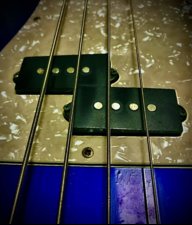
I'm no JB purist, so mine does have the VBT setup, and whatever it doesn't do, I could care less. It suits me and sounds great, it was simply beyond aggravating turning up and down two volume pots. All passive with CTS and Fender Yosemites.

TalkBass has been independent since 1998. Add your voice.
Create a free account to reply to discussions, view embedded media, and browse with fewer display ads.
Join free Log in
Want zero display ads or expanded classifieds tools? Compare plans.


Yeah I've switched most things to switches on my basses, either Selector/Kill/Tone or individual toggles. I usually add a Series/Parallel switch too.The J has only three main tones: neck pup full and bridge pup off, neck pup off and bridge pup full, and both pups full. All the other micro variations can be heard only by the player. So, VVT or VBT doesn’t matter.
This explains why I've never been able to achieve a 'blend' with jazz bass pickups when one is at 100% volume and the opposite is at any volume other than 100% - The tone simply reverts to the loudest pickup, i.e. 100% bridge and (for e.g.) 75% neck is actually all bridge; and 100% neck and (for e.g.) 75% bridge is actually all neck. I've never understood guys who say, for example, "favorite setting is 100% neck and 50% bridge", because for me it's never worked that way. 100% neck and 50% bridge is all neck.



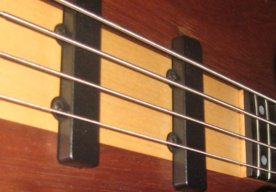
I have one bass with VVT and another with VBT.
Both get me to where I want to be.
I don't see downsides in either.

With a balance pot you can't run up your bridge and leave it while you add in some neck. As the neck increases the bridge decreases.


Seems like a pain in the butt to try to sort a tone with the relative level of each pickup and set an overall volume at the same time.
Why not have them with a master volume and a balance pot instead? Wouldn't it be easier?
Requires 4 pots. Leo was cheap.Why not have them with a master volume and a balance pot instead?

when I bought my mustang it had the three way toggle switch and it was pretty terrible. The switch was defective (many others had the same issue) and I replaced it with the stacked V/T/V/T Blend configuration. That is so much more effective IMO.Toggle-switch PU-selector is all I really need.
If you need to change volume quickly use your fingers and if that's not enough use the two volumes to your advantage change to make the change more pronounced.The downside of VVT is, volume being arguably more critical than tone, if you're mid song and you need to go up or down, quickly, you have to adjust TWO knobs, not one.